Begleiten Sie uns auf eine literarische Weltreise!
Buch zum Bücherregal hinzufügen
Grey
Einen neuen Kommentar schreiben Default profile 50px
Grey
Jetzt das ganze Buch im Abo oder die ersten Seiten gratis lesen!
All characters reduced
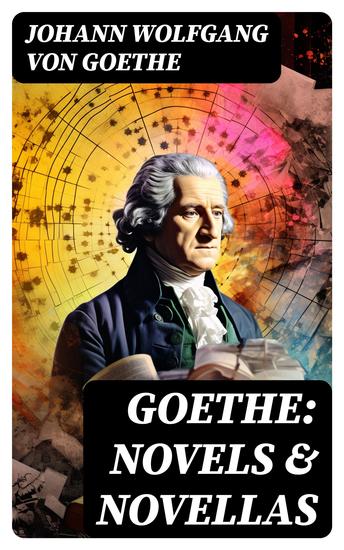
Goethe: Novels & Novellas - cover

Goethe: Novels & Novellas

Johann Wolfgang von Goethe

Übersetzer Thomas Carlyle, James Anthony Froude, R. Dillon Boylan, Hjalmar Hjorth Boyesen

Verlag: DigiCat

  • 0
  • 0
  • 0

Beschreibung

In "Goethe: Novels & Novellas," readers are offered a rich tapestry of human emotion and existential inquiry, beautifully articulated through the lens of 18th and early 19th-century thought. This collection showcases Goethe's mastery of narrative form, blending lyrical prose with profound philosophical reflections. His works, often situated within the Sturm und Drang movement, reflect his deep engagement with themes of passion, nature, and the complexities of the human experience, particularly in masterpieces such as "The Sorrows of Young Werther" and "Wilhelm Meister's Apprenticeship." The text's stylistic nuances convey the tension between enlightenment rationality and romantic fervor, inviting readers into a world where individuality is both celebrated and scrutinized. Johann Wolfgang von Goethe, a polymath and cultural titan, had a profound impact on literature, philosophy, and science. His diverse experiences, from a privileged upbringing to his extensive travels and involvement in the Weimar Court, enriched his insight into human nature and society. Goethe's deep existential ponderings and appreciation for the arts catalyzed his literary exploration, reflected in the emotional depth and intellectual richness of his narratives. This anthology is essential for both scholars and casual readers alike, providing a gateway to Goethe's intricate world. It invites engagement with the questions of existence and identity that resonate across time, making each story relevant to contemporary discourse. Delve into this timeless collection and experience firsthand the genius of a true literary master.
Verfügbar seit: 28.12.2023.
Drucklänge: 1528 Seiten.

Weitere Bücher, die Sie mögen werden

  • Wind in the Willows AND The Reluctant Dragon The - Unabridged - Two Classics by Kenneth Grahame! - cover

    Wind in the Willows AND The...

    Kenneth Grahame

    • 0
    • 0
    • 0
    British author Kenneth Grahame, during his brief career, managed to create two of the world's most beloved children's stories: the classic tale "The Wind in the Willows" and the novella "The Reluctant Dragon," each one a magnificent addition to any collection.  Here, these two famous stories are combined into one volume, presented in their original and unabridged format. First, Grahame's sprawling saga of life in the English countryside, "The Wind in the Willows," featuring the sensible and amiable Mole, the fiery and whip-smart Water Rat, the gruff and respectable Badger as well as the irrepressible and out-of-control Toad of Toad Hall, whose mad and impulsive behavior drives him to obsession, thievery, prison and escape! There are few more cherished children's books in the history of literature.  As an added bonus, however, we also include Grahame's story of friendship, love and compassion, the beautiful and elegiac novella "The Reluctant Dragon," wherein the main character - the Boy - discovers a friendly dragon living outside his small village. When the villagers learn of the dragon's existence, they recruit St. George himself to slay the monster, prompting the Boy to intervene and try to save his friend. A beautiful fable of love and friendship for children of all ages.
    Zum Buch
  • Looking Backward 2000 to 1887 - cover

    Looking Backward 2000 to 1887

    Edward Bellamy

    • 0
    • 0
    • 0
    "Looking Backward: 2000-1887" is a utopian science fiction novel written by Edward Bellamy. It was first published in 1888 and is considered one of the most influential works of American socialist literature. The story is set in the year 2000 and follows Julian West, a young man who falls into a deep sleep in 1887 and wakes up in a drastically transformed and idealized future. In the novel, Bellamy presents a vision of a utopian society where social and economic inequalities have been eliminated. The government controls the means of production, and everyone is provided for according to their needs. The novel explores themes of social justice, equality, and the potential for a more equitable and cooperative society.
    Zum Buch
  • A Little Woman - A man tries to appease a woman frustrated with him in true Kafkaesque fashion - cover

    A Little Woman - A man tries to...

    Franz Kafka

    • 0
    • 0
    • 0
    Franz Kafka was born on 3rd July 1883 in Prague, then in Bohemia, the eldest of 6, into a middle-class Jewish family. 
     
    Life for the young Kafka and his passion for literature was often made an ordeal by his over-bearing and domineering entrepreneur of a father.   
     
    In 1889 Kafka was sent to the Deutsche Knabenschule, an elementary school in Prague. His father would only allow him to be educated in German-speaking schools and even went so far as to limit visits to the synagogue to four a year. 
     
    In 1901 he graduated from the classics-oriented Altstädter Gymnasium. Kafka did well there and across a large range of subjects.  He now enrolled at the Charles Ferdinand University, to study chemistry, but quickly switched to law for which he obtained his degree in June 1906 and then performed the mandatory year of unpaid service as clerk at the civil and criminal courts. 
     
    A job at an Italian insurance company left him little time to write and after a year he took another job with the Worker's Accident Insurance Institute for the Kingdom of Bohemia where he stayed until ill health led to his resignation in 1922. 
     
    Although he saw work as a means to pay the bills and to allow him time to write, he received several promotions and was noted as a good employee. 
     
    By 1917 Kafka was suffering from tuberculosis, which required frequent periods of convalescence. Interspersed with this, were several intense affairs before he settled in Berlin with Dora Diamant, a 25-year-old kindergarten teacher who herself having left the ghetto now influenced Kafka's interest in the book of Jewish law, the Talmud. 
     
    Kafka’s on-going health was littered with problems. Apart from TB there were several other ailments, including migraines, insomnia, boils, depression, all usually brought on by excessive stresses and strains. He attempted to counteract all of this by naturopathic treatments, a vegetarian diet and consuming large quantities of unpasteurized milk. 
     
    His tuberculosis still worsened. He returned to Prague, where he died on 3rd June 1924. He was 40. 
     
    His literary works are few in number but towering in influence.  His masterpieces include ‘The Trial’, ‘The Metamorphosis’ as well as a number of short stories which reveal facets of humankind that truthfully could only be born from Kafka’s brain and pen.
    Zum Buch
  • A Dream of Life - cover

    A Dream of Life

    D H Lawrence

    • 0
    • 0
    • 0
    'A Dream of Life', is unfinished but there is enough extant to let us know where Lawrence was going in this story. He begins by looking back and bemoaning what has become of his generation, under the thumb of women and lacking the spark of his father's mining friends. Then in a scene reminiscent of 'Pilgrim's Progress' he travels forward in time and sees his village in the distant future. The people are living in an idealised commune but do they have the spark of life?
    Zum Buch
  • Oliver Twist - cover

    Oliver Twist

    Charles Dickens

    • 0
    • 0
    • 0
    A pauper's child reared in a workhouse, young Oliver Twist serves an apprenticeship in a loveless house. Despairing, he runs away and is befriended by a gang of young pickpockets who offer him the only welcome home he has ever known. Falling under the influence of villainous company, the young orphan struggles to escape from a life of poverty and crime, in search of the love he longs for. Oliver Twist is one of Dickens' greatest achievements, a vivid depiction of London's outlaw society with an array of memorable characters.
    Zum Buch
  • Uncommercial Traveller The (Unabridged) - cover

    Uncommercial Traveller The...

    Charles Dickens

    • 0
    • 0
    • 0
    The Uncommercial Traveller is a collection of literary sketches and reminiscences written by Charles Dickens, published in 1860-1861. In 1859 Dickens founded a new journal called All the Year Round, and the "Uncommercial Traveller" articles would be among his main contributions. He seems to have chosen the title and persona of the Uncommercial Traveller as a result of a speech he gave on 22 December 1859 to the Commercial Travellers' School London in his role as honorary chairman and treasurer. The persona sits well with a writer who liked to travel, not only as a tourist, but also to research and report what he found visiting Europe, America and giving book readings throughout Britain. He did not seem content to rest late in his career when he had attained wealth and comfort and continued travelling locally, walking the streets of London in the mould of the flâneur, a "gentleman stroller of city streets". He often suffered from insomnia and his night-time wanderings gave him an insight into some of the hidden aspects of Victorian London, details of which he also incorporated into his novels.
    Zum Buch