Begleiten Sie uns auf eine literarische Weltreise!
Buch zum Bücherregal hinzufügen
Grey
Einen neuen Kommentar schreiben Default profile 50px
Grey
Jetzt das ganze Buch im Abo oder die ersten Seiten gratis lesen!
All characters reduced
Facts of Consciousness - Enriched edition - cover

Facts of Consciousness - Enriched edition

Johann Gottlieb Fichte

Übersetzer Adolph Ernst Kroeger

Verlag: DigiCat

  • 0
  • 0
  • 0

Beschreibung

In "Facts of Consciousness," Johann Gottlieb Fichte presents a pivotal exploration of self-awareness and the nature of consciousness that significantly influenced the development of German idealism. Written in the early 19th century, the book employs a rigorous, philosophical style characterized by dialectical reasoning and introspective inquiry. Fichte probes deeply into the processes of thought, subjectivity, and the role of the self in constructing knowledge, often challenging prevailing empiricist notions and emphasizing the significance of the individual's active engagement with their own consciousness. Fichte, a prominent philosopher of the Enlightenment, was greatly influenced by the ideas of Immanuel Kant, particularly the critical examination of the faculties of human understanding. His commitment to the principles of freedom and autonomy stems from his own experiences and the socio-political upheavals of his time, motivating him to seek a philosophical grounding for personal agency within a collective context. This backdrop informed Fichte's conviction that human consciousness is not a passive receiver of sensations but an active participant in the formation of knowledge and reality. "Facts of Consciousness" is a must-read for anyone intrigued by philosophical discourses surrounding self and consciousness. It offers profound insights into the nature of individual perception and serves as a crucial text for understanding the evolution of modern philosophical thought. Whether you are a philosopher, student, or avid reader of intellectual history, Fichte's work will enrich your comprehension of the self and its relation to the world.

In this enriched edition, we have carefully created added value for your reading experience:
- A succinct Introduction situates the work's timeless appeal and themes.
- The Synopsis outlines the central plot, highlighting key developments without spoiling critical twists.
- A detailed Historical Context immerses you in the era's events and influences that shaped the writing.
- An Author Biography reveals milestones in the author's life, illuminating the personal insights behind the text.
- A thorough Analysis dissects symbols, motifs, and character arcs to unearth underlying meanings.
- Reflection questions prompt you to engage personally with the work's messages, connecting them to modern life.
- Hand‐picked Memorable Quotes shine a spotlight on moments of literary brilliance.
- Interactive footnotes clarify unusual references, historical allusions, and archaic phrases for an effortless, more informed read.
Verfügbar seit: 10.08.2022.
Drucklänge: 133 Seiten.
Weitere Bücher, die Sie mögen werden

  • Guadalcanal's Longest Fight - The Pivotal Battles of the Matanikau Front - cover

    Guadalcanal's Longest Fight -...

    Dave R. Holland, USMCR (Ret)...

    • 0
    • 0
    • 0
    The Matanikau battles proved to be the critical turning points in the land campaign for Guadalcanal—the campaign's longest and bloodiest ground fight. A five-month conflict raged along the river and its basin. The real importance of this area has long remained unrecognized, yet the American and Japanese forces that fought over it knew that it was the key to the ultimate prize of Henderson Airfield. In this mile-long bloody tug-of-war from the river across to the hills and ravines were fought seven major battles and countless smaller skirmishes.While countless books have been published on the Guadalcanal Campaign, none have concentrated on the pivotal battles of the Matanikau basin. Extensively researched, this first in-depth study of these important battles, objectively showing all sides, fills in this crucial missing piece of the history of the Guadalcanal campaign.The well-known Guadalcanal battlefield guide Dave Holland spent three years walking the battlefields, researching, and documenting what he found. His unparalleled knowledge of the ground enables him to take the listener along with the men on the ground. Using his investigative skills and military background, he provides a fresh, detailed, and often completely new view of the land campaign.
    Zum Buch
  • Knights Templars at the priory of Sion - cover

    Knights Templars at the priory...

    Jean-Patrick Pourtal

    • 0
    • 0
    • 0
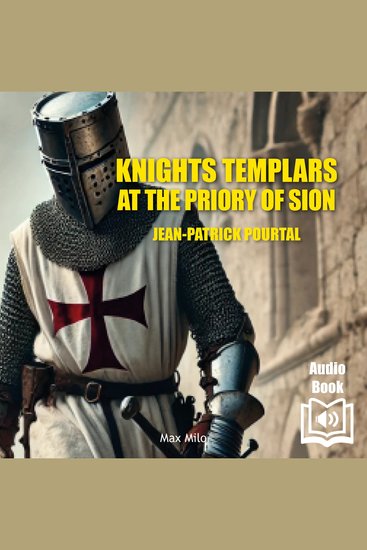
    The dissolution of the Order of the Temple and the persecution of the Knights Templar are still fresh in people's minds. Why did King Philip the Fair and Pope Clement V set out to destroy them? What secrets did the Knights Templar hold? Just as the Da Vinci Code revealed the existence of the Order of the Priory of Sion and left its mark on the world, Jean-Patrick Pourtal takes you on an investigative journey from the 14th century to the present day. The author develops his hypotheses on the historical implications of the Knights Templar, mixing royal dynasty and hidden messages. He returns to mythical sites such as Arginy, Gisors and Rennes-Le-Château, and meets the characters who were instrumental in bringing about the so-called Templar resurgence.
    Zum Buch
  • The Healing Power of Story - How Reading and Storytelling Boost Mental and Emotional Well-Being - cover

    The Healing Power of Story - How...

    Davis Truman

    • 0
    • 0
    • 0
    This audiobook is narrated by an AI Voice.   
    In an age of noise, anxiety, and endless distractions, The Healing Power of Story offers a refreshing, science-backed path to inner peace and emotional strength through the timeless act of storytelling. 
    Whether it's reading a novel, sharing personal memories, or listening to others' lived experiences, stories shape who we are. But they also heal. 
    In this powerful and inspiring book, Davis Truman explores how storytelling taps into our deepest emotions, rewires our brains, and fosters resilience, empathy, and a sense of meaning. Drawing on the latest psychological research, compelling case studies, and practical exercises, Truman reveals how both reading and telling stories can: 
    •	Reduce stress, anxiety, and depression 
    •	Strengthen memory and emotional regulation 
    •	Build deeper connections and empathy 
    •	Help process grief, trauma, and life transitions 
    •	Reignite creativity and purpose 
    Whether you're a book lover, therapist, teacher, parent, or someone longing for hope and connection, The Healing Power of Story is your guide to transforming how you think, feel, and relate to the world. 
    Open a book. Share your story. Heal your life.
    Zum Buch
  • Wisdom Pills - Profound Insights Condensed into Bite-Sized Doses - cover

    Wisdom Pills - Profound Insights...

    Sandeep Verma

    • 0
    • 0
    • 0
    Welcome to Wisdom Pills, where profound insights are condensed into bite-sized doses from sages across time and traditions. Delve into each pill, let it resonate within you, and be transformed. Consume with caution, for their power lies beyond words. Join us on this journey of condensed wisdom for personal growth and self-discovery.
    Zum Buch
  • Familiar Violence - A History of Child Abuse - cover

    Familiar Violence - A History of...

    Heather Montgomery

    • 0
    • 0
    • 0
    Child abuse casts a long shadow over the history of childhood. Across the centuries there are numerous accounts of children being beaten, neglected, sexually assaulted, or even killed by those closest to them. This book explores this darker side of childhood history, looking at what constituted cruelty towards children in the past and at the social responses towards it. Focusing primarily on England, it is a history of violence against children in their own homes, covering a large timeframe which extends from medieval times to the present. 


    Undeniably, the experience of children in the past was often brutal, and children were treated with, what seems to contemporary mores, callousness and cruelty. However, historians have paid far less attention to how the mistreatment of children was understood within its contemporary context. Most parents, both now and in the past, loved their children and there have always been widely shared understandings of the boundaries that separate the acceptable treatment of children from the intolerable and morally wrong. This book will examine how these boundaries have changed and been contested over time and, in doing so, provides a context to the many forms of violence experienced by children in the past.
    Zum Buch
  • The Investiture Controversy - Church Vs State - cover

    The Investiture Controversy -...

    Harris Ropes

    • 0
    • 0
    • 0
    The Investiture Controversy, one of the most defining struggles of the medieval period, had its roots in the growing tension between the secular rulers of Europe and the spiritual authority of the Church. This conflict emerged in a time when power structures were deeply intertwined, and the boundaries between church and state were neither clear nor firmly established. At the heart of the controversy was the question of who held the authority to appoint, or "invest," bishops and abbots—the emperor or the pope. 
    The Church had grown significantly in power and influence during the early Middle Ages, accumulating wealth, land, and political clout. By the 11th century, popes were increasingly assertive, seeking to reform the Church and free it from secular interference. The papacy, under reform-minded leaders, aimed to elevate the moral and spiritual authority of the Church above that of earthly rulers. This push was partly a response to widespread abuses, such as simony—the buying and selling of church offices—and lay investiture, where secular leaders granted religious titles and symbols of office to church officials. 
    On the other side, the Holy Roman Emperors viewed themselves as divinely appointed protectors of Christendom. They believed it was their right and duty to appoint bishops within their realms, not just as spiritual leaders but also as loyal administrators of imperial lands. In many parts of the empire, bishops held significant secular power and governed vast territories, making their appointment a matter of political importance as much as religious concern. For emperors like Henry IV, relinquishing control over these appointments threatened to weaken imperial unity and reduce their ability to govern effectively.
    Zum Buch