Rejoignez-nous pour un voyage dans le monde des livres!
Ajouter ce livre à l'électronique
Grey
Ecrivez un nouveau commentaire Default profile 50px
Grey
Abonnez-vous pour lire le livre complet ou lisez les premières pages gratuitement!
All characters reduced
Courage - cover

Courage

J. M. Barrie

Maison d'édition: e-artnow

  • 0
  • 0
  • 0

Synopsis

'Courage' is a commencement address delivered by J. M. Barrie to the St. Andrews University graduates in 1922. Barries is best-remembered today for writing Peter Pan. In his speech, Barrie advises the students to not be afraid to do better than "the greats" before them who have committed wrongdoings, and to hold onto their aspirations. However, he also reminds them that everyone will eventually be held responsible for their actions.
Disponible depuis: 24/11/2023.
Longueur d'impression: 114 pages.

D'autres livres qui pourraient vous intéresser

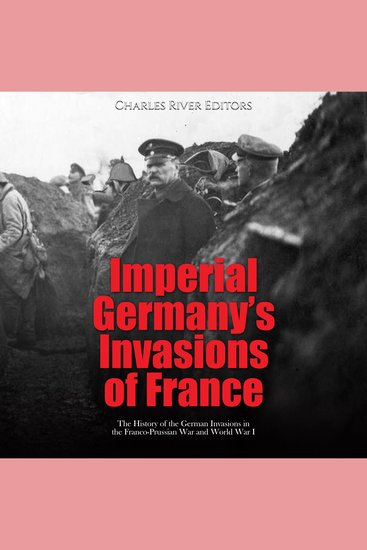
  • Imperial Germany’s Invasions of France: The History of the German Invasions in the Franco-Prussian War and World War I - cover

    Imperial Germany’s Invasions of...

    Editors Charles River

    • 0
    • 0
    • 0
    Prussian leaders, especially Otto von Bismarck, the chancellor and advisor to Prussia’s king, believed Prussia could be a united and respected power, but only without the traditional Austrian dominance. At the time, the Austrian empire was a collection of ethnically diverse peoples and had been dominated by a socio-political conservatism that sought to keep the empire ruled in Hapsburg tradition.  
    After Prussia was victorious in the Austro-Prussian War, Bismarck played a waiting game where the unification of Germany was concerned, as the joining of the southern states - initially resistant to Prussian rule, friendly with Austria, and bent on independence - would have to be overcome. What was needed was “a clear case of French aggression” toward either Prussia or the southern states. Not only would such a move by Emperor Napoleon III trigger the terms of the treaty between the German states, but it would keep the remaining world powers out of the conflict. It would be a dispute over the throne of Spain that would cause Napoleon III to act. 
    	If trench warfare was an inevitability during the war, it is only because the events leading up to the First Battle of the Marne were quite different. The armies at the beginning of the war moved quickly through the land, but the First Battle of the Marne devolved into a bloody pitched battle that led to the construction of trenches after the Germans retreated, blocked in their pursuit of Paris. When the aftermath disintegrated into a war between trenches, some Germans thought they had the upper hand since they were occupying French territory, but with fewer soldiers than the combined Allied nations and fewer resources and supplies, it was possibly only a matter of time before they were ultimately defeated. The commander of the German armies, General Helmuth von Moltke, allegedly said to Kaiser Wilhelm II immediately after the First Battle of the Marne, "Your Majesty, we have lost the war."
    Voir livre
  • CompTIA A+ Certification Study Guide - Exam Prep for 220-1101 & 220-1102 ( 2 Books in 1): 500+ Practice Questions & Answers for Guaranteed Success - cover

    CompTIA A+ Certification Study...

    Josh Russell

    • 0
    • 0
    • 0
    Are you ready to pass the CompTIA A+ exams (220-1101 & 220-1102) on your first try? This 2-in-1 comprehensive study guide is your ultimate weapon for exam success—packed with 500+ realistic practice questions, expert explanations, and insider tips to help you master the core IT concepts with confidence! 
    What You’ll Get Inside: 
    ✅ 500+ Exam-Style Questions & Answers – Simulate the real test and boost your confidence. 
    ✅ Detailed Answer Explanations – Understand the “why” behind every correct answer. 
    ✅ Comprehensive 2-in-1 Coverage – Includes 220-1101 (Core 1) & 220-1102 (Core 2) with all essential topics. 
    ✅ Proven Exam Strategies & Test-Taking Tips – Maximize efficiency and avoid common mistakes. 
    ✅ Real-World Scenarios & Hands-On Troubleshooting – Gain practical IT knowledge for the job market. 
    Who Is This For? 
    🔹 Aspiring IT professionals looking to start or advance their careers. 
    🔹 Students & self-learners preparing for the CompTIA A+ certification. 
    🔹 Tech enthusiasts eager to sharpen their IT troubleshooting skills.
    Voir livre
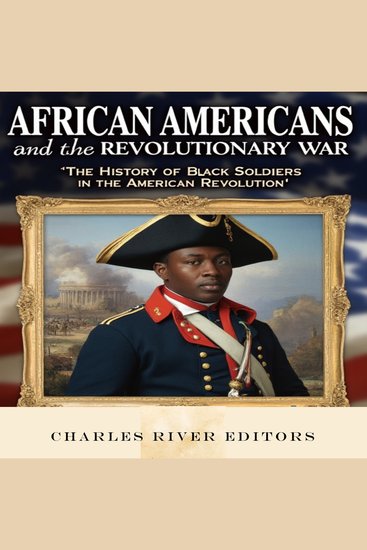
  • African Americans and the Revolutionary War: The History of Black Soldiers in the American Revolution - cover

    African Americans and the...

    Editors Charles River

    • 0
    • 0
    • 0
    The American Revolution is replete with seminal moments that every American learns in school, from the “shot heard ‘round the world” to the Declaration of Independence, but the events that led up to the fighting at Lexington & Concord were borne out of 10 years of division between the British and their American colonies over everything from colonial representation in governments to taxation, the nature of searches, and the quartering of British regulars in private houses. From 1764-1775, a chain of events that included lightning rods like the Townshend Acts led to bloodshed in the form of the Boston Massacre, while the Boston Tea Party became a symbol of nonviolent protest.  
    	The political and military nature of the Revolutionary War was just as full of intrigue. While disorganized militias fought the Battles of Lexington & Concord, George Washington would lead the Continental Army in the field while men like Thomas Jefferson drafted the Declaration of Independence in Philadelphia and Benjamin Franklin negotiated overseas in France. Benedict Arnold would become one of his nation’s most vital war heroes and its most notorious traitor, French forces would play a crucial role at the end of the war, and the Treaty of Paris would conclude the Revolution with one last great surprise.  
    	Perhaps not surprisingly, the Revolution was far more complex than often depicted, both demographically and politically. Not all the British colonies in North America joined the rebel colonies - East and West Florida remained British (although Britain almost lost both to Spain), while the Bahamas, Bermuda, and the Caribbean colonies remained in the empire. The colonies in what is now Canada also remained loyal, namely Quebec, Newfoundland, Nova Scotia, and Rupert’s Land. 
    Voir livre
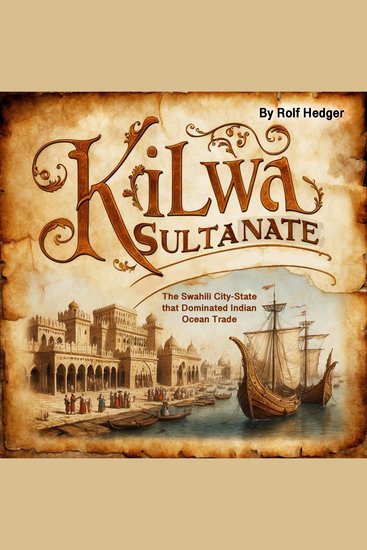
  • Kilwa Sultanate - The Swahili City-State That Dominated Indian Ocean Trade - cover

    Kilwa Sultanate - The Swahili...

    Rolf Hedger

    • 0
    • 0
    • 0
    Nestled along the shores of the Indian Ocean, Kilwa emerged as a vibrant cultural and trading hub whose origins can be traced back to the mingling of diverse peoples and traditions. Long before it became known as a dominant maritime power, the region was home to indigenous communities that thrived on the rich resources of the East African coast. The arrival of Arab and Persian traders introduced new goods, ideas, and cultural practices, setting in motion a transformation that would lay the groundwork for Kilwa’s future prominence. 
    The early formation of Kilwa was not the result of a single event but rather a gradual process influenced by its strategic geographic location. Its natural harbor provided an ideal meeting point for merchants navigating the vast Indian Ocean, linking the interior of Africa with the markets of Arabia, India, and even China. This advantageous position allowed Kilwa to evolve from a modest trading outpost into a bustling urban center, where economic opportunities attracted people from far and wide. 
    As the trade networks expanded, so did the cultural exchange. The integration of Islamic traditions played a significant role in shaping the identity of the nascent city-state. Early Muslim traders and scholars brought with them not only the teachings of Islam but also innovative approaches to governance, education, and law. This infusion of new perspectives blended with existing local customs, creating a unique cultural synthesis that became characteristic of the Swahili coast. Over time, the fusion of indigenous and foreign elements fostered a distinct identity, one that celebrated both its African roots and the influences of distant lands.
    Voir livre
  • Matilda by Roald Dahl (Book Analysis) - Detailed Summary Analysis and Reading Guide - cover

    Matilda by Roald Dahl (Book...

    Bright Summaries

    • 0
    • 0
    • 0
    Unlock the more straightforward side of Matilda with this concise and insightful summary and analysis!This engaging summary presents an analysis of Matilda by Roald Dahl, the story of a young girl with a passion for reading, something which her parents simply cannot understand. She discovers that she has incredible powers and decides to use them to save her favourite teacher, and the whole school, from their terrifying head teacher, Miss Trunchbull. It has been considered one of the best children's novels of all times, and its popularity has led to it being turned into a hugely successful feature film starring Danny DeVito, as well as a Broadway musical. Find out everything you need to know about Matilda in a fraction of the time!This in-depth and informative reading guide brings you:• A complete plot summary• Character studies• Key themes and symbols• Questions for further reflectionWhy choose BrightSummaries.com?Available in print and digital format, our publications are designed to accompany you in your reading journey. The clear and concise style makes for easy understanding, providing the perfect opportunity to improve your literary knowledge in no time.See the very best of literature in a whole new light with BrightSummaries.com!
    Voir livre
  • Of Consolation - To Marcia To Helvia To Polybius - cover

    Of Consolation - To Marcia To...

    Seneca the Younger

    • 0
    • 0
    • 0
    These three ‘Consolations’, written by Seneca to his mother and two friends, have been described as ‘the crowning achievement in the canon of ‘consolation letters’. But sentimental they are not, for they emerge from the writer’s deep-seated commitment to Stoicism, where individuals are exhorted to inhabit qualities of virtue, positivity, resilience, and indifference. This recording opens with Seneca’s consolatory letter to Marcia, who, after three years, was still mourning the death of her son. He recognises her exceptional personal qualities and what benefits she has brought to her family, having rescued her father’s legacy as a historian following his death. He cites other noble Roman mothers who lost their sons, and enjoins her to adopt a more Stoic attitude of mind: we are all destined to die, he declares.  
    The second letter is to his mother sent after he had been exiled to Corsica by Emperor Caligula. He counsels Helvia not to mourn his absence – not least because he himself does not feel grief at the prospect of his own exile. He acknowledges the trials of his mother during her life, remarking ‘ill-fortune has given you no respite’. But her grief at the absence of her son may be put to one side in the knowledge that as he has ‘never trusted in Fortune,’ she can be comforted that her son is not discommoded. And history points to far harsher separations.  
    The final letter is to Polybius, Emperor Claudius’s Literary Secretary, who was mourning his brother.  Written while in exile, Seneca’s unwavering commitment to Stoic philosophy is again in evidence. One of Seneca’s principal suggestions is for Polybius to distract himself from grief by an increasing involvement in work.  
    These ‘Consolations’ have been widely admired from Classical times to the present, but are periodically questioned for their emphasis on a somewhat detached approach to grief and bereavement. Not all can manage imperturbability in such circumstances. Nevertheless, there is a steadiness and emotional calm in these missives, which Seneca himself displayed when ordered to commit suicide by Emperor Nero.
    Voir livre