Rejoignez-nous pour un voyage dans le monde des livres!
Ajouter ce livre à l'électronique
Grey
Ecrivez un nouveau commentaire Default profile 50px
Grey
Abonnez-vous pour lire le livre complet ou lisez les premières pages gratuitement!
All characters reduced
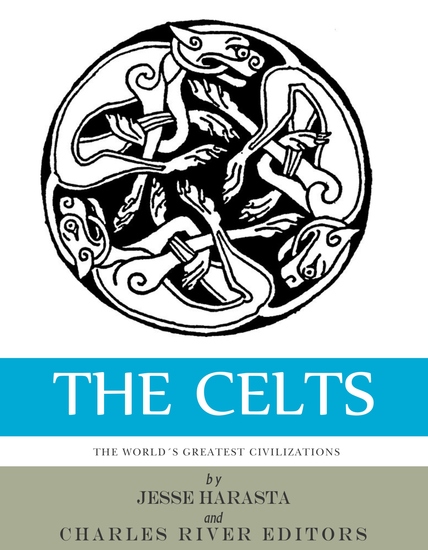
The Celts - The World’s Greatest Civilizations - cover

The Celts - The World’s Greatest Civilizations

Jesse Harasta

Maison d'édition: Charles River Editors

  • 0
  • 0
  • 0

Synopsis

The Celts are one of the most well-known groups in Europe and one of the least understood. Depending on which classifications are used, the Celts are also one of the oldest civilizations in Europe. In the centuries before Christ, the Celts were spread out across much of continental Europe, and though they are mostly identified with Gaul, evidence suggests they also spread as far as Portugal.
 
Though they were spread out across Europe before the height of the Roman Empire, most people associate the Celts with the British Isles today, particularly Ireland and Scotland. After they had been relegated to those smaller regions as a result of the Romans and other migrations, the culture of the Celts as it is currently understood began to congeal during the Early Middle Ages, and Celtic culture, folklore, and legend have all become inextricably intertwined with Irish history and British history as a whole.
 
While much of the world associates the Celts with the British Isles and Ireland specifically, Celtic is typically used in the British Isles as a way to describe anything that is in contrast to the dominant "Saxon," "Anglo-Saxon" or "English" culture.  It is impossible to separate these two: Celtic in this sense exists because it can be contrasted to English and vice versa.  The "Celts" and "Celtic" things are viewed as more natural, emotional, irrational, tradition-bound, hot-headed and feminine.  The English are seen as more civilized, rational, forward-thinking, cool-headed and masculine. For many centuries, the Church of England was seen as a paragon of Englishness, defended as the most rational and civilized of religions, but recently there has been a growing trend towards "Celtic Christianity" within the Church. This tendency attempts to create a Christianity that is more balanced between the genders, kinder to nature, and more in tune with the mystical and spiritual.  This division was dramatically portrayed in the film "Braveheart," when the Celtic Scots were led by an emotionally-charged, wild-tempered, absurdly brave, freedom-loving William Wallace, while the English were carefully-organized, coldly cruel and strategic defenders of an oppressive central government.
 
The World’s Greatest Civilizations: The History and Culture of the Celts comprehensively covers the history, culture, and legacy of the Celts, from their origins in Europe to their influence in Great Britain. Along with pictures and a bibliography, you will learn about the Celts like you never have before, in no time at all.
 
 
Disponible depuis: 02/05/2025.
Longueur d'impression: 42 pages.

D'autres livres qui pourraient vous intéresser

  • A Classic Interview with Rock Icon George Harrison Part 1 - cover

    A Classic Interview with Rock...

    George Harrison

    • 0
    • 0
    • 0
    George Harrison (February 25, 1943 - November 29, 2001) was an English musician, singer and songwriter who achieved international fame as the lead guitarist of the Beatles. Sometimes called "the quiet Beatle," Harrison embraced Indian culture and helped broaden the scope of popular music through his incorporation of Indian instrumentation. After the break-up of  The Beatles, Harrison had a notable solo career and success as part of The Traveling Wilberys. Some of Harrison's best-known compositions as part of The Beatles, include "Taxman", "Within You Without You", "While My Guitar Gently Weeps", "Something," and "Here Comes the Sun." The following interview was recorded in 1975.
    Voir livre
  • A Programme of Absolute Disorder - Decolonizing the Museum - cover

    A Programme of Absolute Disorder...

    Françoise Vergès, Paul Gilroy

    • 0
    • 0
    • 0
    "A complete overhaul of the Western museum tradition" —Publishers Weekly 


    "An impressive critique of the universal museum as complicit in the damages inflicted by colonial power" —Isaac Julien, artist and filmmaker 


    "Should fascinate anyone interested in social justice, post-colonialism and the arts" —Euronews 


    "Powerful and so relevant" —Diacritik 


    The Western museum is a battleground—a terrain of ideological, political, and economic contestation. Almost everyone today wants to rethink the museum, but how many have the audacity to question the idea of the universal museum itself? 


    In A Programme of Absolute Disorder, Françoise Vergès puts the museum in its place. Exploring the Louvre's history, she uncovers the context in which the universal museum emerged: as a product of colonialism, and of Europe's self-appointed claim to be the guardian of global heritage. 


    Vergès outlines a radical horizon: to truly decolonize the museum is to implement a "programme of absolute disorder", inventing other ways of apprehending the human and non-human world that nourish collective creativity and bring justice and dignity to the dispossessed.
    Voir livre
  • On Longevity and the Shortness of Life - A Stoic Guide to Time Meaning and Living Fully - cover

    On Longevity and the Shortness...

    Seneca, Tim Zengerink

    • 0
    • 0
    • 0
    What if you could make the most of your time, live with purpose, and never feel like life is slipping away? 
    On the Shortness of Life: A Stoic Guide to Time, Meaning, and Living Fully brings you the timeless wisdom of Seneca, one of the greatest Stoic philosophers, thoughtfully adapted for today’s listeners. 
    Written nearly two thousand years ago, On the Shortness of Life explores life’s most pressing question: How can we make the most of our time? Seneca’s powerful insights remind us that life is not inherently short—but often wasted on distractions, trivial pursuits, and unexamined living. 
    This isn’t just a philosophical essay—it’s a practical guide to focusing on what truly matters, finding deeper meaning, and living fully. Whether you’re navigating a busy life, struggling with time management, or searching for clarity, Seneca’s teachings provide the tools to take control of your time and live intentionally. 
    What You’ll Discover: 
    - The Value of Time: Understand why time is your most precious resource and how to stop wasting it. 
    - How to Live Fully: Find purpose, prioritize meaning, and embrace each day with intention. 
    - A Stoic Guide to Mindfulness: Stay present, focus on what you can control, and live with clarity. 
    - Modernized for Today’s Listeners: Experience Seneca’s wisdom in clear, accessible language designed for modern life. 
    Seneca’s reflections are a timeless antidote to the distractions and busyness of the modern world. His teachings inspire us to examine how we spend our time, embrace what truly matters, and live with purpose. 
    Imagine having the tools to break free from distractions, focus on what truly matters, and live fully. 
    Download your copy today and discover how to make the most of your life with the wisdom of Seneca.
    Voir livre
  • A Space for Us - A Guide for Leading Black Indigenous and People of Color Affinity Groups - cover

    A Space for Us - A Guide for...

    Michelle Cassandra Johnson

    • 0
    • 0
    • 0
    The first comprehensive guide for leading BIPOC affinity groups for challenging white supremacy, healing racial trauma, and taking collective action 


    Meeting in racial affinity groups is a common practice in anti-racist, social justice, diversity, and similar educational endeavors. These groups provide a structured space in which participants can explore how racism personally impacts them, process specific experiences of racism, receive validation and support from their peers, heal, and strategize next steps for challenging racism, white supremacy, and internalized racial oppression. 


    In A Space for Us, Michelle Cassandra Johnson brings her over twenty years of experience leading dismantling-racism work to provide the first affinity-group guide made for BIPOC communities. This essential guide will: provide an understanding of the racial hierarchy and how it has impacted Black people, Indigenous people, and People of Color differently; define and share common manifestations of internalized racial oppression; define anti-Blackness and provide skills to interrupt and address it; share rituals, practices, and sample agendas for affinity groups; provide rituals and tools for healing in BIPOC affinity groups; and provide information about how to come back together as BIPOC and white people to strategize and take collective action.
    Voir livre
  • Kingdom of Pontus The: The History of the Ancient Anatolian Kingdom Before It Was Conquered by Rome - cover

    Kingdom of Pontus The: The...

    Editors Charles River

    • 0
    • 0
    • 0
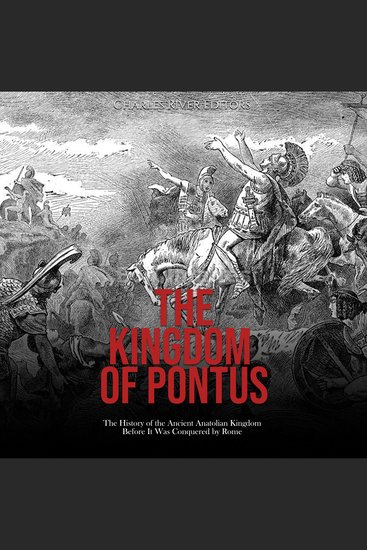
    Rome faced many formidable enemies over the course of nearly 1,000 years, but perhaps none were as enigmatic and forgotten as King Mithridates VI of Pontus. Despite numerous ancient sources detailing the life of the foreign monarch and his wars with Rome, and despite being an interesting character who endured years as a fugitive in his youth, enjoyed a fascination with poisons, and held mercy and pragmatic ruthlessness in a delicate balance, very few scholarly books and works have been produced about the king. It may be that his largely unsuccessful military campaigns have contributed to his disappearance from active historical examination, but despite his poor record in engagements against the Romans, the Kingdom of Pontus dominated much of Asia Minor in the 1st century BCE, and the Romans themselves considered the kingdom one of its most dangerous enemies. According to Plutarch, when Mithridates died, the Roman soldiers felt that “in the person of Mithridates ten thousand enemies had died.” By then, it had required three of Rome’s most famous generals - Sulla, Lucullus, and Pompey - to finally subdue his kingdom.  
    	The early Pontic kings found themselves in the midst of the Diadochi Wars, quickly learning that the survival of their kingdom depended upon which Macedonian general to support and which ones to oppose. For the most part, the kings chose wisely and were able to not only stay independent but also to expand their kingdom’s borders. Somewhat fittingly, as the Pontic kings battled their neighbors for control of the Black Sea basin, they promoted a culture that grafted Greek, Persian, and local Anatolian traditions into a unique identity.  
    The Kingdom of Pontus’ power and prestige grew until it caught the attention of the Romans, whose upward trajectory coincided with Pontus’ in many ways. 
    Voir livre
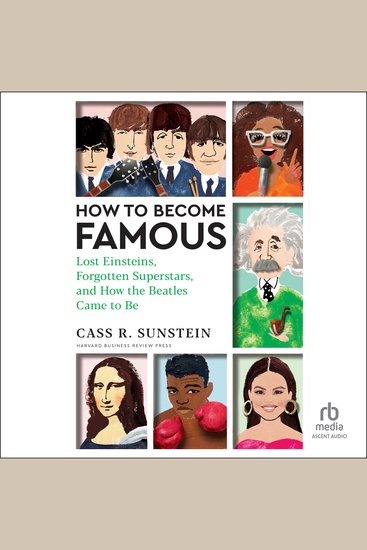
  • How to Become Famous - Lost Einsteins Forgotten Superstars and How the Beatles Came to Be - cover

    How to Become Famous - Lost...

    Cass R. Sunstein

    • 0
    • 0
    • 0
    It's hard to imagine our world without its stars and celebrity geniuses—they become a part of our culture and history, seeming permanent and preordained. But as Cass Sunstein shows in this startling book, that is far from the case. Focusing on both famous and forgotten (or simply overlooked) artists and luminaries in music, literature, business, science, politics, and other fields, he explores why some individuals become famous and others don't and offers a new understanding of the role of greatness, luck, and contingency in the achievement of fame. 


    First, Sunstein examines recent research—on informational cascades, power laws, network effects, and group polarization—to probe the question of how people become famous. He explores what ends up in the history books, in the great religious texts, and in the literary canon—and how that changes radically over time. He delves into the rich and entertaining stories of a diverse cast of famous characters, from John Keats, William Blake, and Jane Austen to Bob Dylan, Ayn Rand, and Stan Lee—as well as John, Paul, George, and Ringo. 


    How to Become Famous takes you on a fun, captivating, and at times profound journey that will forever change your perspective on the latest celebrity's "fifteen minutes," the nature of memory, success and failure in business, and our enduring fascination with fame.
    Voir livre