Rejoignez-nous pour un voyage dans le monde des livres!
Ajouter ce livre à l'électronique
Grey
Ecrivez un nouveau commentaire Default profile 50px
Grey
Abonnez-vous pour lire le livre complet ou lisez les premières pages gratuitement!
All characters reduced
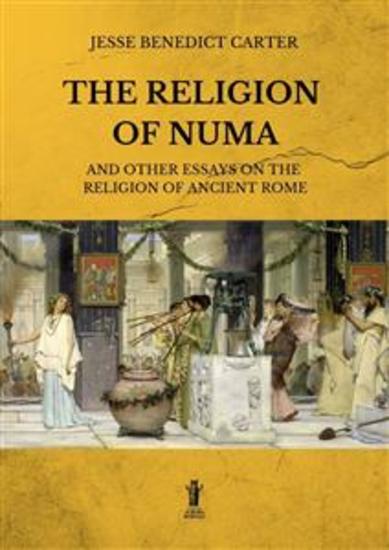
The Religion of Numa and other essays on the Religion of Ancient Rome - cover

The Religion of Numa and other essays on the Religion of Ancient Rome

Jesse Benedict Carter

Maison d'édition: Edizioni Aurora Boreale

  • 0
  • 0
  • 0

Synopsis

Rome forms no exception to the general rule that nations, like individuals, grow by contact with the outside world. In the middle of the five centuries of her republic came the Punic wars and the intimate association with Greece which made the last half of her history as a republic so different from the first half; and in the kingdom, which preceded the republic, there was a similar coming of foreign influence, which made the later kingdom with its semi-historical names of the Tarquins and Servius Tullius so different from the earlier kingdom with its altogether legendary Romulus, Numa, Tullus Hostilius and Ancus Marcius. We have thus four distinct phases in the history of Roman society, and a corresponding phase of religion in each period; and if we add to this that new social structure which came into being by the reforms of Augustus at the beginning of the empire, together with the religious changes which accompanied it, we shall have the five periods which these five essays try to describe: the period before the Tarquins, that is the “Religion of Numa”; the later kingdom, that is the “Reorganisation of Servius”; the first three centuries of the republic, that is the “Coming of the Sibyl”; the closing centuries of the republic, that is the “Decline of Faith”; and finally the early empire and the “Augustan Renaissance”.
Disponible depuis: 09/05/2022.

D'autres livres qui pourraient vous intéresser

  • Insights And Experiences Wendy Joy’s Stepping Stones For Growth - cover

    Insights And Experiences Wendy...

    Wendy Joy Bakelaar

    • 0
    • 0
    • 0
    "Wendy Joy’s" is a deeply personal and inspiring memoir that follows Wendy Joy Bakelaar journey of self-discovery, healing, and spiritual awakening. Through her candid and heartfelt storytelling, Wendy takes readers on a captivating exploration of life's challenges, triumphs, and the thoughtful lessons learned along the way. From facing adversity in her childhood to navigating the complexities of her adult life, Wendy reveals how she overcame obstacles and embraced her true self. She explores the power of spirituality, intuition, and the interconnectedness of all beings, offering a message of hope and resilience. The author’s journey is a testament to the transformative power of forgiveness, self-love, and the firm belief in a higher purpose. She encourages readers to embrace their own unique paths, find strength in their inner wisdom, and trust in the divine guidance that leads us all toward our highest potential. "Wendy Joy" is a compelling read for anyone seeking inspiration, guidance, and a deeper understanding of their spiritual journey. It's a reminder that even in the midst of life's challenges, we have the power to heal, grow, and create a life filled with purpose and meaning. This book serves as a guiding light, offering support and direction to those on their own spiritual paths.
    Voir livre
  • Communist Manifesto The - Karl Marx - cover

    Communist Manifesto The - Karl Marx

    Karl Marx

    • 0
    • 0
    • 0
    The Communist Manifesto (German: Kommunistisches Manifest), originally the Manifesto of the Communist Party (German: Manifest der Kommunistischen Partei), is a political pamphlet written by German philosophers Karl Marx and Friedrich Engels. Commissioned by the Communist League and originally published in London in 1848, the Manifesto remains one of the world's most influential political documents. It presents an analytical approach to class struggle and criticizes capitalism and the capitalist mode of production, without attempting to predict communism's potential future forms. 
    The Communist Manifesto summarises Marx and Engels' theories concerning the nature of society and politics, namely that, in their own words, "[t]he history of all hitherto existing society is the history of class struggles". It also briefly features their ideas for how the capitalist society of the time would eventually be replaced by socialism. In the last paragraph of the Manifesto, the authors call for a "forcible overthrow of all existing social conditions", which served as a call for communist revolutions around the world. 
    In 2013, The Communist Manifesto was registered to UNESCO's Memory of the World Programme along with Marx's Capital.
    Voir livre
  • German Invasions of France during the World Wars The: The History of Germany’s Campaigns in World War I and World War II - cover

    German Invasions of France...

    Editors Charles River

    • 0
    • 0
    • 0
    If trench warfare was an inevitability during the war, it is only because the events leading up to the First Battle of the Marne were quite different. The armies at the beginning of the war moved quickly through the land, but the First Battle of the Marne devolved into a bloody pitched battle that led to the construction of trenches after the Germans retreated, blocked in their pursuit of Paris. When the aftermath disintegrated into a war between trenches, some Germans thought they had the upper hand since they were occupying French territory, but with fewer soldiers than the combined Allied nations and fewer resources and supplies, it was possibly only a matter of time before they were ultimately defeated. The commander of the German armies, General Helmuth von Moltke, allegedly said to Kaiser Wilhelm II immediately after the First Battle of the Marne, "Your Majesty, we have lost the war." 
    One of the most famous people in the world came to tour the city of Paris for the first time on June 28, 1940. Over the next three hours, he rode through the city’s streets, stopping to tour L’Opéra Paris. He rode down the Champs-Élysées toward the Trocadero and the Eiffel Tower, where he had his picture taken. After passing through the Arc de Triomphe, he toured the Pantheon and old medieval churches, though he did not manage to see the Louvre or the Palace of Justice. Heading back to the airport, he told his staff, “It was the dream of my life to be permitted to see Paris. I cannot say how happy I am to have that dream fulfilled today.” Four years after his tour, Adolf Hitler would order the city’s garrison commander, General Dietrich von Choltitz, to destroy Paris, warning his subordinate that the city "must not fall into the enemy's hand except lying in complete debris." 
    Voir livre
  • Max Schmeling: A short biography - 5 Minutes: Short on time – long on info! - cover

    Max Schmeling: A short biography...

    5 Minutes, 5 Minute Biographies,...

    • 0
    • 0
    • 0
    Max Schmeling, first German heavyweight world champion: Life and work in a short biography! Everything you need to know, brief and concise. Infotainment, education and entertainment at its best!
    Voir livre
  • The Secrets of the Federal Reserve - cover

    The Secrets of the Federal Reserve

    Eustace Mullins

    • 0
    • 0
    • 0
    The Secrets of the Federal Reserve* by Eustace Mullins investigates the origins, structure, and influence of the U.S. Federal Reserve System, arguing that it was created not solely to stabilize the economy but to serve the interests of an elite banking group. Mullins traces the Reserve’s formation back to a secret meeting on Jekyll Island and explores how this institution has impacted U.S. and global economics. The book examines key figures, banks, and historical contexts behind the Reserve, presenting a controversial view that challenges mainstream narratives about its purpose and control. This work is often cited by those critical of centralized banking power and has sparked much debate in economic and historical circles.
    Voir livre
  • The First Lessons In Principles of Cooking - cover

    The First Lessons In Principles...

    Lady Barker

    • 0
    • 0
    • 0
    Discover the timeless wisdom of Victorian domestic science in First Lessons in the Principles of Cooking by Lady Barker—a thoughtful and empowering guide for anyone interested in the foundations of cookery. Written in the late 19th century, this classic manual goes far beyond recipes, exploring the “why” behind food preparation with a practical, scientific lens. 
    Lady Barker advocates for economy, nutrition, and efficiency in the kitchen, teaching readers how to minimize waste and improve health through knowledge of food composition and cooking methods. From milk and bread to beef, vegetables, and boiling techniques, each chapter blends chemistry with domestic pragmatism. 
    Perfect for culinary historians, home cooks, and those curious about the roots of nutritional education, this audiobook offers both inspiration and insight into the intelligent art of cookery—revealing how understanding the science of food can uplift households of any size or income.
    Voir livre