Begleiten Sie uns auf eine literarische Weltreise!
Buch zum Bücherregal hinzufügen
Grey
Einen neuen Kommentar schreiben Default profile 50px
Grey
Jetzt das ganze Buch im Abo oder die ersten Seiten gratis lesen!
All characters reduced
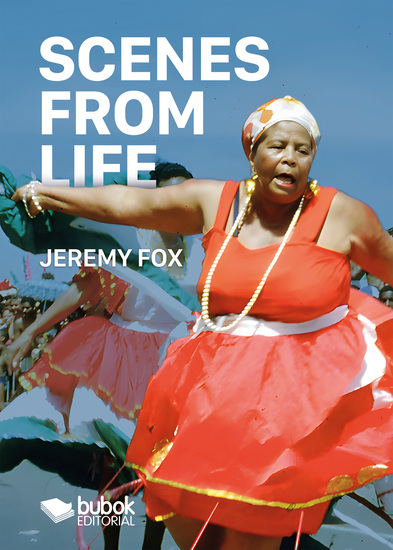
Scenes from Life - cover

Scenes from Life

Jeremy Fox

Verlag: Editorial Bubok Publishing

  • 0
  • 0
  • 0

Beschreibung

Scenes from Life is a collection of stories and vignette set in a variety of countries.  They describe encounters with people and with the often strange worlds they —and we— inhabit.


Some of those brushes are the stuff of adventure.Two involve the author's close encounters with death. There are tales of human kindness, but also of cruelty. One is a narrative told to the author by a survivor of the Holocaust. All accounts in the collection are true in that they are taken from life and are a record of memory and occasional field notes.

As many truths exist as there are people to express them. They are ways of being in and seeing the world. Had someone else encountered the experiences and the characters that appear in this book, they would have written them differently, or perhaps not written them at all and either consigned them to capricious anecdote or to oblivion. So the sense in which these tales are true is necessarily the author's. They are offered to you, the reader in the hope that you will find in them some meaning of your own.

As Thoreau observed: "Nothing was ever so unfamiliar and startling to a man as his own thoughts."  We are alien first to ourselves.
Verfügbar seit: 20.12.2024.
Drucklänge: 186 Seiten.
Weitere Bücher, die Sie mögen werden

  • Fanny and Annie - cover

    Fanny and Annie

    D H Lawrence

    • 0
    • 0
    • 0
    The theme of the woman for whom the man is not 'good enough' is worked out fully in Lawrence's novel 'Sons and Lovers'. The story is beautifully observed as are the relationships in working families of the time. The suspense of 'will she, won't she marry him' is kept on the boil until the last line of the story. 'Fanny and Annie' is a small masterpiece of a short story.
    Zum Buch
  • The Million Pound Note - This hilarious story set in Victorian London is about two rich brothers performing a rather cruel social experiment on someone for their own amusement a la the movie Trading Places but written a century earlier - cover

    The Million Pound Note - This...

    Mark Twain

    • 0
    • 0
    • 0
    Samuel Langhorne Clemens was born in Florida, Missouri on the 30th November 1835 and is far better known by his pen name of Mark Twain.  An American writer and humorist of the first order he is perhaps best known for his novels ‘The Adventures of Tom Sawyer’ and its sequel ‘The Adventures of Huckleberry Finn’ which are often described with that mythic line The Great American Novel. 
     
    Twain grew up in Hannibal, Missouri which would later provide the backdrop to these great novels.  Apprenticed to a printer he also became a typesetter and then a master riverboat pilot on the Mississippi.  Later, heading west with his brother Orion to make his fortune, he failed at gold mining and instead turned to journalism and thence his true calling as a writer of humorous stories where his wit and humor sparkled from every paragraph, his craft evident with every page and punctured target. 
     
    A staunch supporter of copyright protections this helped him keep much of the wealth his writing created, though much money was also lost on investments that he pursued in his love for science and technology as well as investing in his own inventions. 
      
    Twain was born during a visit by Halley’s comet, and he predicted that he would go out with it as well.  He died the day after its subsequent return on 21st April 1910, at his house, Stormfield, located in Redding, Connecticut.   
     
    In this story Twain proposed that coming into possession of a million pound note should solve all of life’s problems, both big and small.  And he’s right.  For a time it does.  But…. Yes, with Twain, there is always a but.
    Zum Buch
  • A Somewhat Improbable Story - From their pens to your ears genius in every story - cover

    A Somewhat Improbable Story -...

    G K Chesterton

    • 0
    • 0
    • 0
    G K Chesterton (29 May 1874 – 14 June 1936) was a poet, novelist, playwright, literary commentator, editor, biographer, journalist, orator and theologian.  He was often dubbed as the “prince of paradox” for his light whimsical style that often addressed serious issues such as politics and religion.  The latter was as a member and defender of the Christian faith and the former was shaped by a distrust of concentrated wealth and power.  He advocated Distributionism and said that every man should be allowed to own "three acres and a cow."  These political views have spread round the world, crediting Chesterton as the father of the “small is beautiful” movement.  It is also said to have influenced Gandhi in seeking a genuine nationalism for India rather than imitating the British state.   
    Chesterton was remarkably prolific but perhaps his most famous creation is Father Brown.  Within this character Chesterton’s clever writing and profound ideas reveal truths, often with humour as the detective priest pursues the answers to his cases.
    Zum Buch
  • Diary of a Lunatic - From their pens to your ears genius in every story - cover

    Diary of a Lunatic - From their...

    Leo Tolstoy

    • 0
    • 0
    • 0
    Leo Tolstoy was born in 1828 in the Russian province of Tula to a wealthy noble family. As a child, he had private tutors but he showed little interest in any formal education. When he went to the University of Kazan in 1843 to study oriental languages and law, he left without completing his courses.  Life now was relaxed and idle but with some writing also taking place.  Gambling debts forced an abrupt change of path and he joined the army to fight in the Crimean War.  He was commended for his bravery and promoted but was appalled at the brutality and loss of life.  He recorded these and other earlier experiences in his diaries which formed the basis of several of his works. 
    In 1852 ‘Childhood’ was published to immediate success and was followed by ‘Boyhood’ and ‘Youth’. 
    His experience in the army and the horrors he witnessed resulted in ‘The Cossacks’ in 1862 and the trilogy ‘Sevastopol Tales’. After the war he travelled around Europe, visiting London and Paris and meeting such luminaries as Victor Hugo and Charles Darwin.  
    It was now that Tolstoy began his masterpiece, ‘War and Peace’. Published in 1869 it was an epic work that changed literature. He quickly followed this with ‘Anna Karenina’.  
    These successes made Tolstoy rich and helped him accomplish many of his dreams but also brought problems as he grappled with his faith and the lot of the oppressed poor. These revolutionary views became so popular that the authorities now kept him under surveillance.  
    He led a life of asceticism and vegetarianism and put his socialist ideals into practice by establishing numerous schools for the poor and food programmes. He also believed in giving away his wealth, which caused much discord with his wife.  
    His writing continued to bring forth classics such as ‘The Death of Ivan Ilyich’ and many brilliant and incisive short stories such as ‘How Much Land Does A Man Need’.  
    In 1901 Tolstoy was excommunicated from the Church and controversially deselected for the Nobel Prize for Literature. 
    Whilst undertaking a pilgrimage by train in October 1910 with his daughter Aleksandra he caught pneumonia in the nearby town of Astapovo.  Leo Tolstoy died on November 9th, 1910, he was 82.
    Zum Buch
  • Two Tales From O Henry - cover

    Two Tales From O Henry

    O. Henry

    • 0
    • 0
    • 0
    William Sydney Porter (September 11, 1862 - June 5, 1910), better known by his pen name O. Henry, was an American writer born in Greensboro, NC, known primarily for his short stories, though he also wrote poetry and non-fiction. O. Henry's stories are known for their naturalist observations, witty narration, and surprise endings. The following includes the short stories, "Hearts and Hands" and "A Comedy In Rubber."
    Zum Buch
  • Aristocratic Education - From their pens to your ears genius in every story - cover

    Aristocratic Education - From...

    Stephen Leacock

    • 0
    • 0
    • 0
    Stephen P H Butler Leacock FRSC was born on the 30th December 1869 in Swanmore, near Southampton, England, the third of eleven children. 
    The family emigrated to Canada in 1876 to live on a 100-acre farm in Sutton, Ontario.  There Leacock was home-schooled and later enrolled into the elite private school Upper Canada College in Toronto.  Academically he was very strong and enrolled at the University of Toronto to study languages and literature.  He left there after his alcoholic father abandoned the family and finances were too stretched to continue his attendance.  He now enrolled in a three-month course at Strathroy Collegiate Institute to become a qualified high school teacher and with it a regular income. 
    Leacock published humorous articles in many Canadian and US magazines but his real passion was economics and political theory.  In 1899 he enrolled for postgraduate studies at the University of Chicago and earned his PhD in 1903. 
    His marriage to Beatrix Hamilton produced a single child 15 years later.  Over time father and son developed a love-hate relationship, partially caused by his son’s diminutive stature of only four feet.  
    He accepted a post at McGill University and kept it until he retired in 1936.  His work ‘Elements of Political Science’, was adopted as a standard textbook for two decades and was also his most profitable.  He now also began public speaking and lecturing.  
    In 1910, he privately printed some articles as ‘Literary Lapses’.  It was then released by a recognised publisher, and he became a commercially successful writer.  His collections of light-hearted whimsy, parody, nonsense, and satire were now frequently published along with biographies and several award-winning volumes on Canada. 
    Politically Leacock was a difficult creature.  He opposed women’s right to vote, was a champion of Empire but advocated social welfare legislation and wealth redistribution, but he often caused friction with his racist views. 
    Leacock has been forgotten as an economist, but it’s often said that in 1911 more people had heard of him than had heard of Canada.  For the decade after 1915 Leacock was the most popular humorist in the English-speaking world. 
    Stephen Leacock died on 28th March 1944 of throat cancer in Toronto, Canada.  He was 74.
    Zum Buch