Begleiten Sie uns auf eine literarische Weltreise!
Buch zum Bücherregal hinzufügen
Grey
Einen neuen Kommentar schreiben Default profile 50px
Grey
Jetzt das ganze Buch im Abo oder die ersten Seiten gratis lesen!
All characters reduced
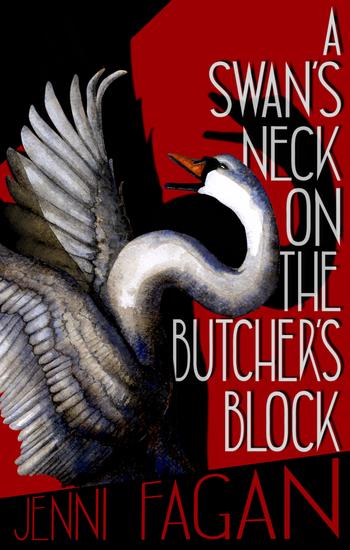
A Swan's Neck on the Butcher's Block - cover

A Swan's Neck on the Butcher's Block

Jenni Fagan

Verlag: Polygon

  • 0
  • 0
  • 0

Beschreibung

The new collection from one of Scotland's most original voices.
Jenni Fagan converses with the poets of the past; through them, she communes with demons and explores a world that is continually at odds with itself.
The poet voyages, as ever, on the outskirts, calling out the nuances of class, of care, of misogyny and brutality. Yet even here, too, in her response, there is always love, humour, hope and defiance.
From one of Scotland's most original voices, this collection places the poet's life under the microscope. Each line brims with verve and wit and absolutely soars. It is, at once, heartbreaking and haunting, visceral and challenging and full of raw passion. These poems sing like only someone who has traversed the most arduous roads, pen in hand, can.
Verfügbar seit: 05.09.2024.
Drucklänge: 96 Seiten.

Weitere Bücher, die Sie mögen werden

  • One Year - cover

    One Year

    Conor Matthews

    • 0
    • 0
    • 0
    One Year is a collection of poems written by Conor Matthews over the course of the last two years. With a wide range of themes, from optimism to grief, from love to death, from fear to slice-of-life, and more in between, One Year is as diverse as it is human, warts and all. Whether you a year to read the collection, or enjoy it in a single session, you're sure to feel something for at least one if not more of the entries.
    Zum Buch
  • The Missing Months - cover

    The Missing Months

    Lachlan Mackinnon

    • 0
    • 0
    • 0
    Many of the poems in The Missing Months occupy the strange hiatus afforded by lockdown. They look forward as well as back, toying with possible futures, enthused by utopian dreams or fearing cultural and bodily entropy. They celebrate and mourn the lives of friends and relatives, captivated by carefully tended images from the past. Lockdown's 'missing months' in the world of a four-year-old granddaughter are laid down and remembered for her. Familiar objects - a park bench, stones, grass, stars, windows - are reanimated. This poetry of imaginative journeying 'stretches/Banks on a slope of air and turns' like the heron it watches. Between the crackle of radio signals and rain, the Russian poet Osip Mandelstam and the American singer Miranda Lambert, here is a poet in search of points of reference, the 'bright fresh leaves' of sunlight among the ruins.
    Zum Buch
  • The Two Voices - An autobiographical poem written by Tennyson after his friend committed suicide - cover

    The Two Voices - An...

    Alfred Lord Tennyson

    • 0
    • 0
    • 0
    Alfred Tennyson was born on August 6th, 1809, in Somersby, Lincolnshire, the fourth of twelve children. 
    Most of Tennyson's early education was under the direction of his father, although he did spend four unhappy years at a nearby grammar school.  He also showed an early and burgeoning talent for writing; by the age of twelve he had written a 6,000-line epic poem.  
    In the 1820s, however, Tennyson’s father began to suffer frequent mental breakdowns exacerbated by his alcoholism. One brother had frequent violent quarrels with his father, a second would be confined to an insane asylum, and another was later an opium addict. 
    Tennyson left home in 1827 to join his brothers at Trinity College, Cambridge and with it escape from Somersby. At Trinity he was those who knew little of the problems that clouded his life. Although shy he was keen to make new friends; he was handsome, intelligent, humorous, and a gifted impersonator. 
    That same year, he and his brother Charles published Poems by Two Brothers. It attracted the attention of the “Apostles," a select undergraduate literary club led by Arthur Hallam. They provided friendship and confidence. Hallam and Tennyson became the best of friends. 
    The pair, in the summer of 1830, were involved in a ridiculous jaunt to take money and secret messages to revolutionaries plotting to overthrow the Spanish king. Tennyson's political enthusiasm was marginal compared to Hallam's, but he was glad to make his first trip abroad.  
    The landscape and atmosphere of the Pyrenees generated such wonderful poems as "Oenone," "The Lotus-Eaters;" inspired by a waterfall in the mountains; and "The Eagle;" invoked from the sight of the great hunters circling above them. The small village of Cauteretz and the surrounding valley became a location Tennyson would return to many times over the next sixty years. 
    In 1830, he published Poems, ‘Chiefly Lyrical’ and in 1832 a volume entitled ‘Poems’.  Tennyson, stung by the harshness of several reviews, would not publish again for nine years.  
    In the autumn of 1833, in what was meant as a gesture of gratitude and reconciliation to his father, Hallam accompanied him to the Continent. In Vienna Hallam died suddenly of apoplexy as a result of a congenital malformation of the brain.  
    Hallam’s death, together with that of his father and a myriad of anxieties, stem-ming mainly from the belief that his family were grimly attached to poverty, and fears that he might become a victim of epilepsy, madness, alcohol, and drugs, as others in his family had, or that he might die like Hallam, conspired to upset the delicate balance of Tennyson's emotions.  
    In 1836, he became engaged to Emily Sellwood. From their correspondence it is clear that she was very much in love with him. He seems to excessively worry about not having the financial means to marry.  He was also falling into trances, which he thought were connected with the epilepsy from which other family members suffered. To marry, he thought, would mean passing on the disease to any children he might father. He broke off the engagement. 
    During these years he used the dark feelings and events to write many of his finest works; "Ulysses," "Morte d'Arthur," "Tithonus," "Tiresias," and "Break, break, break."  
    In 1842 Tennyson’s Poems (in two volumes) was a tremendous critical and popular success.  
    In 1845 he was granted a government pension of £200 a year in recognition of his poetic achievements and his financial need.  Despite this financial support his doubts persisted.  
    Life for Tennyson was becoming increasingly productive and more lucrative.  By 1849 ‘The Princess’ had been published. He was now offered a large advance if he would assemble his elegies on Hallam into one complete poem.  
    Tennyson had now also resumed his relationship with Emily Sellwood and by the following year was talking again of marrying her. 
    In the Spring of 1850 the Poet Laureate William Wordsworth died and a new Laureate was
    Zum Buch
  • Poets of the Early 20th Century The - Volume 2 - Find beauty and hope in a period ravaged worldwide by war - cover

    Poets of the Early 20th Century...

    Edna St. Vincent Millay, TS...

    • 0
    • 0
    • 0
    In England the Victorian Age was about to become the past and a new age of worldwide wars of horror and slaughter would envelop and decimate generations, forever staining mankind.   
     
    The Century would see the World discover strengths. The Democracies would stand firm against Fascism and later Communism yet still keep its own elite and privileged in power and the rest of us underfoot. 
     
    The World was more connected than ever before.  Culture accelerated its kaleidoscopic and interwoven journey. Transport delivered people by car and train and then aeroplane to far flung corners of the globe.  Empires were at their zenith and ready to fragment with new nations, many troubled, rising from their decay. 
     
    The natural world continued to be plundered and pillaged for its resources by industries who pledged ‘more’ and ‘better’ and would clothe and feed a growing world yet sow the seeds now ready to devastate us in our current times. 
     
    The globe was as vibrant and violent as troubled and tarnished as it ever was.  But new ideas, new political systems, new times changed everything once again. 
     1 - The Poets of the Early Twentieth Century  - Volume 2 - An Introduction 
    2 - The Lions by Joseph Mary Plunkett 
    3 - 1841-1891 by Joseph Mary Plunkett 
    4 - If We Return by F W Harvey 
    5 - The Soldier Speaks by F W Harvey 
    6 - The Negro Soldiers by Roscoe C Jamison 
    7 - Into Battle by Julian Grenfell 
    8 - Prayer For Those on the Staff by Julian Grenfell 
    9 - Hymn by Fenton Johnson 
    10 - Tired by Fenton Johnson 
    11 - Sonnet I by Fernando Pessoa 
    12 - If, After I Die by Fernando Pessoa  
    13 - I Have A Rendezvous with Death by Alan Seeger 
    14 - All Thats Not Love by Alan Seeger 
    15 - Maktoob by Alan Seeger 
    16 - The Unseen Planets by Raymond Chandler 
    17 - The Poet's Knowledge by Raymond Chandler 
    18 - I Saw A Man This Morning by Patrick Shaw Stewart 
    19 - Whispers of Immortality by T S Eliot 
    20 - The Love Song of J Alfred Prufrock by T S Eliot 
    21 - Preludes by T S Eliot 
    22 - The Wounded Bird by Katherine Mansfield 
    23 - Stars by Katharine Mansfield 
    24 - A Fine Day by Katherine Mansfield 
    25 - I Taught Myself To Live Simply by Anna Akhmatova 
    26 - When I Write Poems by Anna Akhmatova 
    27 - Poetry by Claude McKay 
    28 - The White House by Claude McKay 
    29 - The Lynching by Claude McKay 
    30 - Strange Hells by Ivor Gurney 
    31 - Crucifix Corner by Ivor Gurney 
    32 - Serenade by Ivor Gurney 
    33 - Break of Day in the Trenches by Isaac Rosenberg 
    34 - Dead Man's Dump by Isaac Rosenberg 
    35 - August 1914 by Isaac Rosenberg 
    36 - Journey's End by Zora Neale Hurston 
    37 - The Dog Tupman by Stella Benson 
    38 - The Ballad of the Harp-Weaver by Edna St Vincent Millay 
    39 - My Heart Being Hungry by Edna St Vincent Millay 
    40 - What Lips My Lips Have Kissed, And Where, And Why by Edna St Vincent Millay 
    41 - Sonnet XVIII - I, Being Born a Woman by Edna St Vincent Millay 
    42 - Unity by Cesar Vallejo 
    43 - Love by Edith Sodergran 
    44 - On Foot I Had to Cross the Solar System by Edith Sodergran 
    45 - Insouciance by Richard Aldington 
    46 - Goodbye by Richard Aldington 
    47 - Grey Hairs by Marina Ivanova Tsvetaeva 
    48 - Lady with Camelias by Marina Ivanova Tsvetaeva 
    49 - To Mother by Marina Ivanova Tsvetaeva 
    50 - Back To Rest by Lietenant William Noel Hodgson MC 
    51 - Before Action  by Lieutenant William Noel Hodgson MC 
    52 - Past One O'Clock by Vladimir Mayakovsky 
    53 - So This Is How I Turned into a Dog by Vladamir Mayakovsky 
    54 - Verse for a Certain Dog by Dorothy Parker 
    55 - A Dream Lies Dead by Dorothy Parker<p
    Zum Buch
  • Primordial - Poems - cover

    Primordial - Poems

    Mai Der Vang

    • 0
    • 0
    • 0
    Mai Der Vang's poetry—lyrically insistent and visually compelling—constitutes a groundbreaking investigation into the collective trauma and resilience experienced by Hmong people and communities, the ongoing cultural and environmental repercussions of the war in Vietnam, the lives of refugees afterward, and the postmemory carried by their descendants. Primordial is a crucial turn to the ecological and generational impact of violence, a powerful and rousing meditation on climate, origin, and fate. 


    With profound and attentive care, Vang addresses the plight of the saola, an extremely rare and critically endangered animal native to the Annamite Mountains in Laos and Vietnam. Remarkably, the saola has only been known to the outside world since 1992, and sightings are so rare that it has now been more than a decade since the last known image of one was captured in a camera trap photo in 2013. 


    Primordial examines the saola's relationship to Hmong refugee identity and cosmology and a shared sense of exile, precarity, privacy, and survival. Can a war-torn landscape and memory provide sanctuary, and what are the consequences for our climate, our origins, our ability to belong to a homeland? Written during a difficult pregnancy and postpartum period, Vang's poems are urgent stays against extinction.
    Zum Buch
  • Easter - A Drama in Three Acts - cover

    Easter - A Drama in Three Acts

    August Strindberg

    • 0
    • 0
    • 0
    Set against the backdrop of a small college town, the Heyst's familial tensions converge during the holiday weekend; not only is the family's livelihood at stake, but the debt collector has just come into town, the youngest daughter has returned from an institution unprompted, and there's even a question of fidelity to boot. However, against the simplicity of communal gatherings and the warmth of familial bonds, the worries that once seemed insurmountable begin to fade. And through the lens of Easter's promise of renewal, Strindberg suggests that life's burdens may be lighter than they appear, offering a glimpse of hope amidst the chaos of everyday existence.
    Zum Buch