Begleiten Sie uns auf eine literarische Weltreise!
Buch zum Bücherregal hinzufügen
Grey
Einen neuen Kommentar schreiben Default profile 50px
Grey
Jetzt das ganze Buch im Abo oder die ersten Seiten gratis lesen!
All characters reduced
Paris Under Water - How the City of Light Survived the Great Flood of 1910 - cover

Paris Under Water - How the City of Light Survived the Great Flood of 1910

Jeffrey H. Jackson

Verlag: St. Martin's Press

  • 0
  • 0
  • 0

Beschreibung

In the winter of 1910, the river that brought life to Paris quickly became a force of destruction.  Torrential rainfall saturated the soil, and faulty engineering created a perfect storm of conditions that soon drowned Parisian streets, homes, businesses, and museums. The city seemed to have lost its battle with the elements. Given the Parisians' history of deep-seated social, religious, and political strife, it was questionable whether they could collaborate to confront the crisis. Yet while the sewers, Métro, and electricity failed around them, Parisians of all backgrounds rallied to save the city and one another. Improvising techniques to keep Paris functioning and braving the dangers of collapsing infrastructure and looters, leaders and residents alike answered the call to action. This newfound ability to work together proved a crucial rehearsal for an even graver crisis four years later, when France was plunged into World War I. On the occasion of the hundredth anniversary of the flood, Jeffrey H. Jackson captures here for the first time the drama and ultimate victory of man over nature.
Verfügbar seit: 04.09.2024.
Drucklänge: 273 Seiten.
Weitere Bücher, die Sie mögen werden

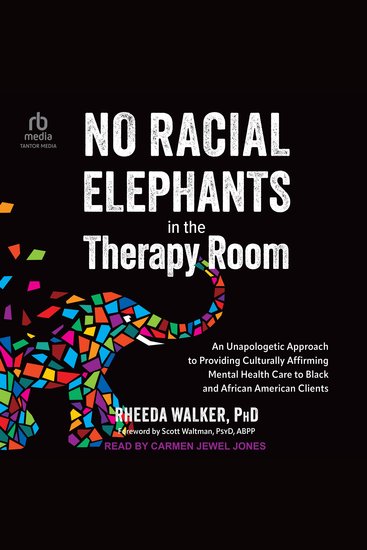
  • No Racial Elephants in the Therapy Room - An Unapologetic Approach to Providing Culturally Affirming Mental Health Care to Black and African American Clients - cover

    No Racial Elephants in the...

    PhD Rheeda Walker, PsyD Scott...

    • 0
    • 0
    • 0
    Do you avoid asking Black clients certain questions because you're embarrassed about something you think you "should" know about "Black culture" or racism? Are you hesitant to have conversations about race or racism with Black clients because you're afraid you'll look ignorant or unintentionally offend them? Do you believe that if a Black client doesn't mention race-related issues as a presenting concern, then it's not worth bringing up at all? 


    The reality is that although many Black clients will not zero in on the impact of racism in their lives, ignoring the issue of race in therapy leaves a very large elephant in the room. And you can't build rapport with elephants in the room. So what do you do? 


    In No Racial Elephants in the Therapy Room, Dr. Rheeda Walker provides the answer to this question. With her no-nonsense and unapologetic style, she provides useful language, tips, and guidance that will allow you to: navigate the first session with Black clients who are wary about working with you; feel more comfortable talking about race, racism, and what it means to be Black; avoid common pitfalls and not to-dos when working with Black clients; and much more. Mental health care isn't designed with Black people in mind. If you truly want to meet African American clients where they are, you will have to confront the elephant in the room.
    Zum Buch
  • Editorial Wild Oats - cover

    Editorial Wild Oats

    Mark Twain

    • 0
    • 0
    • 0
    Editorial Wild Oats is a classic collection of non-fiction, journalistic essays from Mark Twain. It contains:My First Literary VentureMy First Literary VentureJournalism in TennesseeNicodemus Dodge PrinterMr. Bloke's ItemHow I Edited an Agricultural PaperThe Killing of Julius Caesar 'Localized'
    Zum Buch
  • Who Killed Truth? - A History of Evidence - cover

    Who Killed Truth? - A History of...

    Jill Lepore

    • 0
    • 0
    • 0
    Many historians and cultural observers argue we live in a post-truth world—but if truth is dead, who killed it? And how did it die? Join celebrated historian Jill Lepore as she cracks the case by examining key moments in the history of truth, doubt, and evidence across the last century. 
     
    In Who Killed Truth? acclaimed Harvard historian and New Yorker staff writer Jill Lepore traces the origins of our current post-truth crisis. In a series of spellbinding stories, Lepore investigates murders, hoaxes, lies and delusions to reckon with the instability of truth and fiction in the twenty-first century. Listeners will follow Lepore through a fascinating, erudite, and antic journey through the thorny problem of how we know what we know, and why it seems sometimes as if we don't know anything at all anymore.  
      
    Revisiting key moments in U.S. history—from the Scopes Monkey Trial in 1925 to the 1977 National Women’s Convention to the first election predicted by computer, and more—Lepore uncovers the secrets of the past the way a detective might, hot on the trail of the killer of truth. 
      
    Please note: This collection includes content that has been previously released in The Last Archive podcast.
    Zum Buch
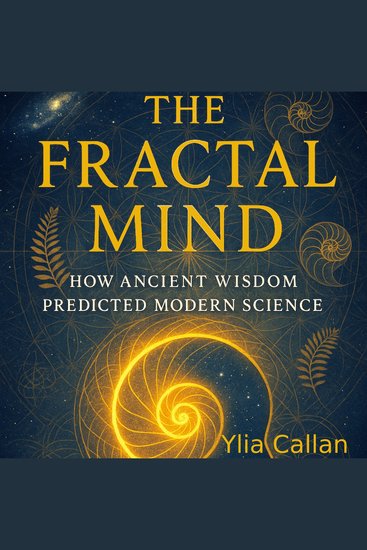
  • The Fractal Mind - How Ancient Wisdom Predicted Modern Science - cover

    The Fractal Mind - How Ancient...

    Ylia Callan

    • 0
    • 0
    • 0
    This audiobook is narrated by an AI Voice.   
    The Fractal Mind – How Ancient Wisdom Predicted Modern Science is a journey across time, thought, and imagination - exploring how humanity’s oldest myths, sacred symbols, and intuitive insights foreshadowed the very discoveries of modern science. 
    From the spiralling patterns of galaxies to the branching of rivers, trees, and neural networks, the universe is woven with fractal geometry - and the ancients seemed to know it. This audiobook uncovers how ancient cultures mirrored these cosmic patterns in story, art, ritual, and language, offering a wisdom that modern physics, biology, and information theory are only beginning to confirm. 
    Blending mythology, science, and philosophy, each chapter reveals hidden connections: how sacred geometry underlies life’s design, how cycles of time shape memory and prophecy, how dreams and symbols reflect the recursive patterns of reality, and how consciousness itself may be a living fractal of the cosmos. 
    This is not only a book about science and spirit - it is a mirror of the timeless human quest to understand our place in the infinite. The Fractal Mind invites listeners into a space where myth and mathematics meet, where story and science entwine, and where the deepest truths of nature resound with wonder. 
    If you have ever felt that the wisdom of the past holds keys to the mysteries of the future, this audiobook is for you.
    Zum Buch
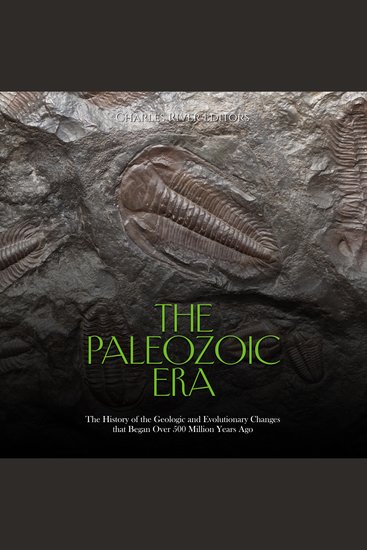
  • Paleozoic Era The: The History of the Geologic and Evolutionary Changes that Began Over 500 Million Years Ago - cover

    Paleozoic Era The: The History...

    Editors Charles River

    • 0
    • 0
    • 0
    The current view of science is that Earth is around 4.6 billion years old, and the first 4 billion years of its development are known as the Precambrian period. For the first billion years or so, there was no life in Earth. Then the first single-celled life-forms, early bacteria and algae, began to emerge. It’s unclear where they came from or even if they originated on this planet at all, but this gradual development continued until around four billion years ago when suddenly (in geological terms) more complex forms of life began to emerge.  
    	Scientists call this time of an explosion of new forms of life the Paleozoic Era, and it stretched from around 541 to 250 million years ago. In the oceans and then on land, new creatures and plants began to appear in bewildering variety, and by the end of this period, life on Earth had diversified into a myriad of complex forms that filled virtually every habitat and niche available in the seas and on the planet’s only continent, Pangea. 
    	The Precambrian Period is divided into three eons: the Hadean, the Archaean, and the Proterozoic. One layer of carbon in rocks that date to the Archaean Eon, found on islands west of Greenland, seems to have fossilized tracks that may have been left by some form of organic life, but scientists simply are not certain. The oldest confirmed remains of life date from the same eon and were found in rocks in Western Australia, which were found to contain fossilized bacteria estimated to be 3.46 billion years old. It seems likely that there were thousands, perhaps even millions of forms of life in these early periods, and most seem to have been microscopic in size and very simple in developmental terms.
    Zum Buch
  • Learn to write a book: Step by step from the book idea to publication - Becoming an author made easy - cover

    Learn to write a book: Step by...

    Miriam Hofmann

    • 0
    • 0
    • 0
    This book takes a step-by-step approach to the problems that stand between you and greater success in your studies. Starting with your basic perspective, motivation, and procrastination, you will learn to build a routine that is tailored to you and will protect you from sudden bulimic learning. Explanations of your internal and external structure will help you filter out and address your difficulties in organization and time management. Tips on how to increase your attention in classes or work more efficiently on your own at home will allow you to have a balanced daily life by not missing out on your hobbies. Strategies for simplifying learning and reproducing content and working efficiently through texts provide you with concrete, applicable solutions.
    Zum Buch