Begleiten Sie uns auf eine literarische Weltreise!
Buch zum Bücherregal hinzufügen
Grey
Einen neuen Kommentar schreiben Default profile 50px
Grey
Jetzt das ganze Buch im Abo oder die ersten Seiten gratis lesen!
All characters reduced
The Perfect Dress - A Polly Randall Cuckquean Story - cover

The Perfect Dress - A Polly Randall Cuckquean Story

Jeff Miller

Verlag: Jeff Miller

  • 0
  • 0
  • 0

Beschreibung

Join Polly Randall on her journey to finding the perfect wedding dress in "The Perfect Dress". As Polly struggles with the overwhelming array of choices and playful teasing from her friends, she turns to her confidant, Paulina, for guidance. But just as she thinks she's found the dress of her dreams, unexpected complications arise in her relationship with her fiancé, Dave, forcing her to question her feelings and desires. Will she be able to navigate the ups and downs of love and find the perfect dress for her big day? Find out in this relatable and heartwarming story of love, friendship and self-discovery
Verfügbar seit: 12.01.2023.

Weitere Bücher, die Sie mögen werden

  • Meg March And The Social Pressure - Little Women Podcast - cover

    Meg March And The Social...

    Niina Niskanen, Jen Brady

    • 0
    • 0
    • 0
    John is the underrated love interest in the Little Women canon, but he is actually really great. He is a gentleman and a wonderful father and he adores Meg. I am joined by Little Women expert, the author of March Sisters Sweet Romance Book series, Jen Brady. In Jen's book "Falling for the tutor" we get John's point of view on things. What does he think about the March family and how did he fall in love with Meg? Join us in this wonderful discussion. We shall be discussing about Meg's character. Her original inspiration is Louisa May Alcott's older sister, Anna Alcott and how Meg is the one sister, who feels most pressure from the outside world to fit in. I have received questions about Louisa May Alcott's/Jo's anger issues, and the possibility of LMA being bipolar so I will be answering those questions as well.
    Zum Buch
  • SŬbmarine-Ër - 30 Years of Hijinks & Keeping the Fleet Afloat - cover

    SŬbmarine-Ër - 30 Years of...

    Jerry Pait, Compiled by Robert...

    • 0
    • 0
    • 0
    An American submarine hero’s sometimes irreverent story of Cold War action on diesel and nuke submarines, how he tested their ballistic missiles, and salvaged the Space Shuttle Challenger. 
    “The book is like an old friend telling stories over dinner.” — Priscilla Bettis, Amazon Reader 
    Lieutenant Commander Jerry Pait's semi-autobiographical collection of sixty stories recounts his thirty years in and around the U.S. Navy's submarine fleet. Ranging from light-hearted to wrenching, all are poignant inside looks at naval operations rarely seen by outsiders. Topics include the real story behind the shuttle Challenger tragedy, risking his own life underwater, discovering a Soviet spy living across the street, surviving when a DELTA Rocket engine ignites, critical missions, and the everyday lives of men and women of the fleet. Dive into Sŭbmarine-ër for hijinks and breathtaking adventure with this poignant memoir by a true American hero.
    Zum Buch
  • Culture Shift: Secrets to Global Success - "Unlock global success secrets! Immerse yourself in captivating audio lessons tailored to elevate your cultural journey!" - cover

    Culture Shift: Secrets to Global...

    Jasper Alden

    • 0
    • 0
    • 0
    Culture Shift: Secrets to Global Success 
    ⭐⭐ Simplified Guide & Explanations Included ⭐⭐ 
    Are you aiming to advance in your career and solidify your understanding of diverse perspectives to foster global collaboration and success? 
    Searching for an all-encompassing guide that equips you with everything necessary for this journey? 
    Your quest ends here! 
    This guide acts as your ultimate companion for enhancing your comprehension, applying your skills, and participating in practical exercises. With this, you're prepared to thrive. 
    Revamped to reflect the latest trends in global collaboration. 
    Key features of this comprehensive guide: 
    - In-depth insights into the principles of global success 
    - Thorough explanation of diverse perspectives 
    - Effective strategies for preparation and execution  
    Our guide stands out with its exhaustive coverage, vital for your triumph. Concepts are not just briefly addressed; they are explored in detail. 
    Please note that this guide operates independently and is not associated with any official entities focused on global success. 
    Crafted with a straightforward structure and accessible language, our guide ensures seamless transitions between topics. Bid farewell to complex terminology and embrace clear, precise, and technically accurate content. 
    So, why delay? Click the BUY NOW button to secure your guide and embark on your journey to global success! 
    Start your journey today!
    Zum Buch
  • The Evolutions of Social Media - Trends and Impact - cover

    The Evolutions of Social Media -...

    Craig Dames

    • 0
    • 0
    • 0
    Social media has transformed the way people connect, communicate, and share information. What started as simple online forums and chat rooms has evolved into a powerful ecosystem of platforms that shape global conversations, influence public opinion, and drive business strategies. The rise of social media can be traced through key technological advancements and shifting user behaviors that have continuously redefined digital interactions. 
    In the early days of the internet, online communities were primarily built around forums, message boards, and early blogging platforms. Websites like Usenet and bulletin board systems (BBS) allowed users to engage in discussions based on shared interests, but they lacked the real-time engagement that modern social media provides. As internet speeds improved and web design became more sophisticated, platforms such as Friendster and MySpace emerged in the early 2000s, marking the beginning of social networking as we know it. These sites introduced profile customization, digital friendships, and a sense of online identity that encouraged users to invest more time in their virtual presence. 
    The launch of Facebook in 2004 marked a major shift in how people engaged with social media. Unlike its predecessors, Facebook prioritized real-world connections and streamlined communication. Instead of anonymous interactions, users connected with friends, family, and colleagues in a structured and highly interactive digital space. This approach quickly gained popularity, and other platforms such as Twitter, LinkedIn, and Instagram followed, each introducing unique features that catered to different aspects of online interaction. Twitter revolutionized real-time communication with its microblogging format, LinkedIn redefined professional networking, and Instagram capitalized on the growing demand for visual content.
    Zum Buch
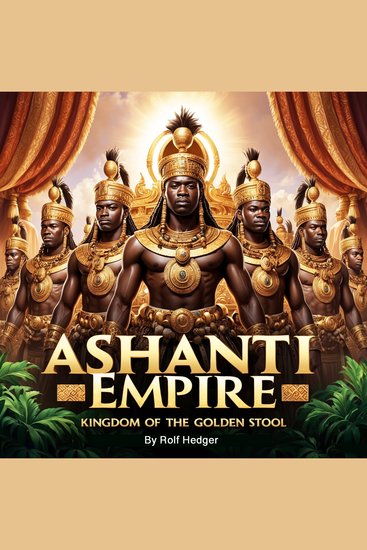
  • Ashanti Empire - Kingdom of the Golden Stool - cover

    Ashanti Empire - Kingdom of the...

    Rolf Hedger

    • 0
    • 0
    • 0
    The Ashanti Empire, flourishing from the 17th to the 19th century in what is now Ghana, stands as a testament to the resilience and sophistication of African states. This powerful kingdom was established through a unique blend of indigenous cultural traditions and political innovations, creating a centralized authority that not only governed a vast territory but also unified diverse ethnic groups under a single national identity. At the heart of this unity was the revered Golden Stool, a symbol of divine providence and the collective spirit of the Ashanti people. 
    Emerging from a landscape rich in natural resources and strategic trade routes, the Ashanti Empire developed robust economic foundations. Gold, kola nuts, and other valuable commodities flowed through well-established networks, facilitating both internal prosperity and external exchanges with neighboring regions and distant trading partners. This economic strength enabled the empire to invest in military expansion and administrative structures that further consolidated its power. 
    The political organization of the Ashanti Empire was characterized by a sophisticated hierarchy led by the Asantehene, whose authority was both political and spiritual. This dual role was crucial in maintaining social order and ensuring loyalty among the various clans and communities within the empire. The administration was further supported by councils of elders and local chiefs, who played significant roles in the governance process by mediating disputes and enforcing the laws that held the society together.
    Zum Buch
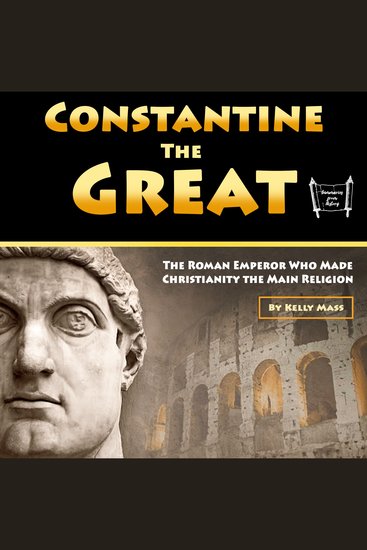
  • Constantine the Great - The Roman Emperor Who Made Christianity the Main Religion - cover

    Constantine the Great - The...

    Kelly Mass

    • 0
    • 0
    • 0
    Constantine I, often called Constantine the Great, was one of the most significant emperors of ancient Rome, reigning from 306 to 337 AD. Born in Naissus, in the province of Dacia Mediterranea (modern-day Niš, Serbia), he was the son of Flavius Constantius, a Roman army officer and a prominent figure in the Tetrarchy, and Helena, a woman of humble Greek origins. His father's position as one of the four emperors in the Tetrarchy was instrumental in shaping Constantine's early life and military career. Under emperors Diocletian and Galerius, Constantine demonstrated his military prowess, initially fighting against barbarian tribes and the Persians in the eastern provinces. In 305 AD, he was summoned to the West to aid his father in campaigns in Britain, where he earned further distinction. 
    Following the death of his father in 306 AD, Constantine’s soldiers declared him emperor at Eboracum (modern York, England). Over the next two decades, he would overcome rival emperors, such as Maxentius and Licinius, in a series of civil wars, eventually becoming the sole ruler of the Roman Empire by 324 AD. His reign marked a period of significant transformation, both militarily and administratively. 
    To strengthen the empire, Constantine initiated a series of reforms. He reorganized the imperial administration, separating civil and military powers to create a more efficient system of governance. Acknowledging the need for economic stability, he introduced the solidus, a new gold coin that helped curb inflation. This currency would become the standard for Byzantine and European economies for nearly a millennium. He also restructured the Roman army, creating specialized units that could respond swiftly to internal threats and barbarian invasions.
    Zum Buch