Unisciti a noi in un viaggio nel mondo dei libri!
Aggiungi questo libro allo scaffale
Grey
Scrivi un nuovo commento Default profile 50px
Grey
Iscriviti per leggere l'intero libro o leggi le prime pagine gratuitamente!
All characters reduced
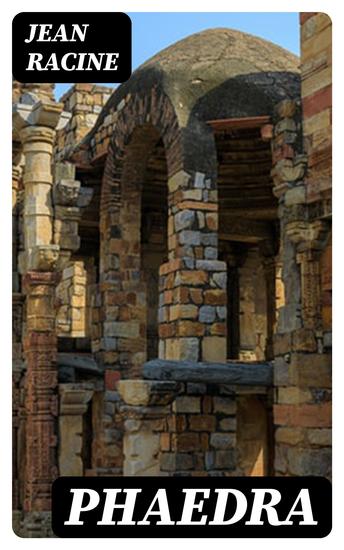
Phaedra - cover

Phaedra

Jean Racine

Traduttore Robert Bruce Boswell

Casa editrice: DigiCat

  • 0
  • 0
  • 0

Sinossi

Jean Racine's "Phaedra" is a poignant exploration of forbidden love, despair, and the complexities of human emotion, set against the backdrop of classical mythology. Written in 1677, this five-act tragedy showcases Racine's mastery of the French Alexandrine verse, blending psychological depth with lyrical beauty. Drawing inspiration from Euripides and Seneca, Racine infuses his characters with moral ambiguity and poignant internal struggle, particularly the titular character, Phaedra, whose obsessive love leads to devastating consequences. The play delves into themes of passion, fate, and the destructive nature of desire while remaining rooted in the neoclassical ideals of unity and decorum prevalent during the period. Racine, a key figure of the French Baroque theatre, was profoundly influenced by the cultural and philosophical currents of his time, particularly the interplay between reason and emotion. His own tumultuous life experiences, including a strained relationship with his mother and his call to serve in a royal court, may have inspired the intense emotional landscapes found in his characters. Through "Phaedra," Racine captures the fragility of human reason when confronted with overwhelming feelings, grounding the tragic elements in relatable psychological truths. Recommended for both literary scholars and general readers, "Phaedra" invites audiences to confront the darker aspects of the human psyche. Its rich, evocative language and profound emotional resonance continue to captivate and challenge readers, making it an essential read for anyone interested in the intricacies of tragedy and the enduring nature of human experience.
Disponibile da: 16/09/2022.
Lunghezza di stampa: 35 pagine.

Altri libri che potrebbero interessarti

  • The Daughter of Pontius Pilate - In Ancient Roman times a rich woman tries to cure her ails - cover

    The Daughter of Pontius Pilate -...

    Ivan Vazov

    • 0
    • 0
    • 0
    Ivan Minchov Vazov was born on the 9th July 1850 (although that date is disputed) in the town of Sopot, in Bulgaria, which was then part of the Ottoman Empire.  
     
    After primary education at the local school he was sent to Kalofer to continue his studies and work as an assistant teacher.  He later spent a short time in Plodiv where he began to write poetry. 
     
    Fascinated by literature he abandoned work as an apprentice to move to Brăila, in Romania, where he lived with exiled revolutionaries and befriended the poet Hristo Botev. 
     
    By 1874, he had joined the struggle for independence from the Ottomans and returned to Sopot. After the failure of the 1876 uprising he had to flee the country, going back to Galaţi, in Romania, where most of the surviving revolutionaries were exiled. There he was appointed a secretary of the committee. 
     
    In 1876 he published his first work, ‘Priaporetz and Gusla’, followed by ‘Bulgaria's Sorrows’ in 1877. 
     
    Bulgaria regained its independence in 1878 as a result of the Russo-Turkish War and Vazov wrote the famous ‘Epic of the Forgotten’.  He now became the editor of the political reviews Science and Dawn.  
     
    Exile was forced upon him once again due to the persecution of the Russophile political faction. Later he returned to Bulgaria with his mother’s help, and started teaching and then became a civil servant. 
     
    He moved to Sofia in 1889 where he started publishing the review Dennitsa. 
     
    His 1888 novel ‘Under the Yoke’, depicting Ottoman oppression, is his most famous work and has been translated into over 30 languages. 
     
    During his life he became a prominent and widely respected figure in the social and cultural life of Bulgaria.  
     
    In 1917, he was nominated for the Nobel Prize in literature. 
     
    Ivan Vazov died on September 22nd, 1921.  He was 71.
    Mostra libro
  • Very Old Folk The (Unabridged) - cover

    Very Old Folk The (Unabridged)

    H. P. Lovecraft

    • 0
    • 0
    • 0
    It is a recording of a dream, where the protagonist is a Roman military official in the Vascon country near Pompelo. The countryside is, every year, ravaged by terrible hill people who kidnap citizens and perform cruel rituals at a Sabbath. The narrator wishes to lead a military expedition to crush these hill folk, as a feeling of approaching evil has enveloped the countryside, due to a riot between the citizens and the hill people. These hill folk came to trade, yet some of these are killed and later, no disappearances occur before the time of the Sabbath. The incursion is guided by a local-born son of Roman parents. As the Romans approach the seat of the Sabbath rituals, something terrible attacks them and in an instant, horrible things come to pass: "He had killed himself when the horses screamed... He, who had been born and lived all his life in that region, and knew what men whispered about the hills. All the torches now began to dim, and the cries of frightened legionaries mingled with the unceasing screams of the tethered horses. The air grew perceptibly colder, more suddenly so than is usual at November's brink, and seemed stirred by terrible undulations which I could not help connecting with the beating of huge wings." The story ends with the narrator waking up and claiming that "it was the most vivid dream in years, drawing upon wells of the subconscious long untouched and forgotten".
    Mostra libro
  • A Funny Man's Dream - cover

    A Funny Man's Dream

    Fyodor Dostoyevsky

    • 0
    • 0
    • 0
    Dostoyevsky was never shy to play with the issues of human mind in his work. A funny man's dream is one of his shorter pieces that, nevertheless, lacks none of the profundity or the mind-bending power of his larger works.
    Mostra libro
  • The Railway Children - cover

    The Railway Children

    Edith Nesbit

    • 0
    • 0
    • 0
    The best known of all Edith Nesbit's books: The Railway Children is a timeless classic that see's three children transplanted into the country and all of their adventures, usually centered around the local Railway Station. When their father leaves under mysterious circumstances, Roberta, Phyllis, Peter and Mother move from their comfortable house to a shabby cottage near a railroad called Three Chimney's. Over time however, they fall in love with the local countryside, and especially the small Train Station and the friends they make there.  
    Narrated by Michael Ward.
    Mostra libro
  • The Wounded Soldier - cover

    The Wounded Soldier

    Mark Twain

    • 0
    • 0
    • 0
    In the course of a certain battle a soldier whose leg had been shot off appealed to another soldier who was hurrying by to carry him to the rear, informing him at the same time of the loss which he had sustained; whereupon the generous son of Mars, shouldering the unfortunate, proceeded to carry out his desire. The bullets and cannon-balls were flying in all directions, and presently one of the latter took the wounded man's head off without, however, his deliverer being aware of it. In no long time he was hailed by an officer, who said: “Where are you going with that carcass?”
    Mostra libro
  • Her Majesty's Servants - The First Jungle Book - cover

    Her Majesty's Servants - The...

    Rudyard Kipling

    • 0
    • 0
    • 0
    Her Majesty's Servants – one of the stories of The Jungle Book.  The Jungle Book (1894) is a collection of stories by English author Rudyard Kipling. The stories were first published in magazines in 1893–1894.
    On the night before a British military parade for the Amir of Afghanistan, the army's working animals—mule, camel, horse, bullock, elephant—discuss what they do in battle and how they feel about their work. It is explained to the Afghans that men and animals obey the orders carried down from the Queen. "'Anybody can be forgiven for being scared in the night,' said the Troop-Horse"…
    Mostra libro