Begleiten Sie uns auf eine literarische Weltreise!
Buch zum Bücherregal hinzufügen
Grey
Einen neuen Kommentar schreiben Default profile 50px
Grey
Jetzt das ganze Buch im Abo oder die ersten Seiten gratis lesen!
All characters reduced
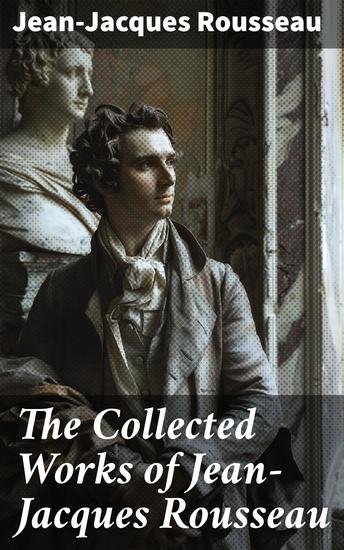
The Collected Works of Jean-Jacques Rousseau - Emile The Social Contract Discourse on the Origin of Inequality Among Men Confessions & more - cover

The Collected Works of Jean-Jacques Rousseau - Emile The Social Contract Discourse on the Origin of Inequality Among Men Confessions & more

Jean-Jacques Rousseau

Übersetzer Barbara Foxley, G. D. H. Cole, Samuel William Orson

Verlag: Good Press

  • 0
  • 0
  • 0

Beschreibung

The Collected Works of Jean-Jacques Rousseau is a comprehensive anthology encapsulating the revolutionary ideas of one of the Enlightenment's most influential thinkers. This volume features Rousseau's significant writings, including his treatises on natural human goodness, societal corruption, and the fundamental principles of political philosophy. Through a blend of autobiographical narrative, philosophical argumentation, and social critique, Rousseau employs a lyrical yet rigorous style that challenges conventional views of civilization. His reflections on education in "Emile, or On Education" and governance in "The Social Contract" illuminate the complex relationship between individuals and society, offering profound insights on freedom, equality, and the human condition. Jean-Jacques Rousseau (1712-1778) was born in Geneva, Switzerland, and experienced a tumultuous life that deeply influenced his writings. His formative years were marked by personal and societal struggles, including unstable family life and a rejection of established norms. As a key figure in the development of Romanticism and modern political theory, Rousseau's works reflect his belief in the innate goodness of humanity and the corrupting influence of society, driven by a desire for authenticity and truth amidst the constraints of his time. Rousseau's collected works are essential reading for anyone interested in philosophy, political science, or social theory. They invite readers to engage with questions of human nature and social justice, encouraging critical reflection on contemporary societal structures. This anthology not only showcases Rousseau's groundbreaking ideas but also serves as a crucial touchstone for understanding the trajectory of modern thought.
Verfügbar seit: 17.11.2023.
Drucklänge: 1769 Seiten.
Weitere Bücher, die Sie mögen werden

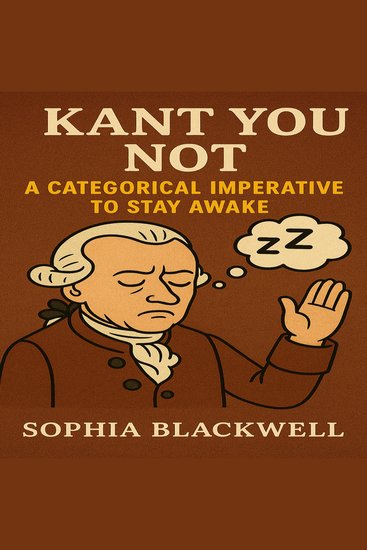
  • Kant You Not - A Categorical Imperative to Stay Awake - cover

    Kant You Not - A Categorical...

    Sophia Blackwell

    • 0
    • 0
    • 0
    Ever tried reading Kant and felt your brain melt into a puddle of transcendental confusion? You're not alone! "Kant You Not" is the hilarious antidote to philosophical pretension that explains Immanuel Kant's revolutionary ideas without inducing narcolepsy. 
    In this irreverent guide to history's most unnecessarily complicated philosopher, author Sophia Blackwell translates Kantian gibberish into actual human language while mercilessly mocking his impenetrable prose, bizarre personal habits, and occasionally absurd conclusions. 
    You'll discover: 
    Why a man who never left his hometown somehow revolutionized Western philosophy 
    How Kant needed 800 pages to say "we can't know things as they really are" 
    Why he thought lying to axe murderers was morally wrong (seriously) 
    How to fake Kantian knowledge at dinner parties without reading the originals 
    Why we're still talking about this guy 200+ years later (Stockholm syndrome) 
    Perfect for philosophy students suffering through assigned readings, professors who secretly hate teaching Kant, or anyone who enjoys watching brilliant ideas get roasted. "Kant You Not" proves that philosophy can be educational AND entertaining—a concept that would probably make Kant himself deeply uncomfortable. 
    Buy now and transform your philosophical confusion into laughter! No prior knowledge required—just a willingness to question everything, especially sentences that run for more than half a page. 
    Part of the bestselling "Cogito Ergo Nope!" series that makes philosophy accessible without being condescending and funny without sacrificing accuracy.
    Zum Buch
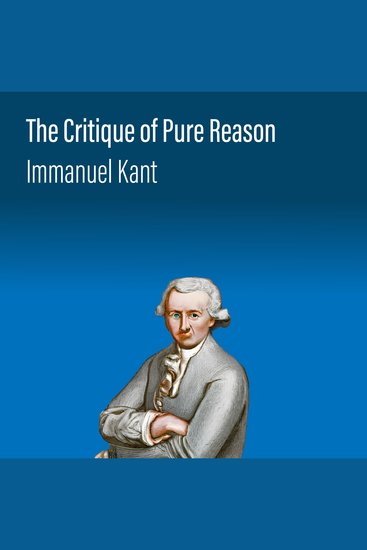
  • The Critique of Pure Reason - cover

    The Critique of Pure Reason

    Immanuel Kant

    • 0
    • 0
    • 0
    The Critique of Pure Reason is a philosophical work written by Immanuel Kant, published in 1781. The book is divided into two main parts: the first part deals with what Kant calls "Transcendental Aesthetic," which is concerned with the nature of space and time and the way in which our minds perceive them. The second part deals with what Kant calls "Transcendental Logic," which is concerned with the nature of our understanding and how we reason about the world. 
    In the Critique of Pure Reason, Kant aims to investigate the limits and conditions of knowledge, particularly in the context of metaphysics. He argues that all knowledge must be based on experience, but that our understanding is not limited to the information that we can gain through our senses. Rather, he posits that we have certain innate concepts and categories that allow us to make sense of the world and that shape our perception and understanding of reality. 
    Kant's approach to metaphysics is known as transcendental idealism, which holds that the world as it appears to us is not necessarily the same as it is in itself. He argues that we can only know the world as it appears to us, not as it is in itself, and that our knowledge is necessarily limited by the nature of our minds and our perception. 
    Overall, the Critique of Pure Reason is a complex and influential work that has had a profound impact on philosophy, particularly in the fields of epistemology and metaphysics. It is considered a foundational text of modern philosophy and is still widely studied and debated today.
    Zum Buch
  • Odin - An Illustrated Guide to the Allfather - cover

    Odin - An Illustrated Guide to...

    L. Dean Lee

    • 0
    • 0
    • 0
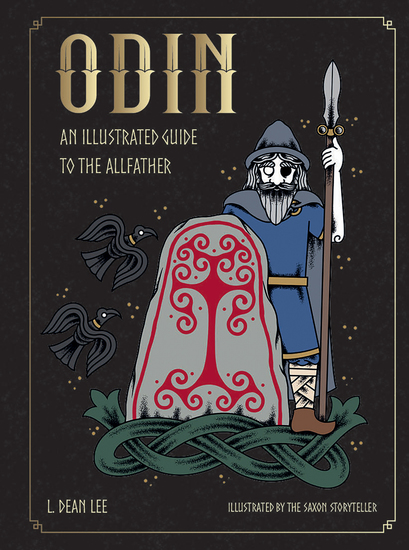
    Odin: wanderer, rune-carver, and chief of the Æsir. Explore the revered god of Norse mythology in this richly illustrated guide.   This authentic introduction to the Norse god Odin Borson, revered in Norse paganism as a warrior, a wanderer, and a leader, delves into his history, impact on the Norse pantheon, and enduring legacy. Portrayed as a poet, magician, mad man and, most distinctively, as an old man, Odin’s most famous role is as the keeper of Valhalla, a glittering afterlife reserved for chosen warriors who died bravely in the heat of battle.  Odin: An Illustrated Guide to the Allfather provides an overview of Odin’s origins, personality, significance, powers, and associations in this comprehensive, accessible, and beautifully designed hardcover. Included are the most important folklore and mythological tales involving Odin, such as the creation of the world, the Æsir-Vanir war, an eye for wisdom, Graybeard the ferryman, the death of Balder, and Ragnarök. This guide covers Odin not only in ancient times, but through the ages, sharing how he became an icon around the world.   With Odin: An Illustrated Guide to the Allfather you will delve into the depths of Norse mythology and understand the true nature of Odin. Expert practicing Norse heathen L. Dean Lee shares how to properly venerate and incorporate Loki into your spiritual practice.
    Zum Buch
  • Mastering Intrusive Thoughts - Practical CBT Techniques for Managing OCD - cover

    Mastering Intrusive Thoughts -...

    Artem Kudelia PhD

    • 0
    • 0
    • 0
    Endless thoughts buzzing? Compulsive checks? Constant nagging sense of unfinished tasks?Tormented by OCD Intrusive Thoughts? Tame Them with this accessible 15-Step CBT Guide! 
    Modern life triggers can fuel your intrusive fears, obsessions and anxieties, from hours of doomscrolling to FOMO-driven checking. These behaviors can lock you in loops of rumination, perfectionism, self-sabotage, shame, leading to compulsive rituals, guilt-driven procrastination, and isolation... 
    What can you do about this "situation"? How can you take back control of your life? 
    Dr. Artem Kudelia, a clinical psychologist with a PhD, offers a compassionate, grounded in real-therapy OCD workbook for adults to manage obsessive-compulsive spectrum disorders using science-backed Cognitive Behavioral Therapy (CBT) techniques in a step-by-step process. 
    You can manage OCD with CBT, and Dr. Art will help you: 
    ✔ Understand your OCD triggers—gain clarity on your patterns 
    ✔ Reframe hyper-responsibility—let go of guilt  
    ✔ Stop overthinking—learn to act despite your thoughts  
    ✔ Reduce compulsive checking—refrain and regain control  
    Imagine waking each day grounded, with tools to win over negative thoughts, finish what you start, and live free from compulsive cycles—no more isolation, mental clutter, or self-doubt. Whether you’re new to OCD self-help books or seeking a real science-backed best OCD tool, Mastering Intrusive Thoughts offers clarity, science with heart and humor, expertise, structure, and hope. 
    *Audiobook Companion PDF Included 
    Take Your First Step—Click "Add to Cart" Now 🟢
    Zum Buch
  • Cynicism - Ancient Wisdom for a Modern World - cover

    Cynicism - Ancient Wisdom for a...

    Hector Davidson

    • 0
    • 0
    • 0
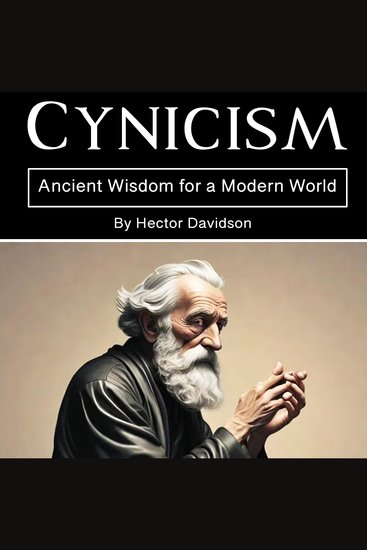
    Cynicism, as a philosophical movement, originated in ancient Greece during the 4th century BCE. It emerged in response to the growing complexity of Greek social and political life, which many perceived as rife with corruption and moral decay. The movement sought to critique and challenge these structures through a radical reevaluation of values. The term "Cynicism" itself derives from the Greek word kynikos, meaning "dog-like," a reflection of the movement's provocative and unconventional practices, often likened to the traits of a dog—independent, shameless, and straightforward. 
    The seeds of Cynicism were planted by Antisthenes, a devoted student of Socrates. Rejecting the materialism and social constructs of his time, Antisthenes advocated for a life rooted in virtue as the highest good. He proposed that virtue was attainable through rigorous self-discipline and liberation from societal expectations. In his view, wealth, power, and social status were distractions that led individuals away from true happiness. Antisthenes' emphasis on asceticism laid the groundwork for Cynicism's core principles. 
    Diogenes of Sinope, the most iconic figure in Cynicism, brought the philosophy to life through his dramatic and often confrontational actions. Renowned for his extreme asceticism, he discarded conventional comforts and famously lived in a large ceramic jar, owning only a few possessions. Diogenes used his lifestyle as a form of social critique, questioning the moral foundations of his contemporaries. His legendary act of walking through the city with a lit lantern during the day, claiming to search for an honest man, remains a potent symbol of his scorn for societal hypocrisy and moral pretense. Diogenes embodied the Cynic ideal: a life of radical honesty, self-sufficiency, and rejection of superficial values.
    Zum Buch
  • What is your own story - how you see yourself - cover

    What is your own story - how you...

    Parshwika Bhandari

    • 0
    • 0
    • 0
    What is your own story and how you see yourself is key to life, cause how you see yourself and what you think about yourself will determine everything in your life and will create your life, more in the book
    Zum Buch