Begleiten Sie uns auf eine literarische Weltreise!
Buch zum Bücherregal hinzufügen
Grey
Einen neuen Kommentar schreiben Default profile 50px
Grey
Jetzt das ganze Buch im Abo oder die ersten Seiten gratis lesen!
All characters reduced
Jargo - Chapter 48-127 - cover

Jargo - Chapter 48-127

Jean Harvey

Verlag: BookRix

  • 0
  • 0
  • 0

Beschreibung

The Story of Jargo Ends with this Book.There is still something to tell, so take your Time to read.  
After all, Jargo could be in you too. 
Just find it out now.
Verfügbar seit: 22.12.2023.
Drucklänge: 10 Seiten.

Weitere Bücher, die Sie mögen werden

  • The Open Window - From their pens to your ears genius in every story - cover

    The Open Window - From their...

    Saki Saki

    • 0
    • 0
    • 0
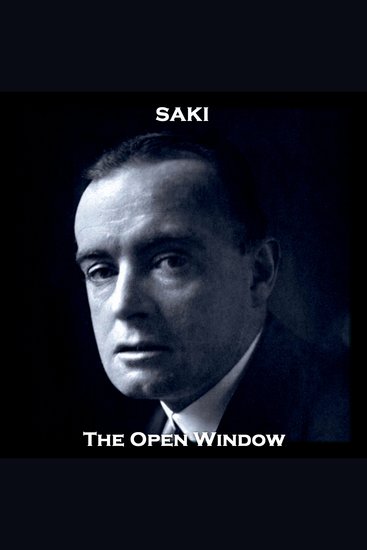
    Hector Hugh Munro, more familiarly known by his pen-name ‘Saki’ was born in what was then Akyab in British Burma on 18th December 1870. His father was an Inspector General for the Indian Imperial Police, and his mother the daughter of a Rear Admiral. 
    When he was 2 his mother died and he and his siblings were sent back to England to be raised by their grandmother and paternal maiden aunts in a strict, puritanical household near Barnstaple, Devon. Educated by governesses Saki used many of these women as character models for his later writing. 
    At 17 his father retried and returned to England and then embarked on a series of European travels with Saki and his siblings. 
    After a short stint working in Burma with the Indian Imperial Police Saki decided to move to London to make a living as a writer. Initially he wrote as a journalist for a number of newspapers and magazines before attempting an historical study, ‘The Rise of the Russian Empire’, whose real value lay in directing him to writing short stories instead, the first of which, ‘Dogged’, he published in 1899. 
    From here it was a short stab of the pen to writing political satire before in 1902 he became the foreign correspondent for The Morning Post, first in the Balkans, then Russia, Paris and back to London in 1908, where 'the agreeable life of a man of letters with a brilliant reputation awaited him.'  
    Collections of his short stories full of witty, mischievous and often macabre stories that satirized Edwardian society and two novels now appeared in the years up to the Great War.  At its’ outbreak he was 43 but managed to join as an ordinary trooper. More than once he returned to the battlefield when officially too sick or injured.  
    On 14th November 1916 Hector Hugh Munro was sheltering in crater during the Battle of the Ancre, when he was shot and killed by a German sniper. According to several sources, his last words were "Put that bloody cigarette out!"
    Zum Buch
  • The Sorrows of Gin - cover

    The Sorrows of Gin

    John Cheever

    • 0
    • 0
    • 0
    Here is one of twelve magnificent stories, originally part of The John Cheever Audio Collection, in which John Cheever celebrates—with unequaled grace and tenderness—the deepest feelings we have. 
    As Cheever writes in his preface, "These stories seem at times to be stories of a long-lost world when the city of New York was still filled with a river light, when you heard the Benny Goodman quartets from a radio in the corner stationery store, and when almost everybody wore a hat."
    Zum Buch
  • Dracula – Chapter 1: Jonathan Harker’s Journal - A Chapter-by-Chapter Reading of Bram Stoker’s Classic - cover

    Dracula – Chapter 1: Jonathan...

    Bram Stoker

    • 0
    • 0
    • 0
    Jonathan Harker, a young English solicitor, journeys to the remote mountains of Transylvania to assist a mysterious nobleman named Count Dracula. At first, the Count is courteous and charming — but as the days pass, Harker begins to realize that he is not a guest, but a prisoner in a castle filled with shadows, secrets, and unspeakable horrors. 
    This is Chapter 1 of Bram Stoker’s Dracula — narrated by Amazon bestselling horror author Jonathan Dunne — part of a complete, chapter-by-chapter audiobook series that brings the classic Gothic nightmare to life in chilling detail. 
    Whether you’re revisiting Stoker’s masterpiece or discovering it for the first time, this immersive narration captures the dread, mystery, and slow-building terror that shaped the vampire legend for more than a century. 
    📖 Public domain text. Original publication: 1897.
    Zum Buch
  • Home Life Relayed - BBC presents a live show from a family house with disastrous consequences - cover

    Home Life Relayed - BBC presents...

    E M Delafield

    • 0
    • 0
    • 0
    Edmée Elizabeth Monica Dashwood, née de la Pasture, and more commonly known as E M Delafield, was born in Steyning, Sussex on 9th June 1890.   
     
    Raised in the fading years of the Victorian era with its Empire and strict moral codes Delafield, not yet married at twenty-one, joined a French religious order, in Belgium, but soon decided that this was a totally wrong choice for her.   
     
    Her next challenge was her work during the horror of the First World War.  Delafield decided to take up a position as a nurse in a Voluntary Aid Detachment in Exeter.  It was whilst here that she managed to write her first novel, ‘Zella Sees Herself’.   
     
    With the end of the war new opportunities were sought and she now took up a position for the South-West Region of the Ministry of National Service in Bristol.  With it came enough time to write two more novels: ‘The War Workers’ (1918) and ‘The Pelicans’ (1918).   
     
    On 17th July 1919, she married Colonel Arthur Paul Dashwood, OBE, an engineer responsible for building the massive docks at Hong Kong Harbour.  The marriage produced two children; Lionel and Rosamund.  That same year her fourth novel, ‘Consequences’, was published.   
     
    The couple spent their early years in Malaya but returned to England to live in Croyle, an old house in Kentisbeare, Devon.  Delafield continued to collect responsibilities and organise whatever she could.  At the initial meeting of the Kentisbeare Women's Institute, Delafield was unanimously elected president, and also became a Justice of the Peace, raised the children and, of course, continued to write her best-selling novels.   
     
    Her greatest work is undoubtedly the largely autobiographical ‘Diary of a Provincial Lady’, which is a simply structured journal of the life of an upper-middle class Englishwoman, living mostly in a Devon village of the 1930s.  It spawned several best-selling sequels.  Her works also includes stage and radio plays, film scripts and short stories.  
     
    After the death of her son in 1940, her health began to markedly decline.    
     
    E M Delafield died on 2nd December 1943 after collapsing whilst giving a lecture in Oxford.  She was 53.
    Zum Buch

  • Too Early - cover

    Too Early

    Anton Chekhov

    • 0
    • 0
    • 0
    The story takes place in the village of Shalmovo, where two peasant sportsmen, Filimon Slyunka and Ignat Ryabov, are sitting in a pothouse turned restaurant. Slyunka is an old man who used to be a house-serf and now lives off his old wife's alms. Ryabov is a silent, sturdy peasant. Slyunka and Ryabov are trying to convince the innkeeper, Semyon Mitritch, to give them a gun that they had left as collateral. Semyon refuses, citing the Lenten season and the lack of game. Despite their pleas and promises to return the gun, Semyon remains firm in his decision. Slyunka and Ryabov leave the tavern and decide to go stand-shooting in the forest, hoping to find snipe. They walk to the forest, but find no snipe and decide to wait another five days before trying again. The story ends with the sportsmen walking home in silence. Overall, the story portrays a slice of rural life and explores themes of poverty, longing, and the connection between humans and nature.
    Zum Buch
  • Eveline - From their pens to your ears genius in every story - cover

    Eveline - From their pens to...

    James Joyce

    • 0
    • 0
    • 0
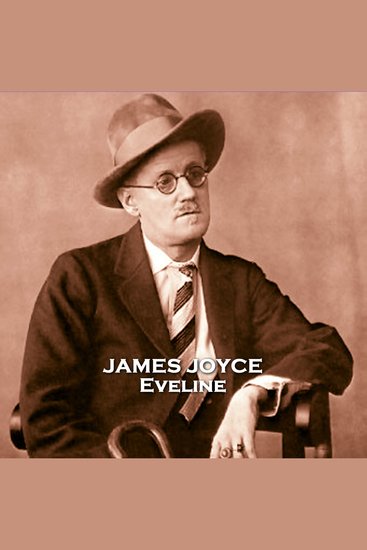
    James Augustine Aloysius Joyce was born on the 2nd February 1882 in Dublin into a middle-class family, and the eldest of ten surviving siblings 
    Admired as a brilliant student he briefly attended the Christian Brothers-run O'Connell School before excelling at the Jesuit schools of Clongowes and Belvedere.  From there he went on to attend University College Dublin from 1898, studying English, French and Italian 
    In 1902, Joyce was now in his early twenties, and went to Paris to study Medicine but soon abandoned his teachings.  Back in Dublin to attend to his dying Mother he met Nora Barnacle. They bonded immediately into a life-long match. Together they decided to emigrate to Europe.  The couple lived in Trieste, Rome, Paris, and finally Zürich where Joyce pursued a variety of jobs and ventures to supplement his literary pursuits but none of these paid off.  
    After publishing a poetry volume, ‘Chamber Music’, in 1907, his short story collection ‘The Dubliners’, in 1914, helped establish his talent in the rapidly changing world.  
    Although far from home Joyce’s literary heart and works were set in his recollections of Dublin.  Characters are close resemblances of family and friends and indeed enemies.  His landmark work ‘Ulysses’, published in 1922, is set in the streets and alleyways of the city as it parallels Homer’s Odyssey in a variety of styles including its famed stream of consciousness. 
    His pen continued to produce classics of the order of ‘A Portrait of the Artist as A Young Man’ and ‘Finnegan’s Wake’ together with several volumes of poetry and a play ‘The Exiles, in 1918.   
    On the 11th January 1941, Joyce underwent surgery in Zürich for a perforated duodenal ulcer. The next day he fell into a coma. On the 13th after a brief period of lucidity in which he called for his wife and son he passed.  He was 58.
    Zum Buch