Rejoignez-nous pour un voyage dans le monde des livres!
Ajouter ce livre à l'électronique
Grey
Ecrivez un nouveau commentaire Default profile 50px
Grey
Abonnez-vous pour lire le livre complet ou lisez les premières pages gratuitement!
All characters reduced
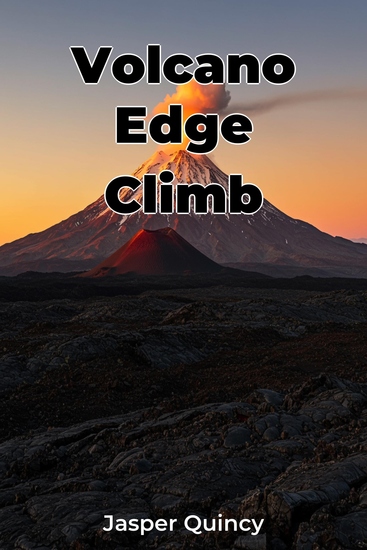
Volcano Edge Climb - cover

Volcano Edge Climb

Jasper Quincy

Traducteur A AI

Maison d'édition: Publifye

  • 0
  • 0
  • 0

Synopsis

Volcano Edge Climb explores the thrilling yet perilous world of volcano climbing, offering a unique perspective on mountaineering in geologically active environments. It highlights how traditional climbing techniques fall short when facing seismic risk assessment, unstable volcanic terrain, and the dangers of sulfur exposure.

 
The book emphasizes the necessity of integrating real-time geological monitoring and specialized gear, advocating for a paradigm shift in climbing practices to ensure climber safety. For instance, understanding plate tectonics, the driving force behind volcanism, becomes crucial for anticipating potential hazards.

 
The book begins by establishing a solid scientific foundation, introducing key concepts in volcanology and seismology. It progresses to discuss essential gear modifications, risk assessment strategies, and ethical considerations for responsible exploration. By blending scientific rigor with practical advice, Volcano Edge Climb bridges the gap between earth science and adventure.

 
The book also uses case studies and expert interviews to support its arguments, making it an invaluable resource for experienced climbers and earth science enthusiasts alike.
Disponible depuis: 02/05/2025.
Longueur d'impression: 79 pages.

D'autres livres qui pourraient vous intéresser

  • Hidden History of Detroit - cover

    Hidden History of Detroit

    Amy Elliott Bragg

    • 0
    • 0
    • 0
    "Engaging" stories of what the Motor City was like before the invention of the motor (Detroit Metro-Times). 


    Long before it became the twentieth-century automotive capital, Detroit was a muddy port town full of grog shops, horse races, haphazard cemeteries, and enterprising bootstrappers from all over the world. 


    In this lively book you'll discover the city's forgotten history and meet a variety of unforgettable characters—the argumentative French fugitive who founded the city; the tobacco magnate who haunts his shuttered factory; the gambler prankster millionaire who built a monument to himself; the governor who brought his scholarly library with him on canoe expeditions; and the historians who helped create the story of Detroit as we know it: one of the oldest, rowdiest, and most enigmatic cities in the Midwest.
    Voir livre
  • Why You Should Go on a Cultural Weekend in Paris - cover

    Why You Should Go on a Cultural...

    Mark Ferdinand

    • 0
    • 0
    • 0
    Paris is the ultimate city for culture lovers—a place where every street corner seems to hide a story, every gallery bursts with masterpieces, and every café hums with creative spirit. A weekend here is enough to immerse yourself in the world’s greatest art, history, and style. 
    Mark Ferdinand shows you how to make the most of a cultural escape in the French capital: exploring the treasures of the Louvre and the Musée d’Orsay, strolling through the literary cafés of Saint-Germain, watching cabaret sparkle at the Moulin Rouge, and uncovering hidden gems beyond the tourist trails. From iconic landmarks to intimate artistic moments, Paris is a city that nourishes the mind, heart, and soul—perfect for a weekend you’ll never forget.
    Voir livre
  • Yuan Dynasty - Mongol Rule and the Blending of Cultures - cover

    Yuan Dynasty - Mongol Rule and...

    Rolf Hedger

    • 0
    • 0
    • 0
    The Yuan Dynasty emerged from the ambitions of Kublai Khan, the grandson of Genghis Khan, who sought to consolidate Mongol rule over China. Before the establishment of the Yuan, the Mongols had waged a relentless military campaign against the Song Dynasty, the ruling power in southern China. After decades of conflict, Kublai Khan successfully defeated the Song in 1279, marking the first time in history that all of China was under foreign rule. His ascension to the throne not only signified the dominance of the Mongols but also introduced a new era of governance that blended Mongol traditions with Chinese administration. 
    Kublai Khan declared himself emperor in 1271 and named his dynasty "Yuan," meaning "Great Origin," a term rooted in Chinese philosophy and symbolic of the vast scope of Mongol rule. Unlike his predecessors, who maintained a nomadic lifestyle, Kublai recognized the necessity of adopting Chinese customs to effectively govern a vast and diverse population. He moved the capital from Karakorum to Dadu, present-day Beijing, reinforcing his commitment to ruling as a Chinese emperor while still maintaining Mongol authority. His reign sought to balance the military-driven expansion of his ancestors with the complexities of ruling a settled, bureaucratic society. 
    Despite his efforts to integrate into Chinese political traditions, Kublai faced challenges in legitimizing his rule. Many Han Chinese viewed the Mongols as outsiders and resisted their authority. To solidify his claim, Kublai adopted Confucian principles and retained elements of the Chinese imperial structure, appointing Chinese officials in lower government positions while keeping key positions reserved for Mongols and trusted foreign allies. This approach ensured Mongol dominance while utilizing the administrative expertise of the Chinese.
    Voir livre
  • Adventures and Exploration - Journeys into the Unknown (4 in 1) - cover

    Adventures and Exploration -...

    John Harpoon

    • 0
    • 0
    • 0
    This book contains four books, which are: 
    - Forsaken Realms: Throughout history, there have been places where human ambition, industry, or even nature’s cruelty has left behind stark reminders of a world once bustling with life, now standing frozen in time. These forsaken realms—whether born of abandonment, catastrophe, or the slow erosion of human civilization—whisper tales of a forgotten past. They are the remnants of once-thriving cities, sprawling industries, and cultures now reduced to ruins, each holding secrets that time has almost claimed. 
    - Terra Incognita: To document the unknown is to navigate a delicate and often treacherous path. It is an undertaking that demands curiosity and courage, tempered by discipline and respect for the subject at hand. When the unknown takes the form of a remote, enigmatic island, the challenges multiply, and the journey becomes as much about understanding ourselves as it is about uncovering the mysteries of the place. 
    - The Bargain Paradise: An economical dwelling is a home designed with cost-efficiency in mind, blending affordability, functionality, and sustainability. The concept of such a dwelling goes beyond simply being cheap; it involves thoughtful design choices that minimize expenses while maintaining comfort and quality of life. At its core, an economical dwelling aims to reduce the financial burden on its owner without sacrificing the essential aspects of a well-built home. 
    - Himalaya Doomsday Device: In the vast expanse of the Himalayas, hidden beneath centuries of snow and ice, lay a secret that had been buried for generations. The towering peaks, once home to monks and ancient civilizations, now shielded a dark legacy that time itself had forgotten. The truth about this forgotten legacy, however, was about to resurface, altering the course of history and threatening the very future of a nation.
    Voir livre
  • Waking Up - How I Grew to Love My Body and Myself While Solo-Hiking Across Northern England A Memoir - cover

    Waking Up - How I Grew to Love...

    M.Ed. Kay Lock Kolp

    • 0
    • 0
    • 0
    The award-winning, riveting true story about overcoming hardship to fulfill a most deeply held dream… 
    ​​​​​Scarred by disability. 
    Derailed by ADHD. 
    Believing herself broken and weak. 
    The odds were certainly stacked against Kay, walking all by herself from one side of England to the other. 
    Here’s the interesting thing: those elements which Kay perceived as liabilities became assets. 
    Fuel for empowerment. 
    And the trek was only the beginning. 
    Come on a journey of discovery.. 
    Waking Up is the true story of a woman who used to need a wheelchair and couldn't use her hands almost at all. 
    The book tells how she grew into an artist, creator and adventurer. 
    Give yourself permission to be caught up in the magic… in cheering for Kay, you just may end up cheering for yourself."An absolute gem of a book that radiates positivity and inspiration from start to finish… its free-flowing narrative style captivates the reader from the very first page." – Monique Giroux, Digital Nomad and Forest Therapy Coach, author of Lost Intentionally 
    Waking Up unfolds in a unique and conversational style. 
    From the "How to Use This Book" section: 
    "Make this book your own. 
    That's when the magic happens 
    When we read something somebody else wrote and it inspires us 
    Or helps us 
    Or upholds us 
    As we spark something wonderful in our own life.""Phenomenal." - Janine Halloran, LMHC, Therapist and author of the bestseller Coping Skills for Kids"So well written and powerful. Freeform and yet cohesive. AWESOME!!!"  - Lorraine Viau, Lancaster, PA
    Voir livre
  • Early Indian Empires - Foundations of Indian Power (3 in 1) - cover

    Early Indian Empires -...

    Rolf Hedger

    • 0
    • 0
    • 0
    The history of early Indian empires is a fascinating story of conquest, governance, and cultural transformation. Over centuries, three powerful dynasties—the Maurya, Satavahana, and Gupta Empires—laid the foundations of Indian civilization, shaping its political, economic, and social structures.  
    The Maurya Empire, established by Chandragupta Maurya, was the first large-scale empire to unify much of the Indian subcontinent, creating a highly organized administrative system.  
    Under Ashoka, the empire saw a shift from military expansion to the promotion of Buddhism and moral governance. Following the Mauryas, the Satavahana Empire emerged as a vital force in the Deccan, maintaining stability through a blend of military strength and trade dominance. They controlled key routes linking northern and southern India, facilitating cultural and commercial exchanges.  
    Later, the Gupta Empire brought about a golden age of Indian history, marked by advancements in science, mathematics, literature, and the arts. Their reign saw the revival of Hindu traditions alongside continued Buddhist and Jain influences. Together, these three empires set the stage for India’s rich historical and cultural legacy, influencing the region for centuries to come.
    Voir livre