Begleiten Sie uns auf eine literarische Weltreise!
Buch zum Bücherregal hinzufügen
Grey
Einen neuen Kommentar schreiben Default profile 50px
Grey
Jetzt das ganze Buch im Abo oder die ersten Seiten gratis lesen!
All characters reduced
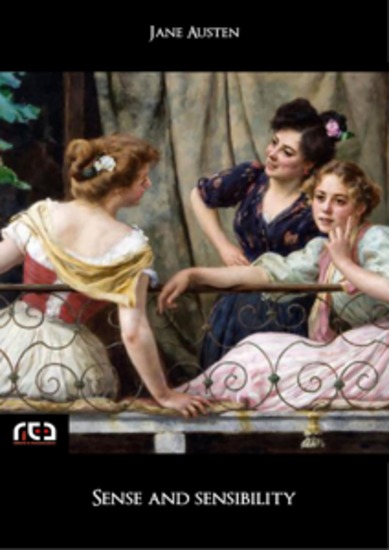
Sense and sensibility - cover

Sense and sensibility

Jane Austen

Verlag: REA Multimedia

  • 0
  • 0
  • 0

Beschreibung

Sense and Sensibility is the first novel by the English author Jane Austen, published in 1811. On his deathbed, Henry Dashwood gets John, his son by his first wife, to promise to take care of his stepmother and half-sisters, Elinor, Marianne and Margaret, from his inheritance. But Fanny, John's wife, persuades her husband not to support them financially, leaving them to survive on a greatly reduced income.
Fanny’s brother Edward Ferrars comes on a visit, but when Elinor and he seem to be growing close, Fanny warns Mrs Dashwood that Edward is destined for higher things by their mother. Affronted by this, Mrs Dashwood decides to move her family to Barton Cottage in Devonshire, which has been offered her at a low rent by her second cousin, Sir John Middleton. Later, while dining with the Middletons at Barton Park, Marianne attracts the attention of a family friend, Colonel Brandon. However, he is aged thirty-five, which seems much too old to the romantic sensibility of sixteen-year-old Marianne.
Verfügbar seit: 07.02.2025.
Weitere Bücher, die Sie mögen werden

  • As the Crow Flies - From their pens to your ears genius in every story - cover

    As the Crow Flies - From their...

    John Davys Beresford

    • 0
    • 0
    • 0
    John Davys Beresford was born on 17th March 1873.  His life was blighted by infantile paralysis which left him partially disabled. 
    After an education at Oundle school he trained to be an architect.  However, he quickly decided that his life was to be centred on a literary career.  His first offerings were in drama and as a journalist. 
    As well as being a book reviewer for the Manchester Guardian he contributed to New Statesman, The Spectator, Westminster Gazette, and the Theosophist magazine The Aryan Path.   
    His spiritual journey in early adulthood had claimed him as an agnostic, in defiance of his clergyman father.  This view he later abandoned in preference to describing himself as a Theosophist and a pacifist. 
    As well as many novels, many themed with spiritual and philosophical elements.  Beresford was also a gifted short story writer particularly across the science-fiction, horror and ghost genres. 
    All of these elements helped him to obtain a prominent place in Edwardian Literary London. 
    John Davys Beresford died on the 2nd February 1947. He was 73.
    Zum Buch
  • The Choephori - cover

    The Choephori

    Aeschylus

    • 0
    • 0
    • 0
    Produced in 458 BC, Aeschylus' Choephori is the second play in the Oresteian trilogy. The bloodshed begun in the first play with the murder of Agamemnon by his wife Clytemnestra is here continued when Agamemnon's son Orestes avenges his father's death by killing Clytemnestra. It is not until the third and final play, Eumenides, that peace is restored to the family of the Atreidae. The introduction discusses the pre-Aeschylean 'Orestes' tradition in literature and art, as well as the place of Choephori within the Oresteia, its imagery and dramatic structure, the questions of staging the play, and the manuscript tradition.
    Zum Buch
  • Darkness - cover

    Darkness

    Anton Chekhov

    • 0
    • 0
    • 0
    A young peasant finds himself confronting a doctor at a hospital with the hopes of convincing him to release his brother. The doctor is not pleased and refuses to release him saying the peasant needs to go to the authorities. He is disappointed by his statement and unsure of where to go. On his way out he comes to meet an old man just outside the hospital gate. He reveals his problem to him and the old man directs him exactly where he needs to head. The peasant is conflicted because it is a long journey, but after a few moments he decides to head out with the hope of saving his brother.
    .
    Zum Buch
  • Filmer (Unabridged) - cover

    Filmer (Unabridged)

    H. G. Wells

    • 0
    • 0
    • 0
    Herbert George Wells (21 September 1866 - 13 August 1946) was an English writer. Prolific in many genres, he wrote dozens of novels, short stories, and works of social commentary, history, satire, biography and autobiography. His work also included two books on recreational war games. Wells is now best remembered for his science fiction novels and is often called the "father of science fiction", along with Jules Verne and the publisher Hugo Gernsback.
    FILMER: In truth the mastery of flying was the work of thousands of men-this man a suggestion and that an experiment, until at last only one vigorous intellectual effort was needed to finish the work.
    Zum Buch
  • About Love - From their pens to your ears genius in every story - cover

    About Love - From their pens to...

    Anton Chekhov

    • 0
    • 0
    • 0
    Anton Pavlovich Chekhov was born on 29th January 1860 in Taganrog, on the south coast of Russia.  
    His family life was difficult; his father was strict and over-bearing but his mother was a passionate story-teller, a subject Chekhov warmed to. As he later said; ‘our talents we got from our father, but our soul from our mother’.  
    At school Chekhov was distinctly average. At 16 his father mis-managed his finances and was declared bankrupt. His family fled to Moscow. Chekhov remained and eked out a living by various means, including writing and selling short sketches to newspapers, to finish his schooling. That completed and with a scholarship to Moscow University obtained he rejoined his family. 
    He was able to help support them by selling satirical sketches and vignettes of Russian lifestyles and gradually obtained further commissions. In 1884, he qualified as a physician and, although it earned him little, he often treated the poor for free, he was fond of saying ‘Medicine is my lawful wife, and literature is my mistress.’ 
    His own health was now an issue as he began to cough up blood, a symptom of tuberculosis.  Despite this his writing success enabled him to move the family into more comfortable accommodation.  
    Chekhov wrote over 500 short stories which included many, many classics including ‘The Kiss’ and ‘The Lady with a Dog’.  His collection ‘At Dusk’ won him the coveted Pushkin Prize when was only 26.  
    He was also a major playwright beginning with the huge success of ‘Ivanov’ in 1887.   
    In 1892 Chekhov bought a country estate north of Moscow. Here his medical skills and money helped the peasants tackle outbreaks of cholera and bouts of famine. He also built three schools, a fire station and a clinic.  It left him with less time for writing but the interactions with real people gained him detailed knowledge about the peasantry and their living conditions for his stories.  
    His most famous work, ‘The Seagull’ was received disastrously at its premiere in St Petersburg. It was later restaged in Moscow to highlight its psychological aspects and was a huge success. It led to ‘Uncle Vanya’, ‘The Three Sisters’ and ‘The Cherry Orchard’.  
    Chekhov suffered a major lung hemorrhage in 1897 while visiting Moscow. A formal diagnosis confirmed tuberculosis and the doctors ordered changes to his lifestyle.  
    Despite a dread of weddings the elusive literary bachelor quietly married the actress Olga Knipper, whom he had met at rehearsals for ‘The Seagull’, on 25th May 1901. 
    By May 1904 with his tuberculosis worsening and death imminent he set off for the German town of Badenweiler writing cheerful, witty letters to his family and assuring them his health was improving.  
    On 15th July 1904 Anton Chekhov died at Badenweiler.  He was 44.
    Zum Buch
  • Love of Life (Unabridged) - cover

    Love of Life (Unabridged)

    Jack London

    • 0
    • 0
    • 0
    Jack London (born John Griffith Chaney, January 12, 1876 - November 22, 1916) was an American author, journalist, and social activist. He was a pioneer in the then-burgeoning world of commercial magazine fiction and was one of the first fiction writers to obtain worldwide celebrity and a large fortune from his fiction alone.
    LOVE OF LIFE: They limped painfully down the bank, and once the foremost of the two men staggered among the rough-strewn rocks. They were tired and weak, and their faces had the drawn expression of patience which comes of hardship long endured. They were heavily burdened with blanket packs which were strapped to their shoulders. Head-straps, passing across the forehead, helped support these packs. Each man carried a rifle. They walked in a stooped posture, the shoulders well forward, the head still farther forward, the eyes bent upon the ground.
    Zum Buch