Begleiten Sie uns auf eine literarische Weltreise!
Buch zum Bücherregal hinzufügen
Grey
Einen neuen Kommentar schreiben Default profile 50px
Grey
Jetzt das ganze Buch im Abo oder die ersten Seiten gratis lesen!
All characters reduced
Pride and Prejudice - cover

Pride and Prejudice

Jane Austen

Verlag: Madeley publishing

  • 0
  • 0
  • 0

Beschreibung

Pride and Prejudice is the second novel by English author Jane Austen, published in 1813. A novel of manners, it follows the character development of Elizabeth Bennet, the protagonist of the book, who learns about the repercussions of hasty judgments and comes to appreciate the difference between superficial goodness and actual goodness.
Mr Bennet, owner of the Longbourn estate in Hertfordshire, has five daughters, but his property is entailed and can only be passed to a male heir. His wife also lacks an inheritance, so his family faces becoming poor upon his death. Thus, it is imperative that at least one of the daughters marry well to support the others, which is a primary motivation driving the plot.
Verfügbar seit: 14.09.2024.

Weitere Bücher, die Sie mögen werden

  • Mrs Maccabee's Miracle - cover

    Mrs Maccabee's Miracle

    Elka Weber

    • 0
    • 0
    • 0
    The Maccabee home was a happy one, but Mrs. Maccabee’s five sons were often losing things. “Mom, have you seen my spear?” one would say. “Your things don’t grow legs and walk away,” Mrs. Maccabee would sigh, pointing to the missing items. “Where you leave them is where they stay.” When her five sons go to war against the Greeks, Mrs. Maccabee’s lessons stay with them. Recalling their mom’s words, the brothers remember where they’d last seen the oil for the Temple menorah. A miracle indeed.
    Zum Buch
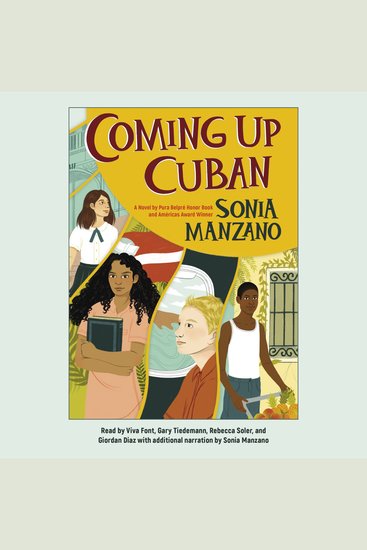
  • Coming Up Cuban - cover

    Coming Up Cuban

    Sonia Manzano

    • 0
    • 0
    • 0
    From Pura Belpré Honoree and Emmy-award winning actor Sonia Manzano--best known as "Maria" from Sesame Street--comesthe expansive and timeless story of four children who must carve out a path for themselves in the wake of Fidel Castro's rise topower.Fifteen-time Emmy Award winner and Pura Belpre honoree Sonia Manzano examines the impact of the 1959 Cuban Revolutionon four children from very different walks of life.In the wake of a new regime in Cuba, Ana, Miguel, Zulema, and Juan learn to find a place for themselves in a world foreverchanged. In a tumultuous moment of history, we see the lasting effects of a revolution in Havana, the countryside, Miami, and NewYork. Through these snapshot stories, we are reminded that regardless of any tumultuous times, we are all forever connected inour humanity.
    Zum Buch
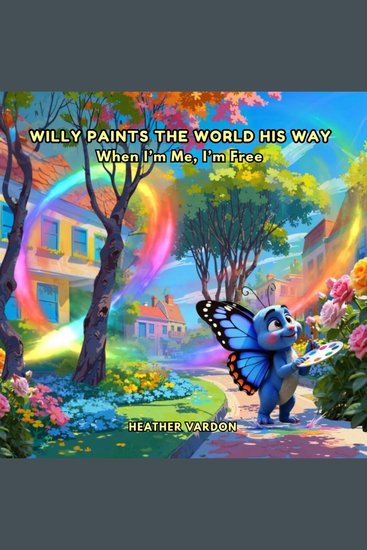
  • Willy Paints the World His Way - When I'm Me I'm Free - cover

    Willy Paints the World His Way -...

    Heather Vardon

    • 0
    • 0
    • 0
    This audiobook is narrated by an AI Voice.  Willy discovers the freedom that comes from being true to himself. As he begins to paint from the heart ~ boldly, colorfully, and unapologetically; his wings transform into a beautiful reflection of his spirit. With each brushstroke, Willy lets go of the fear of not fitting in and embraces the joy of simply being who he is. 
     
    No longer afraid to stand out, Willy shares his art with the world, creating murals that speak to the hearts of others. His colors brighten the walls of his school and inspire his classmates to express themselves, too ~ with courage, confidence, and creativity. 
     
    This uplifting story gently encourages children to listen to their hearts, honor their feelings, and celebrate the special spark that makes them uniquely who they are. Through Willy’s journey, young readers learn that when they bravely share their true colors with the world, they not only feel free; they give others the courage to do the same. 
     
    Willy Paints the World His Way is a beautiful reminder that being yourself is more than enough, it is something to be proud of. Let this story inspire every child to dream big, express boldly, and always believe in the power of their own light. 
     
    “My purpose, and the intention behind my books, is to guide others from the very beginning to look within themselves and embrace their unique selves and authenticity. We need to become aware and reflect on our own inner child and heal ourselves in order to raise our next generation with love, free of our expectations and demands of society. When we do this, we break free from the chains of our own upbringing and societal programming allowing our children to become their authentic selves unapologetically, and we as parents find who we truly are among the process.” 
     
     ~Heather Vardon
    Zum Buch
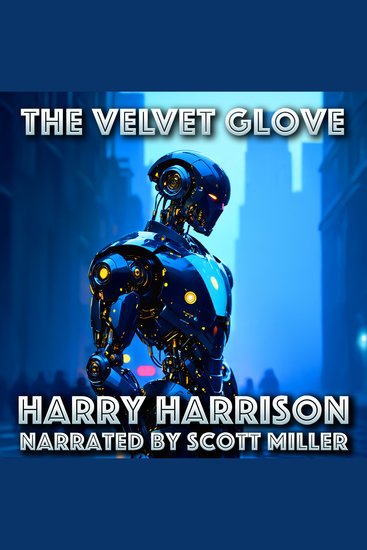
  • The Velvet Glove - Robots and the Fragile Balance of Power - cover

    The Velvet Glove - Robots and...

    Harry Harrison

    • 0
    • 0
    • 0
    The Velvet Glove by Harry Harrison is a sharp, thought-provoking tale that examines what it truly means to be human. First published in Fantastic Universe in 1956, the story follows a robot named Jon Venex, built to serve humanity in a society where machines have begun to think, feel, and perhaps surpass their creators. When Jon meets a human woman who sees beyond his metal shell, the story becomes both a love story and a quiet tragedy about prejudice, purpose, and identity. With crisp dialogue and a touch of irony, Harrison explores the uneasy relationship between man and machine—long before artificial intelligence became a common theme in science fiction. 
    Like much of Harrison’s early work, The Velvet Glove blends social commentary with pulpy adventure energy. It reflects his fascination with how technology reshapes ethics and emotion, and how progress can expose the flaws in human nature. Beneath the futuristic surface lies a timeless question: if a machine can feel compassion, who is truly more human? 
    Harry Harrison (1925–2012) was an American author best known for his wit, imagination, and biting satire. Born in Stamford, Connecticut, he served in the U.S. Army Air Forces during World War II before turning to writing and illustrating for pulp magazines. He gained fame with the Stainless Steel Rat series—rollicking space adventures featuring a charming rogue—and with Make Room! Make Room! (1966), the grim novel that inspired the film Soylent Green. 
    Harrison’s work often mixed humor with moral inquiry, challenging the militarism, greed, and hypocrisy of modern life while celebrating intelligence and individuality. Whether through a rebellious con man or a soulful robot, his stories reminded readers that humanity’s greatest strength—and weakness—lies in its capacity to choose compassion over control.
    Zum Buch
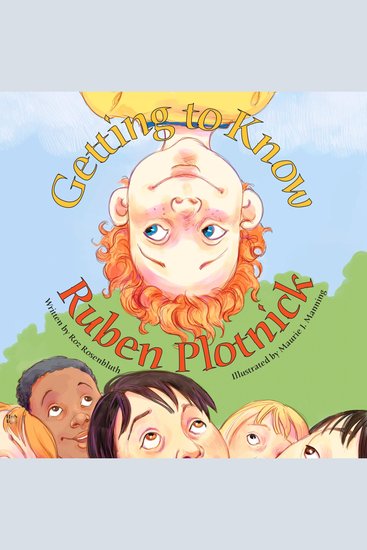
  • Getting to Know Ruben Plotnick - cover

    Getting to Know Ruben Plotnick

    Roz Rosenbluth

    • 0
    • 0
    • 0
    What do you get when you put together the coolest kid in class, an unpredictable live-in grandmother, and a caring but anxious grandson? Disaster?
    
    
    No. You get to know Ruben Plotnick.
    
    
    David is worried about how zany Ruben Plotnick will react when he meets Grandma Rosie, who often says and does unexpected things. Will Ruben make fun of her to their classmates? Will he imitate her whispery voice? What will he do if Grandma Rosie suddenly wants to dance?
    
    
    This heartwarming story of senility and school-age embarrassment reveals the importance of looking beneath the surface to really get to know someone.
    Zum Buch
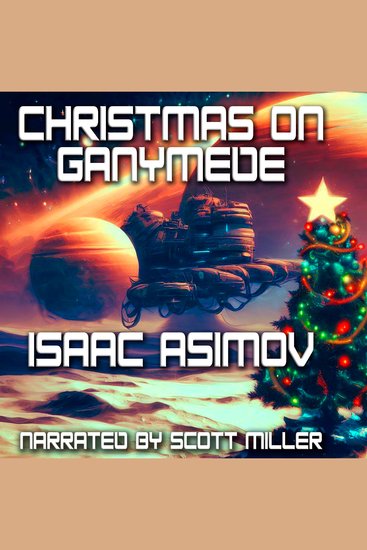
  • Christmas on Ganymede - cover

    Christmas on Ganymede

    Isaac Asimov

    • 0
    • 0
    • 0
    Christmas on Ganymede by Isaac Asimov - Consider the problems of miners who work on Ganymede, moon of Jupiter, 390,000,000 miles from earth: isolated on a world so different from our own, surrounded by beings who know nothing of our traditions, how might these men teach their alien work-mates how we celebrate Christmas? 
    Olaf Johnson hummed nasally to himself and his china-blue eyes were dreamy as he surveyed the stately fir tree in the corner of the library. Though the library was the largest single room in the Dome, Olaf felt it none too spacious for the occasion. Enthusiastically he dipped into the huge crate at his side and took out the first roll of red-and-green crepe paper.  
    What sudden burst of sentiment had inspired the Ganymedan Products Corporation, Inc. to ship a complete collection of Christmas decorations to the Dome, he did not pause to inquire. Olaf’s was a placid disposition, and in his self-imposed job as chief Christmas decorator, he was content with his lot.  
    He frowned suddenly and muttered a curse. The General Assembly signal light was flashing on and off hysterically. With a hurt air Olaf laid down the tack-hammer he had just lifted, then the roll of crêpe paper, picked some tinsel out of his hair and left for officers quarters.  
    Commander Scott Pelham was in his deep armchair at the head of the table when Olaf entered. His stubby fingers were drumming unrhythmically upon the glass-topped table. Olaf met the commander’s hotly furious eyes without fear, for nothing had gone wrong in his department in twenty Ganymedan revolutions.  
    The room filled rapidly with men, and Pelham’s eyes hardened as he counted noses in one sweeping glance. 
    "We’re all here. Men, we face a crisis!" 
    There was a vague stir. Olaf’s eyes sought the ceiling and he relaxed. Crises hit the Dome once a revolution, on the average.
    Zum Buch