Rejoignez-nous pour un voyage dans le monde des livres!
Ajouter ce livre à l'électronique
Grey
Ecrivez un nouveau commentaire Default profile 50px
Grey
Abonnez-vous pour lire le livre complet ou lisez les premières pages gratuitement!
All characters reduced
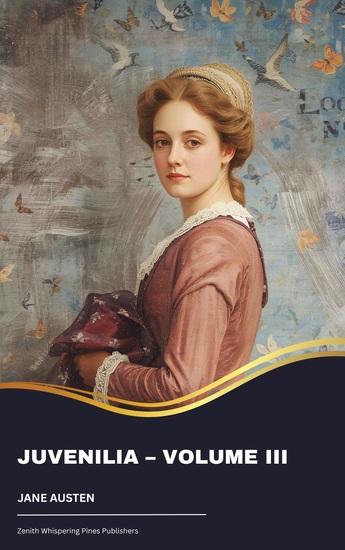
Juvenilia – Volume III - cover

Juvenilia – Volume III

Jane Austen

Maison d'édition: Zenith Whispering Pines Publishers

  • 0
  • 0
  • 0

Synopsis

Bold, witty, and wonderfully unrestrained—Austen's youthful voice shines brighter than ever.
In Juvenilia – Volume III, the young Jane Austen continues her playful exploration of storytelling with tales full of mischievous heroines, dramatic twists, clever satire, and wild imagination. These early pieces capture her developing genius, revealing the humorous, daring mind that would one day craft some of literature's most beloved novels.

Celebrated as "a captivating window into Austen's creative beginnings," this volume offers both laughter and literary insight, showing how her trademark wit and social sharpness took shape long before Pride and Prejudice or Emma.

If you enjoy Austen's humor, lively characters, and sparkling commentary on human behavior, this collection will delight you from beginning to end.

Open the book—and discover Jane Austen as she first learned to dazzle.
Disponible depuis: 11/12/2025.
Longueur d'impression: 74 pages.

D'autres livres qui pourraient vous intéresser

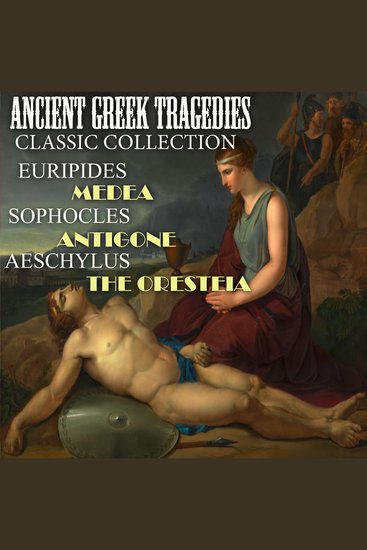
  • Ancient Greek Tragedies Classic collection - Euripides Medea; Sophocles Antigone; Aeschylus The Oresteia - cover

    Ancient Greek Tragedies Classic...

    Euripides, Sophocles, Aeschylus

    • 0
    • 0
    • 0
    This collection presents the works of the three fathers of ancient Greek tragedies: Aeschylus, Sophocles, and Euripides.The reader of this collection will be able to comprehend how the plots and conflicts populating classical tragedy developed.The principle theme of Aeschylus' tragedies is the idea of fate being omnipotent and the futility in struggling against it.The tragedies of Sophocles reflect the era of the Greeks' victorious war against the Persians, which opened up commercial prosperity through trade.Euripides propels his dramas by incorporating conflicts from within the human psyche.Contents:Euripides: MedeaSophocles: AntigoneAeschylus: The OresteiaAgamemnonEumenidesThe Choephori
    Voir livre
  • The Awakening - cover

    The Awakening

    Kate Chopin

    • 0
    • 0
    • 0
    "The Awakening" is Kate Chopin's groundbreaking novel published in 1899 that focuses on the life of Edna Pontellier, a woman who grapples with the societal conventions of the American South during the late 19th century. As Edna awakens to her own desires and seeks self-discovery and independence, she challenges the societal norms surrounding femininity, motherhood, and marriage. The narrative explores themes of identity, freedom, and the constraints of tradition. It was controversial upon its release due to its candid portrayal of a woman's sexual and emotional desires, but is now regarded as a seminal work in feminist literature.
    Voir livre
  • Les Misérables: Volume 4: The Idyll in the Rue Plumet and the Epic in the Rue St Denis - Book 7: Slang (Unabridged) - cover

    Les Misérables: Volume 4: The...

    Victor Hugo

    • 0
    • 0
    • 0
    Victor-Marie Hugo (26 February 1802 - 22 May 1885) was a French poet, novelist, essayist, playwright, and dramatist of the Romantic movement. During a literary career that spanned more than sixty years, he wrote abundantly in an exceptional variety of genres: lyrics, satires, epics, philosophical poems, epigrams, novels, history, critical essays, political speeches, funeral orations, diaries, and letters public and private, as well as dramas in verse and prose.
    BOOK 7: SLANG: Pigritia is a terrible word. It engenders a whole world, la pègre, for which read theft, and a hell, la pègrenne, for which read hunger.
    Voir livre
  • The Adventure of the Beryl Coronet - cover

    The Adventure of the Beryl Coronet

    Arthur Conan Doyle

    • 0
    • 0
    • 0
    The Adventure of the Beryl Coronet, one of the 56 short Sherlock Holmes stories written by Sir Arthur Conan Doyle, is the eleventh of the twelve stories collected in The Adventures of Sherlock Holmes. The story was first published in Strand Magazine in May 1892.A banker, Mr. Alexander Holder of Streatham, makes a loan of £50,000 to a socially prominent client, who leaves a beryl coronet—one of the most valuable public possessions in existence—as collateral. Holder feels that he must not leave this rare and precious piece of jewellery in his personal safe at the bank, and so he takes it home with him to lock it up there. He is awakened in the night by a noise, enters his dressing room, and is horrified to see his son Arthur with the coronet in his hands, apparently trying to bend it. Holder's niece Mary comes at the sound of all the shouting and, seeing the damaged coronet, faints dead away. Three beryls are missing from it. In a panic, Mr. Holder travels to see Holmes, who agrees to take the case.The case against Arthur seems rather damning, yet Holmes is not convinced of his guilt. Why is Arthur refusing to give a statement of any kind? How could Arthur have broken the coronet (even Holmes, who has exceptionally strong hands, cannot do it) and without making any noise? Could any other people in the household be involved, such as the servants, or Mary? Could some visitor, such as the maid's wooden-legged suitor, or Arthur's rakish friend Sir George Burnwell, have something to do with what happened to the coronet? The failure to resolve the case will result in Mr. Holder's dishonour, and a national scandal.Famous works of the author Arthur Conan Doyle's: "A Study in Scarlet", "Silver Blaze", "The Hound of the Baskervilles", "The Yellow Face", "A Scandal in Bohemia", "The Red-Headed League", A Case of Identity", "The Boscombe Valley Mystery", "The Five Orange Pips", "The Man with the Twisted Lip", "The Blue Carbuncle", "The Speckled Band", "The Engineer's Thumb", "The Noble Bachelor", "The Beryl Coronet", "The Copper Beeches" and many more.
    Voir livre

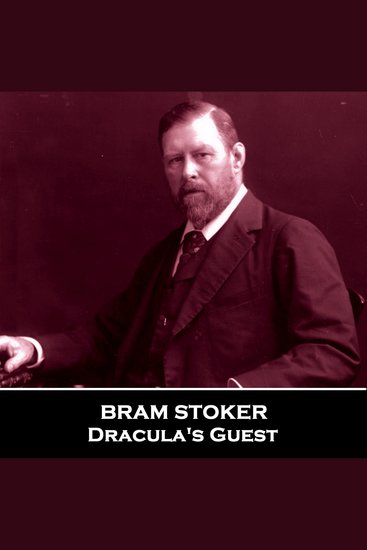
  • Dracula's Guest - From their pens to your ears genius in every story - cover

    Dracula's Guest - From their...

    Bram Stoker

    • 0
    • 0
    • 0
    Abraham Stoker was born in Dublin, Ireland on the 8th of November 1847, the third of seven children.  
    His early years were plagued with such ill-health that he was unable to start school until the age of seven.  He turned the long periods of recovery into an opportunity for thinking and said “I was naturally thoughtful, and the leisure of long illness gave opportunity for many thoughts which were fruitful according to their kind in later years”.  
    Strikingly at Trinity College, Dublin his health had returned with such vigour that he was named their University Athlete whilst also achieving a BA in Mathematics with honours.  
    At this time his interest in theatre became a job offer to be the Dublin Evening Mail’s theatre critic, co-owned by Sheridan Le Fanu.  He now began to also write short stories and in 1872 ‘The Crystal Cup’ was published.  An interest in art developed and he co-founded the Dublin Sketching Club.  
    In 1878 came marriage to Florence Balcombe.  She had formerly been courted by Stoker’s acquaintance, Oscar Wilde.  The marriage produced one child.   
    Stoker had some years before reviewed Henry Irving’s Hamlet and had dined with him.  That friendship now resulted in a proposal from Irving to move to London and to manage his Lyceum Theatre.  His numerous commercial innovations ensured both he and the theatre thrived.  Irving would also often take Stoker with him when he toured abroad. 
    Despite this busy life Stoker continued to write and these works paved the way for his most famous creation, published in 1897, ‘Dracula’.  It is rightly recognised as one of the greatest horror novels of all time and although not the first with a theme of Vampires, it is undoubtedly the most well-known. 
    Stoker also wrote poetry and many excellent short stories and continued to write novels and other works throughout his career. 
    Politically Stoker supported Home Rule, though only by peaceful means.  He was also keen on following scientific trends particularly in medicine. 
    In 1902 his tenure at the Lyceum Theatre ended and although he continued to write his health was deteriorating, mainly due to a series of debilitating strokes. 
    Bram Stoker died on the 20th April 1912, in Pimlico, London.  He was 64.
    Voir livre
  • The Hunter's Family - cover

    The Hunter's Family

    Robert Louis Stevenson

    • 0
    • 0
    • 0
    There is quite a large race or class of people in America, for whom we scarcely seem to have a parallel in England. Of pure white blood, they are unknown or unrecognizable in towns; inhabit the fringe of settlements and the deep, quiet places of the country; rebellious to all labour, and pettily thievish, like the English gipsies; rustically ignorant, but with a touch of wood-lore and the dexterity of the savage. Whence they came is a moot point.
    Voir livre