Begleiten Sie uns auf eine literarische Weltreise!
Buch zum Bücherregal hinzufügen
Grey
Einen neuen Kommentar schreiben Default profile 50px
Grey
Jetzt das ganze Buch im Abo oder die ersten Seiten gratis lesen!
All characters reduced
Jane Austen Collection - cover

Jane Austen Collection

Jane Austen

Verlag: E-Kitap Projesi & Cheapest Books

  • 0
  • 0
  • 0

Beschreibung

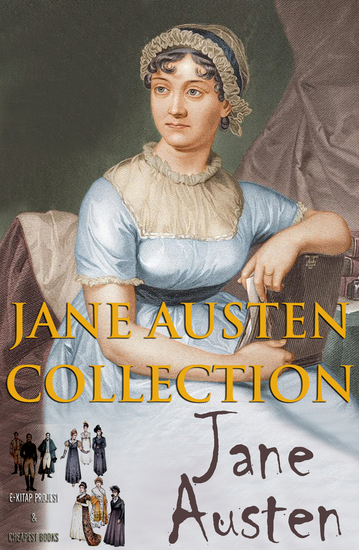
This Excellent Collection brings together Jane Austen's longer, major books and a fine selection of shorter pieces and Fiction Books. These Books created and collected in Jane Austen's Most important Works illuminate the life and work of one of the most individual writers of the XIX and XX century - a woman who elevated political writing to an art.

Jane Austen (16 December 1775 – 18 July 1817) was an English novelist known primarily for her six major novels, which interpret, critique and comment upon the British landed gentry at the end of the 18th century. Austen's plots often explore the dependence of women on marriage in the pursuit of favourable social standing and economic security. Her works critique the novels of sensibility of the second half of the 18th century and are part of the transition to 19th-century literary realism. Her use of biting irony, along with her realism, humour, and social commentary, have long earned her acclaim among critics, scholars, and popular audiences alike.

While not widely known in her own time, Jane Austen's comic novels of love among the landed gentry gained popularity after 1869, and her reputation skyrocketed in the 20th century. Her novels, including Pride and Prejudice and Sense and Sensibility, are considered literary classics, bridging the gap between romance and realism.

This Collection included:

1. Lady Susan
2. Sense and Sensibility
3. Pride and Prejudice
4. Mansfield Park
5. Emma
6. Persuasion
7. Northanger Abbey
8. Juvenilia – Volume I
9. Juvenilia – Volume II
10. Juvenilia – Volume III
Verfügbar seit: 05.04.2024.
Drucklänge: 1400 Seiten.
Weitere Bücher, die Sie mögen werden

  • The Valley of Spiders - From their pens to your ears genius in every story - cover

    The Valley of Spiders - From...

    HG Wells

    • 0
    • 0
    • 0
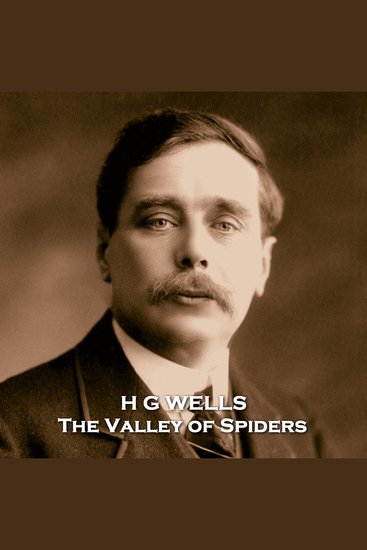
    Herbert George Wells was born on September 21st, 1866 at Atlas House, 46 High Street, Bromley, Kent. He was the youngest of four siblings and his family affectionately knew him as ‘Bertie’.  
    The first few years of his childhood were spent fairly quietly, and Wells didn’t display much literary interest until, in 1874, he accidentally broke his leg and was left to recover in bed, largely entertained by the library books his father regularly brought him. Through these Wells found he could escape the boredom and misery of his bed and convalescence by exploring the new worlds he encountered in these books.  
    From these humble beginnings began a career that was, after several delays, to be seen as one of the most brilliant of modern English writers.    
    Able to write comfortably in a number of genres he was especially applauded for his science fiction works such as The Time Machine and War of the Worlds but his forays into the social conditions of the times, with classics such as Kipps, were almost as commercially successful.  His short stories are miniature masterpieces many of which bring new and incredible ideas of science fiction to the edge of present day science fact.  Wells also received four nominations for the Nobel Prize in Literature 
    Despite a strong and lasting second marriage his affairs with other women also brought the complications of fathering other children.  His writings and work against fascism, as well as the promotion of socialism, brought him into increasing doubts with and opposition to religion.  His writings on what the world could be in works, such as A Modern Utopia, are thought provoking as well as being plausible, especially when viewed from the distressing times they were written in. 
    His diabetic condition pushed him to create what is now the largest Diabetes charity in the United Kingdom.  Wells even found the time to run twice for Parliament. 
    It was a long, distinguished and powerfully successful career by the time he died, aged 79, on August 13th, 1946.
    Zum Buch
  • Emma - cover

    Emma

    Jane Austen

    • 0
    • 0
    • 0
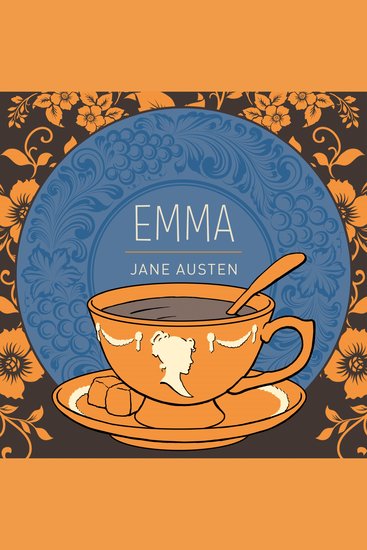
    Albeit that she is not yet 21, Emma Woodhouse foresees a future as a spinster dabbling in matchmaking. Charming and infuriating, she almost ruins the marriage prospects of Harriet Smith, her protégée, after misguidedly attempting to match Harriet with the local rector, who is in fact in search of a wealthy wife. Reprimanded by her friend, George Knightly, and misled by Frank Crawford, whom she saw as a potential suitor, Emma learns some valuable lessons in humility and about love and marriage.
    Zum Buch
  • All's Well That Ends Well - cover

    All's Well That Ends Well

    William Shakespeare

    • 0
    • 0
    • 0
    A Shakespeare Society Production. The complete play in five acts. 
    Desperately in love with Bertram, the son of a Spanish countess, Helena schemes with the virginal Diana to fulfill Bertram’s stipulations and win his love. As Bertram’s infidelity and Helena’s deceits are revealed, the estranged lovers reunite, but the audience is left to wonder if, in love, the end justifies the means.
    Zum Buch
  • The Japanese Quince - From their pens to your ears genius in every story - cover

    The Japanese Quince - From their...

    John Galsworthy

    • 0
    • 0
    • 0
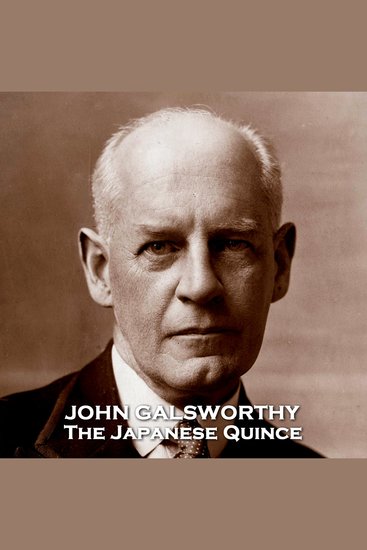
    John Galsworthy was born on the 14th August 1867 on the family estate, Parkfield, in Kingston-upon-Thames.  His family’s wealth came from the shipping industry 
    At age nine he began his education at Saugeen, a Bournemouth preparatory school, before moving to Harrow school in 1881, distinguishing himself as an athlete.  
    Galsworthy attended New College, Oxford to read law and left with a second-class degree with honours in 1889. The bar called him in 1890 but Galsworthy decided he would rather run the family’s shipping business. This also meant travelling to destinations such as Vancouver, South Africa and Australia. 
    In 1895 Galsworthy began a decade long affair with Ada Nemesis Pearson Cooper, the wife of his first cousin. It was only when, in 1905, she divorced and married Galsworthy that their affair became known. 
    His literary career began in 1897 with a short story volume, ‘From the Four Winds’, with the pseudonym John Sinjohn as were three further works. Under his own name, in 1904, came ‘The Island Pharisees’, a novel of social observation, seasoned with flashes of satire and propaganda. He also switched from small, independent publishers to the larger Heinemann and to whom he remained for the duration of his career. 
    1906 saw first major play, ‘The Silver Box’, and the novel ‘The Man of Property’. Each to considerable acclaim. The latter was the first in ‘The Forsyte Saga’ trilogy written between 1906 and 1921. It dealt with the questions of status, class and materialism through Soames Forsyte, who is acutely aware of his ‘new money’ status. Jealous of his wife, his machinations drive her into the arms of another. Soames engages in a terrible revenge with terrible consequences.  
    His social agenda was enlightened particularly in his condemnation over the use of solitary confinement in prisons, his attacks on theatrical censorship and campaigning for animal rights. 
    Galsworthy, having been passed over for active service, spent much of the First World War working as an orderly in a field hospital in France. 
    Despite his it was only in 1920 that he had his first blockbuster play ‘The Skin Game’, a melodrama dealing with ethics, property and class.  
    In 1920 ‘In Chancery’ also arrived with further discourse on the marital disharmony between Soames Forsyte and his wife.  
    The appreciation of his work gradually shifted from plays to novels, particularly through his detailing English social difference, tension and pretension with the Forsytes.  A second trilogy, ‘A Modern Comedy’, followed, examining his love for his daughter Fleur and the English commercial upper-middle class, its ideologies and Soames’ poisonous materialism.  
    Having rejected a knighthood in 1918 he was appointed, in 1929, to the Order of Merit. Galsworthy spent his last years writing a third Forsythe trilogy, ‘End of the Chapter’.   
    In 1932 he was awarded the Nobel Prize, but by now failing health meant he was too ill to attend the ceremony. 
    John Galsworthy died at his Hampstead home of a brain tumour on 31st January, 1933. He was cremated and his ashes scattered from an aeroplane over the South Downs.
    Zum Buch
  • Les Miserables Volume 3 - cover

    Les Miserables Volume 3

    Victor Hugo

    • 0
    • 0
    • 0
    In "Les Misérables Volume 3" by Victor Hugo, the lives of Jean Valjean, Cosette, and Marius become increasingly intertwined amid rising revolutionary fervor in Paris. As Valjean continues to protect Cosette while evading Javert, Marius joins the fight for liberty, torn between love and duty. The novel explores themes of sacrifice, justice, and the clash between personal desires and societal ideals. Hugo masterfully depicts both intimate struggles and grand historical events, capturing the chaos of rebellion and the resilience of the human spirit. With rich detail and emotional depth, this volume builds toward a powerful climax, blending hope, tragedy, and redemption.
    Zum Buch
  • The Haunted Baronet - cover

    The Haunted Baronet

    Joseph Sheridan Le Fanu

    • 0
    • 0
    • 0
    "The lake does not give up its dead easily, and the House of Mardykes has a long memory."
    
    Sir Bale Mardykes is a man of iron will and a cold heart, living in the ancestral home of Mardykes Hall near the secluded village of Golden Friars. He believes he is the master of his own fate, but he is haunted by a centuries-old prophecy of doom. When he cruelly causes the death of his secretary and distant relative, Philip Feltram, Sir Bale believes he has cleared a nuisance from his path. But when Feltram returns—changed, silent, and carrying the chill of the lake—Sir Bale realizes that the dead have a way of reclaiming what is theirs. It is a slow-burn masterpiece of Gothic tension, where the environment itself seems to conspire against the living.
    
    The Environment as Antagonist: Le Fanu utilizes the "Atmospheric Gothic" to its fullest potential here. The swirling mists of the Lake District, the echoes in the mountain passes, and the bottomless depths of the lake serve as metaphors for Sir Bale's mounting paranoia. The house and the land are not just settings; they are active participants in the baronet's downfall.
    
    A Study in Psychological Ruin: Unlike many contemporary ghost stories, the horror in The Haunted Baronet is deeply internal. We watch Sir Bale's skepticism slowly erode as the supernatural elements become undeniable. The figure of the "Returned" Feltram is one of Le Fanu's most effective creations—a ghost that doesn't just haunt, but inhabits the social space of the living.
    
    The Weight of Ancestry: Le Fanu explores the idea that we are never truly free from the actions of our forefathers. Sir Bale is a victim of his own bloodline as much as his own choices. The novella builds to a tragic and inevitable climax that proves that some debts can only be paid in lifeblood.
    
    Beware the calm waters of Golden Friars. Purchase "The Haunted Baronet" today.
    Zum Buch