Begleiten Sie uns auf eine literarische Weltreise!
Buch zum Bücherregal hinzufügen
Grey
Einen neuen Kommentar schreiben Default profile 50px
Grey
Jetzt das ganze Buch im Abo oder die ersten Seiten gratis lesen!
All characters reduced
Emma - cover

Emma

JANE AUSTEN

Verlag: Classica Libris

  • 0
  • 0
  • 0

Beschreibung

Clever, rich—and single—Emma Woodhouse is perfectly content with her life and sees no need for either love or marriage. Nothing, however, delights her more than interfering in the romantic lives of others. But when she ignores the warnings of her good friend Mr. Knightley and attempts to arrange a suitable match for her protégée Harriet Smith, her carefully laid plans soon unravel and have consequences that she never expected. With its imperfect but charming heroine and its witty and subtle exploration of relationships, Emma is often seen as Jane Austen’s most flawless work.
Verfügbar seit: 06.08.2018.

Weitere Bücher, die Sie mögen werden

  • Middlemarch (Book 8: Sunset and Sunrise) - cover

    Middlemarch (Book 8: Sunset and...

    George Eliot

    • 0
    • 0
    • 0
    Middlemarch (Book 8: Sunset and Sunrise), A Study of Provincial Life is a novel by English author George Eliot, the pen name of Mary Ann Evans. It appeared in eight installments (volumes) in 1871 and 1872. Set in Middlemarch, a fictional English Midlands town, from 1829 to 1832, it follows distinct, intersecting stories with many characters. Issues include the status of women, the nature of marriage, idealism, self-interest, religion, hypocrisy, political reform, and education. Leavened with comic elements, Middlemarch approaches significant historical events in a realist mode: the Reform Act 1832, early railways, and the accession of King William IV. It looks at medicine of the time and reactionary views in a settled community facing unwelcome change. Eliot began writing the two pieces that formed the novel in 1869–1870 and completed it in 1871. Initial reviews were mixed, but it is now seen widely as her best work and one of the great English novels.
    Zum Buch
  • Call of the Wild - cover

    Call of the Wild

    Jack London

    • 0
    • 0
    • 0
    The Call of the Wild is a novel by American writer Jack London. The plot concerns a previously domesticated and even somewhat pampered dog named Buck, whose primordial instincts return after a series of events finds him serving as a sled dog in the treacherous, frigid Yukon during the days of the 19th century Klondike Gold Rushes. Published in 1903, The Call of the Wild is one of London's most-read books, and it is generally considered one of his best.    Because the protagonist is a dog, it is sometimes classified as a juvenile novel, suitable for children, but it is dark in tone and contains numerous scenes of cruelty and violence. London followed the book in 1906 with White Fang, a companion novel with many similar plot elements and themes as The Call of the Wild, although following a mirror image plot in which a wild wolf becomes civilized by a mining expert from San Francisco named Weedon Scott.
    Zum Buch
  • The Emancipated - cover

    The Emancipated

    George Gissing

    • 0
    • 0
    • 0
    The Emancipated explores the complexities of marriage, personal freedom, and societal expectations in late Victorian England. The story centers on Everard Domby, a disillusioned barrister trapped in a loveless marriage to a woman whose conventional mindset stifles his intellectual and emotional growth. As he grows closer to Dora Mead, a divorced and independent-minded woman considered scandalous by society, Everard is forced to confront his own ideals versus social reality. Gissing critiques the institution of marriage and the rigid moral codes of the time, portraying the inner turmoil of individuals torn between duty and desire. With psychological depth and sharp social observation, the novel questions what it truly means to be free—especially for those who challenge the norms of family, gender, and class.
    Zum Buch
  • Study in Scarlet A (a Sherlock Holmes mystery) - cover

    Study in Scarlet A (a Sherlock...

    Arthur Conan Doyle

    • 0
    • 0
    • 0
    "A Study in Scarlet" was written by Arthur Conan Doyle in 1887, and he marks the first appearance of Sherlock Holmes and Dr. Watson, who would go on to become one of the most well-known mystery-solving duos in literature.  
    When a gruesome murder is discovered with the word "RACHE" scrawled in blood, Sherlock Holmes uses his unique powers of deduction to uncover a hidden story of passion, betrayal, vengeance and retribution.
    Zum Buch
  • Howards End - cover

    Howards End

    E. M. Forster

    • 0
    • 0
    • 0
    "Howards End" is one of E.M. Forster's most celebrated novels, first published in 1910. At the heart of the story is the country house, Howards End, which becomes a symbol for the narrative's exploration of the social, economic, and class divisions in early 20th-century England. The novel intertwines the lives of three families: the idealistic, intellectual Schlegel sisters, the wealthy, pragmatic Wilcoxes, and the working-class Basts. Through their interconnected relationships, Forster scrutinizes the changing societal landscape, especially the diminishing values of the Edwardian era and the rise of modernity. Themes of inheritance, belonging, love, and betrayal are delicately interwoven, showcasing Forster's profound understanding of human nature and societal constraints.
    Zum Buch
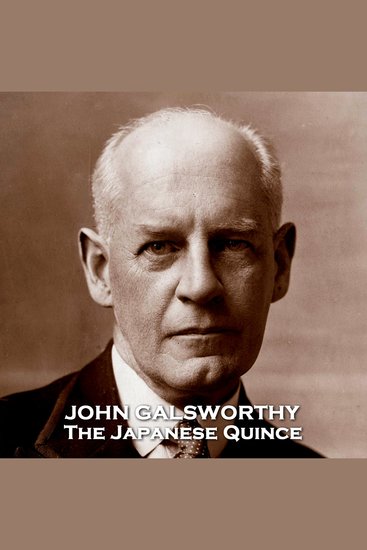
  • The Japanese Quince - From their pens to your ears genius in every story - cover

    The Japanese Quince - From their...

    John Galsworthy

    • 0
    • 0
    • 0
    John Galsworthy was born on the 14th August 1867 on the family estate, Parkfield, in Kingston-upon-Thames.  His family’s wealth came from the shipping industry 
    At age nine he began his education at Saugeen, a Bournemouth preparatory school, before moving to Harrow school in 1881, distinguishing himself as an athlete.  
    Galsworthy attended New College, Oxford to read law and left with a second-class degree with honours in 1889. The bar called him in 1890 but Galsworthy decided he would rather run the family’s shipping business. This also meant travelling to destinations such as Vancouver, South Africa and Australia. 
    In 1895 Galsworthy began a decade long affair with Ada Nemesis Pearson Cooper, the wife of his first cousin. It was only when, in 1905, she divorced and married Galsworthy that their affair became known. 
    His literary career began in 1897 with a short story volume, ‘From the Four Winds’, with the pseudonym John Sinjohn as were three further works. Under his own name, in 1904, came ‘The Island Pharisees’, a novel of social observation, seasoned with flashes of satire and propaganda. He also switched from small, independent publishers to the larger Heinemann and to whom he remained for the duration of his career. 
    1906 saw first major play, ‘The Silver Box’, and the novel ‘The Man of Property’. Each to considerable acclaim. The latter was the first in ‘The Forsyte Saga’ trilogy written between 1906 and 1921. It dealt with the questions of status, class and materialism through Soames Forsyte, who is acutely aware of his ‘new money’ status. Jealous of his wife, his machinations drive her into the arms of another. Soames engages in a terrible revenge with terrible consequences.  
    His social agenda was enlightened particularly in his condemnation over the use of solitary confinement in prisons, his attacks on theatrical censorship and campaigning for animal rights. 
    Galsworthy, having been passed over for active service, spent much of the First World War working as an orderly in a field hospital in France. 
    Despite his it was only in 1920 that he had his first blockbuster play ‘The Skin Game’, a melodrama dealing with ethics, property and class.  
    In 1920 ‘In Chancery’ also arrived with further discourse on the marital disharmony between Soames Forsyte and his wife.  
    The appreciation of his work gradually shifted from plays to novels, particularly through his detailing English social difference, tension and pretension with the Forsytes.  A second trilogy, ‘A Modern Comedy’, followed, examining his love for his daughter Fleur and the English commercial upper-middle class, its ideologies and Soames’ poisonous materialism.  
    Having rejected a knighthood in 1918 he was appointed, in 1929, to the Order of Merit. Galsworthy spent his last years writing a third Forsythe trilogy, ‘End of the Chapter’.   
    In 1932 he was awarded the Nobel Prize, but by now failing health meant he was too ill to attend the ceremony. 
    John Galsworthy died at his Hampstead home of a brain tumour on 31st January, 1933. He was cremated and his ashes scattered from an aeroplane over the South Downs.
    Zum Buch