Begleiten Sie uns auf eine literarische Weltreise!
Buch zum Bücherregal hinzufügen
Grey
Einen neuen Kommentar schreiben Default profile 50px
Grey
Jetzt das ganze Buch im Abo oder die ersten Seiten gratis lesen!
All characters reduced
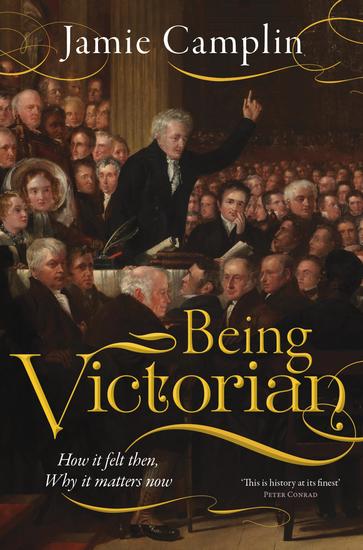
Being Victorian - How it felt then Why it matters now - cover

Being Victorian - How it felt then Why it matters now

Jamie Camplin

Verlag: Unicorn

  • 0
  • 0
  • 0

Beschreibung

Writers and poets, academics and art critics, mathematicians and experimental scientists, churchmen and politicians, women of strong opinions gather for a summer weekend in the 1870s. Is it real, or is it a fantasy? One thing's sure: their debates – about life's aims, rural and urban living, love and money, civilization and belief, the social framework, the past, the present and the future take us to the heart of the Victorian dream and its reality: the idea that their society exemplified 'Progress'. What did 'Progress' mean? Were things (and which things) getting better? What did 'better' mean? And for whom? The history of the world before the Victorians, from Aberdeen to Africa, showed a particular form of equality for almost everyone: an equality of poverty and no prospects, with kindness often in short supply. Victorians wanted to change that world, thought they were changing it, did change it. They did it in a human way: a melange of muddle, vision, certainty, doubt, too slow for many, too fast for some. Yet their changes were decisive both for creating the modern world, but also for revealing the dilemmas attached to mass living in urban, technological societies, as well as the moral flaws in imposing one civilization's or one person's beliefs on another. Most remarkably of all, the upheaval in making major transitions in every area of life, which produced revolutions and violence across Europe, in the Americas and in Asia, was carried out – at least in Britain itself – almost entirely peacefully. The past will always be a foreign country for those unwilling to engage with its people. Whether viewing the lives of rulers or the ruled, 'Being Victorian' corrects innumerable preconceptions.
Verfügbar seit: 11.09.2025.
Drucklänge: 320 Seiten.

Weitere Bücher, die Sie mögen werden

  • War to the Knife - Bleeding Kansas 1854–1861 - cover

    War to the Knife - Bleeding...

    Thomas Goodrich

    • 0
    • 0
    • 0
    This history shines a light on America’s “first civil war”: the bloody conflict in Kansas Territory between abolitionists and proslavery extremists. Long before the secession crisis at Fort Sumter ignited the War between the States, men fought and died on the prairies of Kansas over the incendiary issue of slavery. The bitter conflict was described in the Atchison Squatter Sovereign newspaper as “war to the knife and knife to the hilt.”  In 1854 a shooting war developed between proslavery men from Missouri and free-staters in Kansas over control of the territory. The prize was whether Kansas would become a slave or a free state when admitted to the Union, a question that could decide the balance of power in Washington.  War to the Knife is an absorbing account of this bloody episode in our nation's past, told in the unforgettable words of the men and women involved: Robert E. Lee, William Tecumseh Sherman, Sara Robinson, Jeb Stuart, Abraham Lincoln, William F. Cody, and John Brown—the abolitionist who was hailed by some as a prophet, and denounced as a madman by others.
    Zum Buch
  • On Longevity and Shortness of Life - Aristotle’s Study of the Secrets of a Long Life - cover

    On Longevity and Shortness of...

    Aristotle, Tim Zengerink

    • 0
    • 0
    • 0
    What if you could uncover age-old insights into why some beings thrive longer and how we might extend our own vitality? 
    In this remarkable treatise, Aristotle explores the variables that affect lifespan, delving into the anatomical, environmental, and philosophical factors behind longevity. Adapted for contemporary readers, this work offers a fascinating bridge between ancient natural science and modern health considerations—helping you navigate the quest for a healthier, more enduring life. 
    What You’ll Discover in This Modern Translation: 
    - Ancient perspectives on longevity and lifespan differences 
    - The role of environment, diet, and constitution in longevity 
    - Philosophical reflections on life’s quality vs. quantity 
    - Timeless insights that complement modern health science 
    Imagine having a guide that not only explains the fundamentals of living well but also encourages deeper thought on what makes life worth living. Aristotle’s profound inquiry provides an inspiring framework for any reader seeking holistic well-being. 
    Begin your journey toward a longer, more meaningful life. Get your copy now and embrace Aristotle’s timeless wisdom on vitality and fulfillment.
    Zum Buch
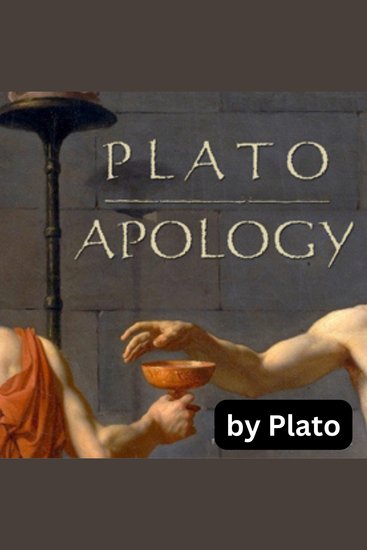
  • Plato: Apology - cover

    Plato: Apology

    Plato

    • 0
    • 0
    • 0
    The Apology is Plato's version of the speech given by Socrates as he defended himself in 399 BC against the charges of "corrupting the young, and by not believing in the gods in whom the city believes, but in other daimonia that are novel" . "Apology" here has its earlier meaning of speaking in defense of a cause or of one's beliefs or actions. The general term apology, in context to literature, defends a world from attack (opposite of satire-which attacks the world).the text is written in the first person from Socrates' point of view, as though it were Socrates' actual speech at the trial. During the course of the speech, Socrates twice mentions Plato as being present. There is, however, no real way of knowing how closely Socrates' words in the Apology match those of Socrates at the actual trial, even if it was Plato's intention to be accurate in this respect 
    Zum Buch
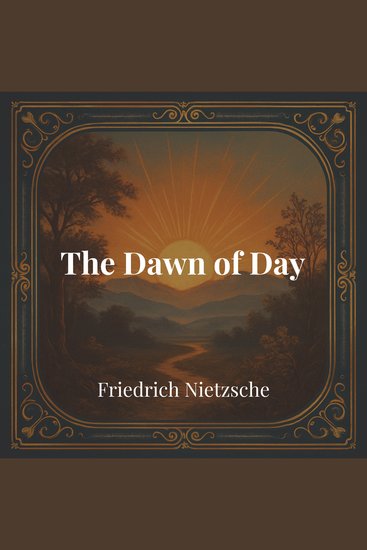
  • The Dawn of Day - cover

    The Dawn of Day

    Friedrich Nietzsche

    • 0
    • 0
    • 0
    The Dawn of Day 
     By Friedrich Nietzsche 
    What if the true dawn of humanity is not behind us, but still ahead? In The Dawn of Day, Nietzsche invites you to peer into the quiet moments before sunrise - where morality, truth, and belief begin to shift their shape. 
    Known as one of the most provocative minds in Western philosophy, Friedrich Nietzsche sought to untangle the inherited dogmas of his age. This work marks a turning point in his thought, foreshadowing the bold ideas of Thus Spoke Zarathustra and Beyond Good and Evil. Here, Nietzsche begins to question the foundations of religion, ethics, and self - urging readers to wake from the slumber of convention and to seek their own truths. 
    Explore entries that challenge the origins of conscience, dissect the psychology of altruism, and examine the hidden instincts that shape our so-called morality. Each aphorism opens a door - sometimes to wonder, sometimes to unease - but always toward deeper self-awareness. 
    More than a philosophical treatise, The Dawn of Day remains a timeless journey into the labyrinth of human nature. Nietzsche's insights continue to influence thinkers, artists, and seekers over a century later. His call for intellectual courage is as relevant now as ever. 
    This immersive audiobook experience, brought to life with crystal-clear AI narration, delivers Nietzsche’s words with precision and emotional nuance—inviting you to engage deeply, reflect boldly, and listen actively. 
    Dare to step into the shadows before sunrise. Buy now and awaken your own dawn of thought.
    Zum Buch
  • Plotting the Impossible: A Modern Guide to Story Architecture - cover

    Plotting the Impossible: A...

    Billy Grady

    • 0
    • 0
    • 0
    Every unforgettable story shares a hidden framework—a structure that pulls readers in, keeps them hooked, and leaves them breathless at the end. Plotting the Impossible is your key to mastering that architecture, whether you’re writing a high-stakes thriller, a sweeping romance, or a genre-defying masterpiece. 
    In this insightful and practical guide, bestselling author and coach Billy Grady reveals how to: 
    Build bulletproof plots that captivate from the first page to the last 
    Design twists and turns that surprise without breaking believability 
    Balance pacing and tension for maximum emotional impact 
    Adapt classic story structures to fit modern audiences and unique voices 
    Packed with real-world examples, actionable exercises, and step-by-step blueprints, Plotting the Impossible gives you the tools to create stories that feel both inevitable and unforgettable. 
    If you’ve ever wondered how to turn a wild idea into a perfectly constructed narrative, this book will show you how to make the impossible not just possible—but unforgettable.
    Zum Buch
  • Third Ear - Reflections on the Art and Science of Listening - cover

    Third Ear - Reflections on the...

    Elizabeth Rosner

    • 0
    • 0
    • 0
    This illuminating book weaves personal stories of a multilingual upbringing with the latest scientific breakthroughs in interspecies communication to show how the skill of deep listening enhances our curiosity and empathy toward the world around us 


    Third Ear braids together personal narrative with scholarly inquiry to examine the power of listening to build interpersonal empathy and social transformation. A daughter of Holocaust survivors, Rosner shares stories from growing up in a home where six languages were spoken to interrogate how psychotherapy, neurolinguistics, and creativity can illuminate the complex ways we are impacted by the sounds and silences of others. 


    Drawing on expertise from journalists, podcasters, performers, translators, acoustic biologists, spiritual leaders, composers, and educators, this hybrid text moves fluidly along a spectrum from molecular to global to reveal how third-ear listening can be a collective means for increased understanding and connection to the natural world.
    Zum Buch