Begleiten Sie uns auf eine literarische Weltreise!
Buch zum Bücherregal hinzufügen
Grey
Einen neuen Kommentar schreiben Default profile 50px
Grey
Jetzt das ganze Buch im Abo oder die ersten Seiten gratis lesen!
All characters reduced
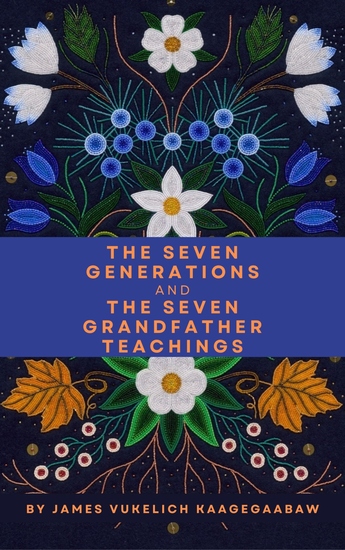
The Seven Generations and The Seven Grandfather Teachings - cover

The Seven Generations and The Seven Grandfather Teachings

James Vukelich Kaagegaabaw

Verlag: Kaagegaabaw

  • 0
  • 0
  • 0

Beschreibung

Discover indigenous wisdom for a life well lived in “The Seven Generations and the Seven Grandfather Teachings.” Based on ancient teachings from the Anishinaabe/Ojibwe people, this spiritual translation of the sacred laws guides us toward Mino-bimaadiziwin, "the good life" – a life of harmony, free from contradiction or conflict. Prepare to embark on a path to peace, balance and personal growth where ancestral knowledge offers timeless lessons for transforming our lives and the lives of future generations.
Verfügbar seit: 21.06.2023.
Drucklänge: 88 Seiten.

Weitere Bücher, die Sie mögen werden

  • Retrospective on the Gulf - The Questions of War - cover

    Retrospective on the Gulf - The...

    Neal Conan

    • 0
    • 0
    • 0
    It was phenomenally successful in the air, strikingly decisive on the ground—and suddenly the war in the Persian Gulf was over, with an overwhelming victory for the allied forces. But what really happened? Why did the air war work so well? Why did the massive, allied casualties many predicted for the ground phase never materialize? Why was it all so easy when American intelligence had said it would be so hard? And what was the impact of using a war plan devised to fight the Warsaw Pact against a developing nation? On this thought-provoking recording, some of NPR's top reporters—Neal Conan, Deborah Amos, Ted Clark, and Anne Garrels—examine these and other questions from the Gulf War.
    Zum Buch
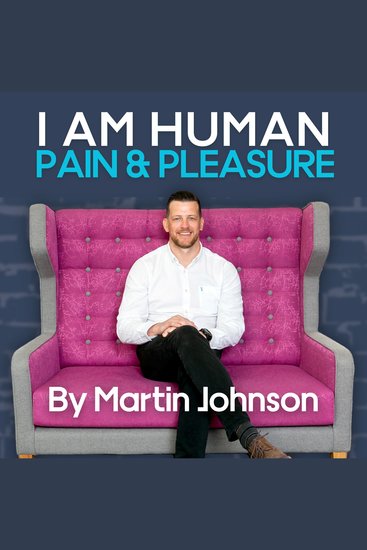
  • I Am Human: Pain & Pleasure - cover

    I Am Human: Pain & Pleasure

    Martin Johnson

    • 0
    • 0
    • 0
    For thousands of years our species has survived, evolved and thrived through our ability to endure pain and suffering, whilst also seeking pleasure and reward. But the scales have tipped and we're losing our balance. Seemingly more susceptible to anxiety than ever before, are the lifestyles we crave creating a "comfort crisis" and do we have the ability to wrestle back control? Exploring the psychology of pain and pleasure, how they dominate and dictate everything we humans do - this book will make you stop and think about your life. Most importantly, it will offer practical solutions to balance your pain-pleasure scales and achieve greater levels of fulfilment.
    Zum Buch
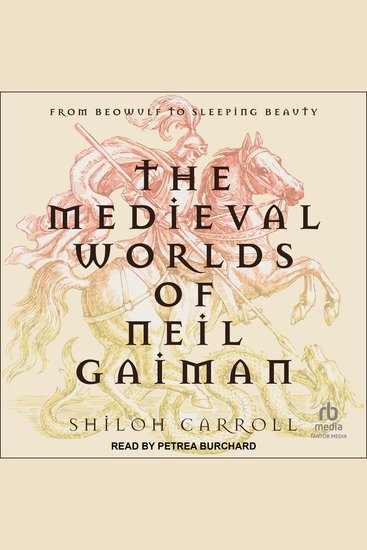
  • The Medieval Worlds of Neil Gaiman - From Beowulf to Sleeping Beauty - cover

    The Medieval Worlds of Neil...

    Shiloh Carroll

    • 0
    • 0
    • 0
    Neil Gaiman is one of the most widely known writers of the twentieth and twenty-first centuries, having produced fiction and nonfiction, fantasy and horror, television, comics, and prose. He often attributes this eclecticism to his "compost heap" approach to writing, gathering inspiration from life, religion, literature, and mythology. 


    Readers love to sink into Gaiman's medieval worlds—but what makes them "medieval"? Shiloh Carroll offers an introduction to the idea of medievalism, how the literature and culture of the Middle Ages have been reinterpreted and repurposed over the centuries, and how the layers of interpretation have impacted Gaiman's own use of medieval material. She examines influences from Norse mythology and Beowulf to medieval romances and fairy tales in order to expand listeners' understanding and appreciation of Gaiman's work, as well as the rest of the medievalist films, TV shows, and books that are so popular today.
    Zum Buch
  • Who killed Napoléon? 10 New scientific investigations to rescue history - cover

    Who killed Napoléon? 10 New...

    Gérard Lucotte, Philippe Bornet

    • 0
    • 0
    • 0
    “Let the muse of history be silent, and make way for genetics.” Jean Tulard. 
    “Fascinating.” Jean-Noël Fabiani, Professor Emeritus, Chair of the History of Medicine. 
    
    Until recent years, many mysteries and rumors have surrounded Napoleon. Was Napoleon's body taken by the British and placed in Westminster Abbey? Was he poisoned with arsenic? Did he die of hereditary stomach cancer, as the English claimed, or of hepatitis and dysentery rampant on that unhealthy island? Was Napoleon III descended from the Emperor? Did the Emperor's physician remove Napoleon's penis after his death on St. Helena in 1821?
    To answer these and many other questions, Professor Gérard Lucotte spent twelve years working on this subject. He was commissioned by Prince Charles Napoléon (a descendant of the Emperor, through the branch descended from Jérôme Bonaparte, the Emperor's youngest brother) and Count Walewski (a descendant of Napoleon the First’s natural son) to work on Napoléon's DNA. Thanks to his genetics laboratory and electron microscope, he has achieved a gigantic feat that will astound all Napoleon enthusiasts.
    Zum Buch
  • They Don't Understand Depression - Saying What You're Not Supposed to Say and Finding Meaning in the Dark - cover

    They Don't Understand Depression...

    Michael D. Griffith

    • 0
    • 0
    • 0
    Have you ever wished you were dead? Do you understand that hopelessness? Is it lonely? In severe depression, you know how it feels when nobody else really understands. It's obvious from what "they" do and say that they've never felt what you feel. This book is not for them. If you do know what "they don't understand" means without my even explaining it, then this book is for you. I will say the uncomfortable, quiet parts out loud, even though we're not supposed to say what we really think. I'm just a guy who struggled for 14 years with strange, undiagnosed health problems, followed by 7 years in an emotional hellhole, before I miraculously found a glimmer of meaning in the dark. I can't understand your personal hell. However, if I articulate even a small part of what it means that "they don't understand," I ask you to consider my unique perspective on why your suffering matters. You can find peace to know that you do not suffer¿in vain. Your life can have meaning, and you can hope for relief.
    Zum Buch
  • The Siamese - History of the Nation of Thailand - cover

    The Siamese - History of the...

    Kelly Mass

    • 0
    • 0
    • 0
    Siam was just a much different name for what's now referred to as Thailand. The Siamese are the people who live there, though they're never ever called as such any longer. 
    The most current and right clarification concerning the Tai people's beginnings claims that Guangxi, instead of Yunnan, is the Tai motherland. Today, Guangxi is home to a big population of Tai people referred to as the Zhuang. According to the Khun Borom folklore, Tai people who were not affected by the Chinese settled in what's now Biên Ph in modern Vietnam around 700 AD. Pittayawat Pittayaporn (2014) assumed that this movement occurred at the time of the 8th and 10th centuries, based upon layers of Chinese loanwords in proto-Southwestern Tai and other historic information. Chinese growth and mistreatment could have triggered Tai-speaking tribe to travel southwestward down rivers and over lower enters Southeast Asia. 
    Thailand is a fascinating country, with its own culinary arts, culture, history, royalty, infrastructure, and influence on the world. To learn more about these “Thai” people before they were called Thai, when they were Siamese, is to learn about those people’s roots.
    Zum Buch