Begleiten Sie uns auf eine literarische Weltreise!
Buch zum Bücherregal hinzufügen
Grey
Einen neuen Kommentar schreiben Default profile 50px
Grey
Jetzt das ganze Buch im Abo oder die ersten Seiten gratis lesen!
All characters reduced
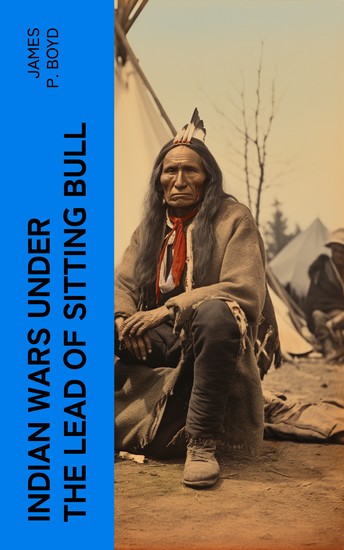
Indian Wars under the Lead of Sitting Bull - With Original Photos and Illustrations - cover

Indian Wars under the Lead of Sitting Bull - With Original Photos and Illustrations

James P. Boyd

Verlag: e-artnow

  • 0
  • 0
  • 0

Beschreibung

In 1875, the Great Sioux War of 1876–77, the last serious Sioux war erupted, when the Dakota gold rush penetrated the Black Hills. The U.S. Government decided to stop evicting trespassers from the Black Hills, and offered to buy the land from the Sioux. When they refused, the Government decided instead to take the land, and gave the Lakota until January 31, 1876 to return to reservations. They were led in the field by Crazy Horse and inspired by Sitting Bull's earlier vision of victory. Sitting Bull was a Hunkpapa Lakota leader who led his people during years of resistance to United States government policies. He was killed by Indian agency police on the Standing Rock Indian Reservation during an attempt to arrest him, at a time when authorities feared that he would join the Ghost Dance movement. Contents: War With the Pueblos The Shoshone Uprising Wars With the California Tribes A Yuma Massacre The Rogue River Wars War With the Cheyennes Navajo Hostilities The Affair of Mountain Meadow The Spokane Wars The Fierce Apaches and Arrapahoes The Piegan Punishment Modoc and Lava Bed Custer and the Sioux The Nez Perces Wars The Utes of White River Messiah Craze and Ghost Dance Mastering the Situation Sentiment Respecting the Uprising
Verfügbar seit: 15.12.2023.
Drucklänge: 177 Seiten.
Weitere Bücher, die Sie mögen werden

  • Puerto Rico - A History of Economic Shifts - cover

    Puerto Rico - A History of...

    Anya Solace

    • 0
    • 0
    • 0
    Puerto Rico’s economic history is a complex narrative shaped by its geography, colonial past, and evolving relationship with the United States. As an island strategically positioned in the Caribbean, Puerto Rico has long been a crossroads of trade and cultural exchange. Its economic transformations have been influenced by global markets, shifting policies, and the resilience of its people. From the early days of indigenous trade and Spanish colonial rule to its modern struggles with debt and recovery, the island’s economy has undergone dramatic shifts that reflect broader historical forces.  
    Before European contact, Puerto Rico’s indigenous Taíno population lived in a society largely based on subsistence farming, fishing, and trade with neighboring islands. The arrival of Spanish colonizers in 1493 fundamentally altered the island’s economic structure, introducing mercantilist policies that prioritized resource extraction for the benefit of Spain. The encomienda system, which forced indigenous labor into agricultural production and mining, marked the beginning of Puerto Rico’s long history of external economic control. As sugarcane, coffee, and tobacco plantations expanded, the island became increasingly dependent on these cash crops, with African slaves and, later, poor laborers fueling the agricultural economy.  
    In 1898, Puerto Rico’s economic trajectory changed abruptly when the United States took control following the Spanish-American War. The transition from Spanish to American rule reshaped trade networks, introducing new economic policies that favored U.S. business interests. The Foraker Act of 1900 established a civilian government but left Puerto Rico politically and economically subordinate to the United States. The shift from a Spanish mercantile system to an American capitalist framework brought opportunities but also deep inequalities.
    Zum Buch
  • Titanic - A Fresh Look at the Evidence by a Former Chief Inspector of Marine Accidents - cover

    Titanic - A Fresh Look at the...

    John Lang

    • 0
    • 0
    • 0
    “By far the most thorough and well-written investigative book on RMS Titanic’s short life and tragic sinking that this reviewer has read . . . fascinating.” —Choice Reviews   The sinking of the Titanic on her maiden voyage in April 1912 was one of the defining moments of the twentieth century. Books and films about the disaster that befell the iconic liner are commonplace, and it seems almost inconceivable that anything fresh can emerge. But there is one angle that has not been covered, and Titanic examines the events of April 1912 from that completely new perspective. John Lang brings the standards of a twenty-first-century accident investigation to bear on the events of April 1912, using his expertise and his investigator’s instinct to determine exactly what happened a century ago, and what important lessons still need to be learned.  “A fascinating account . . . this book looks at the facts from a new perspective and uncovers some unexpected findings. A worthwhile read.” —Royal Naval Sailing Association  “Provides genuine insight into what almost certainly happened before, during and after the ice sliced through the five compartments on the liner’s starboard bow.” —Viewpoint  “Lang, with his experience of marine accident investigation has found an angle in examining events of April 1912 from the perspective of an MAIB officer. His analysis is supported by detailed background material enabling the reader to understand the events of the collision and sinking more fully as he brings the standards of a 21st century investigation to bear on the events in determining exactly what happened and why.” —Flash  
    Zum Buch
  • Sumerians - Their History Religion and Inventions - cover

    Sumerians - Their History...

    Kelly Mass

    • 0
    • 0
    • 0
    The Sumerians were the people from Sumer, the first recognized society in the historic area of southern Mesopotamia (now southern Iraq), developed throughout the 6th and 5th centuries BC throughout the Chalcolithic and early Bronze Ages. In addition to age-old Egypt, the Caral-Supe culture, the Indus Valley civilization, the Minoan civilization, and age-old China, it is also one of the world's early civilizations. Sumerian farmers who lived along the Tigris and Euphrates valleys grew a great deal of grain and other items, which allowed them to establish metropolitan towns. Before 3000 BC, there was proto-writing. The earliest files date from between 3500 and 3000 BC and are from the cities of Uruk and Jemdet Nasr. 
    Most historical analysts believe that Sumer was first completely occupied between c. 5500 and 4000 BC by a West Asian population who spoke the Sumerian language, a non-Semitic and non-Indo-European agglutinative language isolate (as evidenced by the names of cities, rivers, standard professions, and so on). It wasn't an inflected language, in contrast to its Semitic cousins. 
    Go ahead and get stared, and get to know more about the Sumerians, what they did, who they were, and why so many people know so little about them.
    Zum Buch
  • Empath - How To Develop Your Gift Of Empath And Find Yourself - cover

    Empath - How To Develop Your...

    Antony Felix

    • 0
    • 0
    • 0
    Unlock Your Power as an Empath and Transform Your Life and the World 
    Do you often feel drained after being around people? Do you absorb others’ emotions as if they’re your own? Have you been told you’re “too sensitive”? 
    If so, you might be an empath—a unique individual with the extraordinary ability to sense and feel the emotions of others. While this gift can feel overwhelming, it holds incredible potential to bring positive change to your life and the world. 
    This book is your guide to harnessing your empathic power without letting it drain you or cause stress. Discover how to care for yourself while using your gift to its fullest potential.Inside, You’ll Learn:How to identify and embrace your empathic abilities.Ways to protect yourself from negativity and energy vampires.Techniques for using crystals, meditation, and salt baths to restore your energy.Methods to balance and develop your chakras.Strategies to overcome challenges and normalize your day-to-day life as an empath. 
    With practical advice and actionable tips, this book will empower you to turn your sensitivity into strength, protecting your well-being while making a difference in the world. 
    If you’re ready to embrace your empathic gift and stop being overwhelmed by others’ emotions, this book is your roadmap to a balanced and empowered life. 
    Click “Buy Now” to start your journey today!
    Zum Buch
  • Marcus Crassus: The Life and Legacy of Ancient Rome’s Richest Man - cover

    Marcus Crassus: The Life and...

    Editors Charles River

    • 0
    • 0
    • 0
    The reasons for Spartacus’s enduring appeal are obvious, but his uprising has overshadowed the fact that his was actually the third such uprising against the Roman Republic in a short span. Preceding this, the First and Second Servile Wars had already demonstrated that revolts against Rome and the whole institution of slavery could gain momentum, and these earlier uprisings provided a blueprint for the larger attempt by Spartacus to win freedom.  
    	At the same time, it’s often overlooked how the revolt affected Rome, and how the leader who put it down propelled his career and played an outsized role in Roman politics ahead of the civil war between Pompey and Caesar. Marcus Licinius Crassus is most remembered today for being the richest Roman in history, and arguably the richest man in world history, but that came about in part because he played a key role in the revolutionary events that took place in Rome throughout the 1st century BCE, including the dictatorship of Sulla, the Third Servile War, the First Triumvirate, and the Parthian Wars. Crassus was the son of Publius Licinius Crassus, who was consul in 97 BCE, and while very little is known of Crassus’ early life, his career as a military figure began in earnest when he escaped from Rome in 87 BCE to Spain to avoid Lucius Cornelius Cinna, who, along with Gaius Marius, led the opposition against Sulla.  
    	Thanks to his rise in the military and politics, Crassus’s renown and riches heavily influenced his contemporaries. In the wake of the Third Servile War, Crassus’ patronage helped position Julius Caesar to be appointed governor of Hispania Ulterior. In order to maintain political office, which made him immune from prosecution for his debts, he left for modern day Spain before his praetorship expired.
    Zum Buch
  • So Great Was the Slaughter - Market Hunters Sportsmen and Wildlife Conservation in Arkansas - cover

    So Great Was the Slaughter -...

    Buckley T. Foster

    • 0
    • 0
    • 0
    So Great Was the Slaughter reveals the untold story of Arkansas conservation pioneers who saved the state's game and fish populations. As Arkansas entered the twentieth century, the national demand for meat combined with the ability to ship millions of animals to hungry cities like New Orleans, Memphis, and Chicago had driven many species, including bison and passenger pigeons, to extinction in Arkansas. Many others, including deer, bear, turkey, quail, and fish, were in danger of disappearing. 
    In response, an unlikely coalition of Arkansas sportsmen, hunters, and conservationists created a vision for conservation legislation, game laws, and the establishment of fish hatcheries and wildlife refuges. With support from influential outsiders like E. A. McIlhenny and the United States Biological Survey, they waged a long battle against entrenched political and commercial interests. 
    Buckley Foster's meticulous research reveals how these pioneers fought to save the state's wildlife resources from destruction and laid the foundations for sustainable, modern wildlife management in Arkansas. So Great Was the Slaughter will fascinate hunters, conservationists, historians, and those interested in the history of wildlife conservation and conflicts between market hunters and sportsmen in the United States and the American South.
    Zum Buch