Rejoignez-nous pour un voyage dans le monde des livres!
Ajouter ce livre à l'électronique
Grey
Ecrivez un nouveau commentaire Default profile 50px
Grey
Abonnez-vous pour lire le livre complet ou lisez les premières pages gratuitement!
All characters reduced
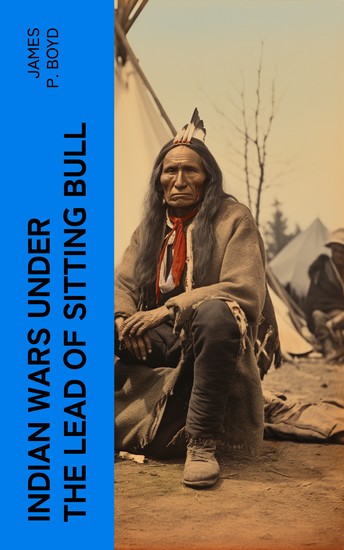
Indian Wars under the Lead of Sitting Bull - With Original Photos and Illustrations - cover

Indian Wars under the Lead of Sitting Bull - With Original Photos and Illustrations

James P. Boyd

Maison d'édition: e-artnow

  • 0
  • 0
  • 0

Synopsis

In 1875, the Great Sioux War of 1876–77, the last serious Sioux war erupted, when the Dakota gold rush penetrated the Black Hills. The U.S. Government decided to stop evicting trespassers from the Black Hills, and offered to buy the land from the Sioux. When they refused, the Government decided instead to take the land, and gave the Lakota until January 31, 1876 to return to reservations. They were led in the field by Crazy Horse and inspired by Sitting Bull's earlier vision of victory. Sitting Bull was a Hunkpapa Lakota leader who led his people during years of resistance to United States government policies. He was killed by Indian agency police on the Standing Rock Indian Reservation during an attempt to arrest him, at a time when authorities feared that he would join the Ghost Dance movement. Contents: War With the Pueblos The Shoshone Uprising Wars With the California Tribes A Yuma Massacre The Rogue River Wars War With the Cheyennes Navajo Hostilities The Affair of Mountain Meadow The Spokane Wars The Fierce Apaches and Arrapahoes The Piegan Punishment Modoc and Lava Bed Custer and the Sioux The Nez Perces Wars The Utes of White River Messiah Craze and Ghost Dance Mastering the Situation Sentiment Respecting the Uprising
Disponible depuis: 15/12/2023.
Longueur d'impression: 177 pages.

D'autres livres qui pourraient vous intéresser

  • Red Symphony - Chapter 40 X-Ray of Revolution - cover

    Red Symphony - Chapter 40 X-Ray...

    Joseph Landowski

    • 0
    • 0
    • 0
    Dr. Landowski was a Russianized Pole and lived in Russia. His father, a Colonel of the Russian Imperial Army, was shot by the Bolsheviks during the 1917 revolution. The life-story of Dr. Landowski is astonishing. He finished the Faculty of Medicine in Russia before the revolution and then studied two years at the Sorbonne in Paris, and he spoke fluent French. He was interested in the effects of drugs on the human organism, to help surgeons in operations. Being a talented doctor, he carried out experiments in this field and had achieved considerable results. The all-seeing NKVD (secret police) became interested in these works and easily discovered the real author. His specialty was very valuable for them. One day in 1936 there was a knock at the doctor's door. He was invited to follow, and he was never again allowed to rejoin his family. He was placed in the building of the chemical laboratory of the NKVD near Moscow. He lived there and was forced to carry out various jobs given to him by his masters, he was a witness at questionings, tortures and the most terrible happenings and crimes. This book is an exact recorded report of the questioning of the former Ambassador in France, C.G. Rakovsky during the period of the trials of the Trotskyists in the USSR in 1938, when he was tried together with Bukharin, Rykoff, Yagoda, Karakhan, Dr. Levin and others. The questioning took place in French by this agent. The doctor was present in order to put drug pills unnoticed into the glass of Rakovsky, to induce energy and a good mood. Behind the wall the conversation was registered on apparatus, and the technician who operated it did not understand French. Then Dr. Landowski had to translate into Russian, with two copies, for Stalin and Gabriel. Secretly he dared to make a carbon copy, which he hid anyway.
    Voir livre
  • Dark Psychology - 3 in 1 Combo: Learn About Manipulation and Mind Controlling Techniques - cover

    Dark Psychology - 3 in 1 Combo:...

    Valerie Glossner

    • 0
    • 0
    • 0
    This is a bundle of 3 titles, which cover the following topics: 
    Title 1: Learning to understand ourselves, the dark and the light, the kind and the cruel, that exists within each one of us, has been a driving factor in psychological studies. 
    Machiavellianism in psychology refers to a personality trait which sees a person so focused on their own interests they will manipulate, deceive, and exploit others to achieve their goals. This audiobook will dive deeper into this topic along with related factors, such as how they control and manipulate others and the consequences that come with it. This audiobook will shed some light on how to spot a manipulator and how to outwit one. Listen about various blackmail tactics and how to spot and avoid some of the most common scams on the internet. 
    Title 2: Since our various vehicles were created, from the train, to the car, to the plane, to the sub, to the rocket, our world has gotten so much smaller, now, space is the last great frontier. There is another unknown great frontier, one that we are only beginning to discover, the human mind, especially the subconscious. Our emotions, our thoughts, that gut instinct telling you something isn’t right. It’s all linked to the subconscious. 
    Our subconscious is a very powerful thing, and just like every other powerful thing in the world, it’s dangerous. In fact, our own subconscious is more dangerous to us than it is to others. 
    Title 3: Abuse. It’s wrong, it’s terrible no matter what form it takes. When most of you hear the word abuse you think of one of the physical kinds of abuse. For others, they think of a different kind of abuse, verbal, emotional, psychological, and mental; there are others, but this book focuses on verbal abuse.
    Voir livre
  • Beyond The Brain - Re-Thinking Epilepsy Diagnosis And Treatment Through The Mind-Body Connection - cover

    Beyond The Brain - Re-Thinking...

    Brittany Forrester

    • 0
    • 0
    • 0
    This book takes a deep dive into the intricate world of epilepsy, encompassing its diagnoses, treatment, and scholarly exploration with a keen critical eye. Its primary mission is to present a compelling argument, challenging the prevailing biomedical approach's narrow focus on the brain as the sole locus of intervention for epilepsy. By doing so, it underscores that such an exclusive perspective falls short of addressing the multidimensional needs of individuals living with epilepsy and comprehending their profound lived experiences. 
    In response to this critical shortfall, it proposes a radical departure from the conventional reliance on pharmaceuticals and biological pathways. This innovative approach promises to unveil novel treatments and foster a holistic understanding of the human body's intricacies. By transcending the current biomedical boundaries, this approach has the power to alleviate the suffering of the estimated 70 million people worldwide who grapple with epilepsy.  
    This book represents a beacon of hope and a new era of enlightenment in epilepsy care, potentially significantly enhancing the quality of life for countless individuals affected by this condition.
    Voir livre
  • Big Magic: Book summary & analysis - cover

    Big Magic: Book summary & analysis

    Briefly Summaries

    • 0
    • 0
    • 0
    This is a concise summary and analysis of Big Magic, by Elizabeth Gilbert. It is not the original book and is not affiliated with or endorsed by Elizabeth Gilbert. Ideal for those seeking a quick and insightful overview.
     
    Creativity is not just for artists—it is for anyone who dares to embrace the magic of ideas, curiosity, and inspiration. Big Magic is a transformative guide to living a fearless, creative life, free from self-doubt and perfectionism. This audiobook summary and analysis will take you on an inspiring journey through the key lessons of the book, helping you break free from fear, unlock your creative potential, and approach your passions with courage and persistence.
     
    Designed for professionals, artists, entrepreneurs, and anyone seeking a more inspired and productive life, Big Magic challenges you to rethink what it means to be creative. Are you ready to unlock your full potential and invite more creativity into your daily life?
    Voir livre
  • Literature and the New Culture Wars - Triggers Cancel Culture and the Teacher's Dilemma - cover

    Literature and the New Culture...

    Deborah Appleman

    • 0
    • 0
    • 0
    Can educators continue to teach troubling but worthwhile texts? 


    Our current "culture wars" have reshaped the politics of secondary literature instruction. Due to a variety of challenges from both the left and the right—to language or subject matter, to potentially triggering content, or to authors who have been canceled—school reading lists are rapidly shrinking. For many teachers, choosing which books to include in their curriculum has become an agonizing task with political, professional, and ethical dimensions. 


    In Literature and the New Culture Wars, Deborah Appleman calls for a reacknowledgment of the intellectual and affective work that literature can do, and offers ways to continue to teach troubling texts without doing harm. Rather than banishing challenged texts from our classrooms, she writes, we should be confronting and teaching the controversies they invoke. Her book is a timely and eloquent argument for a reasoned approach to determining what literature still deserves to be read and taught and discussed.
    Voir livre
  • Cherokee - History and Culture of the Native American Tribes - cover

    Cherokee - History and Culture...

    Kelly Mass

    • 0
    • 0
    • 0
    The Cherokee are among the native tribes of the United States' Southeastern Woodlands. They resided in communities along river valleys in what's now southwestern North Carolina, southeastern Tennessee, the limits of western South Carolina, northern Georgia, and northeastern Alabama just before the 18th century. 
    Cherokee belongs to the Iroquoian language family. One oral legend tells of the people moving south in age-old times from the Great Lakes area, where other Iroquoian-speaking tribes were based, according to James Mooney, an early American ethnographer.
    Voir livre