Rejoignez-nous pour un voyage dans le monde des livres!
Ajouter ce livre à l'électronique
Grey
Ecrivez un nouveau commentaire Default profile 50px
Grey
Abonnez-vous pour lire le livre complet ou lisez les premières pages gratuitement!
All characters reduced
Ulysses - cover

Ulysses

James Joyce

Maison d'édition: Ancient Chapters

  • 0
  • 0
  • 0

Synopsis

One ordinary day. One extraordinary journey through the human mind.

Step into the groundbreaking world of Ulysses, James Joyce's legendary masterpiece that transformed modern literature forever.

Set in Dublin over the course of a single day, this remarkable novel follows the lives, thoughts, memories, and emotions of unforgettable characters as they move through the rhythms of everyday existence. Through innovative storytelling and rich psychological depth, Joyce turns ordinary moments into profound explorations of identity, desire, loneliness, love, and the search for meaning.

Celebrated for its brilliance, complexity, and literary innovation, Ulysses is widely regarded as one of the greatest novels ever written. Its stream-of-consciousness style and layered symbolism opened new possibilities for fiction and continue to influence writers, scholars, and readers around the world.

At once humorous, emotional, intellectual, and deeply human, the novel captures the chaos and beauty of life with extraordinary originality. Every chapter offers a new experience, rewarding readers with insight, challenge, and unforgettable language.

Whether you are a student of literature, a lover of classic fiction, or a reader seeking one of history's most influential books, Ulysses stands as a monumental literary achievement unlike any other.

A single day becomes an epic journey through the depths of the human soul.
Discover the modernist classic that changed literature forever—experience Ulysses today.
Disponible depuis: 12/05/2026.
Longueur d'impression: 573 pages.
D'autres livres qui pourraient vous intéresser

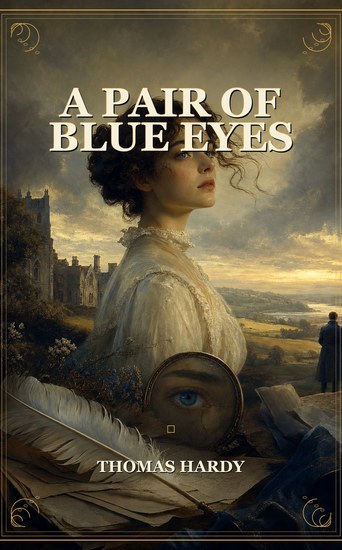
  • A Pair Of Blue Eyes - cover

    A Pair Of Blue Eyes

    Thomas Hardy

    • 0
    • 0
    • 0
    We rely on your support to help us keep producing beautiful, free, and unrestricted editions of literature for the digital age. Will you support our efforts with a donation ? Young Elfride falls in love for the first time with an architect who is sent to make plans to renovate the local church. She supposes Stephen to be a professional man from London, but finds he comes from more humble origins. Stephen must go away and make something of himself before he can claim her. Circumstances change in his absence, and Elfride must decide if she will keep her pledge to marry Stephen. A Pair of Blue Eyes is Thomas Hardy's third novel, and the first one to bear his real name when it was first published. The novel was first published as a serial, and the "cliffhanger" is supposed to have been named after a scene in which a character is left hanging over the edge of a cliff—while readers are left waiting for the next chapter to be serialized. Thomas Hardy (died 1928) was a major literary figure of the early 20th century. Their work has endured across generations and continues to be read and studied worldwide. As a work of classic literary fiction, A Pair Of Blue Eyes exemplifies the narrative craft and social insight that defined great storytelling of its era. Literary fiction of this period was characterized by careful attention to character psychology, social milieu, and the moral questions that animated public discourse.
    Voir livre
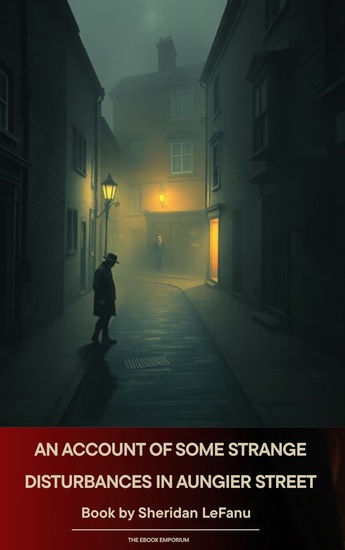
  • An Account of Some Strange Disturbances in Aungier Street - cover

    An Account of Some Strange...

    Joseph Sheridan Le Fanu

    • 0
    • 0
    • 0
    "It was the face of a man who had died in a paroxysm of terror."
    
    Two young medical students, seeking a quiet place to study, rent a massive, dilapidated old house in Dublin's Aungier Street. But the silence they seek is soon shattered by heavy, unseen footsteps, the scratching of a giant rat, and the terrifying apparition of a large man with a crimson velvet waistcoat. They soon discover the house's dark history: it was once the residence of a notorious "hanging judge" who took his own life within its walls. As the atmosphere grows increasingly oppressive, the students realize that the Judge's spirit is not merely wandering—it is actively seeking a new victim.
    
    The Master of Atmospheric Dread: Le Fanu is a pioneer of psychological horror. In this story, he uses the "uncanny"—taking a familiar domestic space and making it feel wrong. The horror isn't just in the ghost itself, but in the growing sense of unease, the shadows that move on their own, and the feeling of being watched by something that "ought not to be there."
    
    The Legacy of the "Hanging Judge": The figure of the Judge represents a common theme in Le Fanu's work: the past refusing to stay buried. The Judge's cruelty in life translates into a predatory supernatural presence in death. The story's climax is a masterclass in suspense, as one of the students finds himself paralyzed by the gaze of the long-dead jurist.
    
    A Classic for Fans of the Macabre: Often cited as one of the greatest ghost stories ever written, this tale influenced a generation of horror writers, including M.R. James. It is a brief but unforgettable journey into the heart of a haunted city.
    
    Open the door to Aungier Street. Purchase this classic of Gothic horror today.
    Voir livre
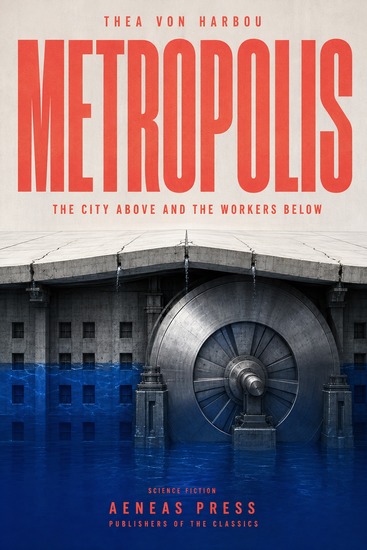
  • Metropolis - The City Above and the Workers Below - cover

    Metropolis - The City Above and...

    Thea von Harbou

    • 0
    • 0
    • 0
    A city where the workers live below and the masters above, a false Maria built out of metal, and a son who crosses between them. Thea von Harbou wrote the novel and the screenplay together with Fritz Lang, her husband, and the film they made from it is the one everybody has seen. This edition adds 59 plates of painting, among them Piranesi's Prisons and works by Marianne North and Horatio Walker, dating from 1745 to 1925.
    Voir livre
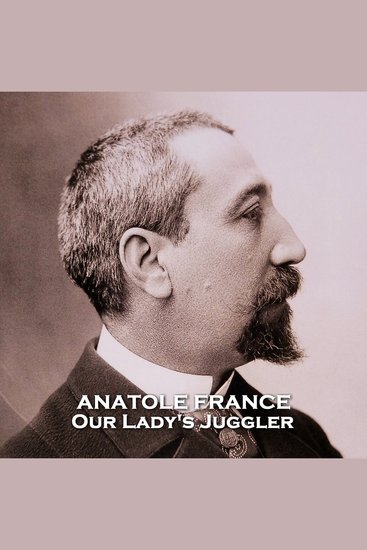
  • Our Lady's Juggler - From their pens to your ears genius in every story - cover

    Our Lady's Juggler - From their...

    Anatole France

    • 0
    • 0
    • 0
    François-Anatole Thibault was born on the 16th April 1844 in Paris, France, the son of a bookseller and bibliophile. 
    He studied at the Collège Stanislas, a private Catholic school, and after graduating joined his father in the bookstore, which specialised in works on the French Revolution.  Several years later he secured a position as cataloguer at Bacheline-Deflorenne and at Lemerre before being appointed librarian for the French Senate in 1876. 
    His literary career had begun as a journalist and as a poet before publishing his novel ‘Le Crime de Sylvestre Bonnard’ in 1881.  Praised for its elegant prose, it won him a prestigious prize from the Académie Française, which later elected him to its storied ranks. 
    His works were profound and thoughtful and often couched in surreal and outlandish expressions; whether penguins baptized by a near-blind Abbott transformed themselves into humans or of a guardian angel who becomes an atheist, his stories turned established thought into startling literature. 
    His short stories run in the same vein.  The premise may seem plausible but his distinctive style turns them into an individual viewpoint which invokes both discussion and admiration. 
    In his private life his relationships with women were often turbulent.  A Socialist, he was a fervent supporter of the Russian Revolution and the early years of the French Communist party. 
    He was awarded the Nobel Prize in 1921 but the following year his entire canon of works was placed on the prohibited list of the Catholic Church, which he thought of as a credit to his name. 
    Anatole France died on the 12th October 1924 in Tours.  He was 80.
    Voir livre
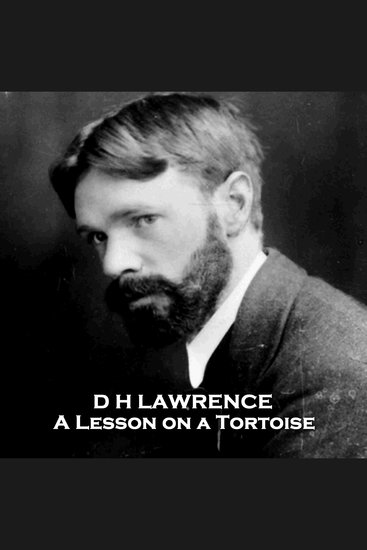
  • A Lesson on a Tortoise - From their pens to your ears genius in every story - cover

    A Lesson on a Tortoise - From...

    D H Lawrence

    • 0
    • 0
    • 0
    David Herbert Lawrence was born on the 11th September 1885 in Eastwood, Nottinghamshire, a coal mining town where the reality of a harsh life was only useful as experiences for future literary works. 
    He was educated at Beauvale Board School and became the first local boy to receive a scholarship to attend Nottingham High School. After 3 years he became a junior clerk in Haywood’s surgical appliances factory. He was also attempting a literary career which, in the short term, led to a teacher training position in Eastwood and later a teaching qualification from University College, Nottingham.  
    Lawrence’s first efforts were poems, short stories and a draft of ‘The White Peacock’. Moving to London and a teaching position in Croydon his writing attracted the attention of Ford Madox Ford, editor of The English Review, and he commissioned him to write ‘Odour of Chrysanthemums’.  
    Wanting to write full-time he now began work on what would become ‘Sons and Lovers.   
    In 1912 he met the older and married mother-of-three Frieda Weekley. They eloped to Germany and here Lawrence could see for himself the growing tensions with France.  So keen was his interest that he was arrested and accused of being a British spy.  
    In early 1914 Frieda obtained her divorce and they returned to Britain to be married just days before the outbreak of war. Owing to her German parentage, and his own public dislike of militarism and violence, the couple were treated with contempt and suspicion throughout the war years.  
    Despite this he continued to write but his reputation in England was so tarnished and, mirrored by his own disdain for the country, he and Frieda left England in November 1919, first for Europe and then America via Ceylon and Australia. 
    They bought a ranch in Taos, New Mexico and visited Mexico several times. The third visit in March 1925 caused a near fatal attack of malaria. To convalesce they moved to Florence. Here he continued work on ‘Lady Chatterley’s Lover’ which for many years would cause controversy. A renewed interest in oil painting resulted in an exhibition in 1929 which was raided by the police and several works were confiscated.  
    D H Lawrence died of complications arising from a bout of tuberculosis on the 2nd of March 1930 in Vence, France.  He was 44.
    Voir livre
  • Across the Moors - From their pens to your ears genius in every story - cover

    Across the Moors - From their...

    W F Harvey

    • 0
    • 0
    • 0
    William Fryer Harvey AM was born on 14th April 1885 into a wealthy Quaker family in Leeds, West Yorkshire. 
    He was educated at the Quaker Bootham School in Yorkshire and Leighton Park School in Reading before university at Balliol College, Oxford.  
    His health was fragile and he poured his energies into writing short stories and in 1910 published his first collection ‘Midnight House’. 
    In the Great War he was with the Friends' Ambulance Unit and then served as a surgeon-lieutenant in the Royal Navy.  There he received the Albert Medal for Lifesaving but lung damage received at that time troubled him for the rest of his life. 
    He continued to write short stories, and even a memoir, but by 1925 ill health had forced his retirement to any outside work.  Three years later he published his second collection which contained his macabre classic ‘The Beast with Five fingers’, only one more collection would come from his pen in his lifetime. 
    For many years of his life he now lived in Switzerland with his wife but a yearning to be home saw them come back to England in 1935. 
    W F Harvey died in Letchworth on the 4th June 1937. He was 52.
    Voir livre