Rejoignez-nous pour un voyage dans le monde des livres!
Ajouter ce livre à l'électronique
Grey
Ecrivez un nouveau commentaire Default profile 50px
Grey
Abonnez-vous pour lire le livre complet ou lisez les premières pages gratuitement!
All characters reduced
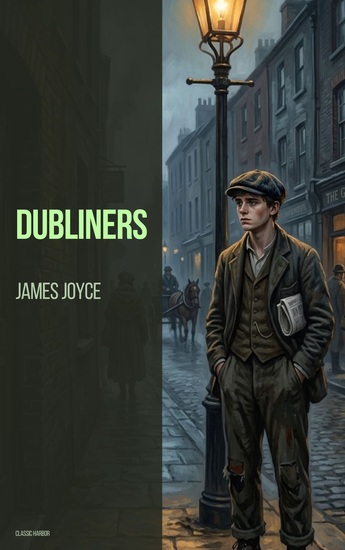
Dubliners - cover

Dubliners

James Joyce

Maison d'édition: Classic Harbor

  • 0
  • 0
  • 0

Synopsis

Behind ordinary lives and quiet moments, hidden truths wait to be discovered.
Enter the world of Dubliners, James Joyce's groundbreaking collection of short stories that reveals the hopes, struggles, and emotions of everyday people living in early twentieth-century Dublin.
First published in 1914, this influential literary classic presents a series of powerful portraits of ordinary men, women, and children facing moments of love, disappointment, ambition, uncertainty, and self-discovery. Through his precise storytelling and remarkable attention to detail, Joyce captures the atmosphere of Dublin and explores the deeper realities behind familiar experiences.
Each story offers a glimpse into human nature, revealing the choices, dreams, and challenges that shape people's lives. With themes of identity, family, relationships, social expectations, and personal awakening, Dubliners remains one of the most important collections in modern literature.
Celebrated for its innovative style and profound understanding of human emotions, James Joyce's masterpiece has influenced generations of writers and continues to be studied and admired worldwide.
Experience the unforgettable voices of Dublin and discover the literary brilliance of one of the greatest writers of the twentieth century.
Add Dubliners to your collection today and explore a timeless classic of modern fiction.
Disponible depuis: 25/09/2026.
Longueur d'impression: 215 pages.

D'autres livres qui pourraient vous intéresser

  • Forgotten Authors The - Volume 7 - R H Malden to Ward Muir - cover

    Forgotten Authors The - Volume 7...

    Thomas Mann, Sadat Hasan Manto,...

    • 0
    • 0
    • 0
    Throughout the long centuries of human history is the want, and the need, to share information, to exchange ideas and for that knowledge and experience, for curiosity and learning, to be the basis of a civil society. 
    In literature the ambition is much narrower.  In order to be known, to be popular, you had to be published.  And for that people had to know you existed and your ideas worth reading.  Obviously for most of humanity’s time people couldn’t read and texts couldn’t be published in any great number. 
    In the 15th Century Gutenberg’s printing press began the revolution to address the second and by the 19th century had gathered pace with startling speed and mass distribution.  Education for the many was brought in to help people understand more of their world and, with new skills, how to have a better place within it.  Now, if the powers that owned the presses and means of distribution agreed an audience would now be able to avail themselves of your ideas, your printed words.  
    Sadly, in the thirst for the new, the recent and the past fell from sight, relegated to dark corners and dusty shelves.   
    But the printed word is rarely without someone, somewhere busying themselves through piles of papers and books rediscovering what a good story is, whatever its age. 
    Sadly, in the thirst for the new, the recent and the past fell from sight, relegated to dark corners and dusty shelves.   
    But the printed word is rarely without someone, somewhere busying themselves through piles of papers and books rediscovering what a good story is, whatever its age. 
    In this volume we offer up a small selection of those talents whose time has now come again.
    Voir livre
  • The Horla - cover

    The Horla

    Guy de Maupassant

    • 0
    • 0
    • 0
    The Horla by Guy de Maupassant, narrated by Christopher Mireider, is a chilling tale of psychological horror that delves into the fragile boundary between sanity and madness. The story follows a man who becomes haunted by an invisible, malevolent presence known as The Horla. As his paranoia intensifies, he struggles to understand whether he is the victim of a supernatural force or descending into madness. Maupassant masterfully explores themes of isolation, fear, and the limits of human perception in this haunting, unforgettable short story. 
    Narrator Christopher Mireider’s gripping performance brings the tension and terror of the story to life, immersing listeners in the protagonist's growing fear and confusion. His voice perfectly captures the unsettling atmosphere, making this classic tale of psychological suspense all the more captivating. 
    Perfect for fans of classic horror and psychological thrillers, The Horla is a timeless exploration of the darker corners of the human mind. This audiobook promises to leave listeners questioning the nature of reality and the unknown forces that may lurk just beyond our perception.
    Voir livre
  • The Pool of the Black One - cover

    The Pool of the Black One

    Robert E. Howard

    • 0
    • 0
    • 0
    This audiobook is narrated by an AI Voice. Discover the dark secrets and dangers lurking in "The Pool of the Black One" by Robert E. Howard. In this electrifying tale, the daring Conan the Barbarian confronts terrifying forces of ancient evil on a distant tropical island. With each page, the reader is drawn deeper into a world of magic, monsters, and relentless struggle for survival. Will Conan be able to defeat the sorcerer and his demonic army? Immerse yourself in an adventure that will test the limits of the legendary warrior's courage and endurance. Don't miss this classic story full of action and unexpected twists!
    Voir livre
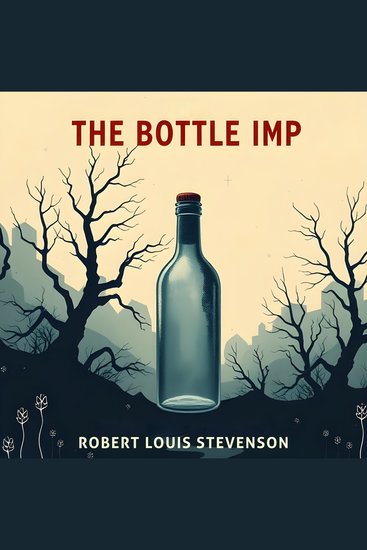
  • The Bottle Imp - cover

    The Bottle Imp

    Robert Louis Stevenson

    • 0
    • 0
    • 0
    The Bottle Imp by Robert Louis Stevenson tells the story of Keawe, a Hawaiian man who buys a magical bottle containing an imp that grants its owner any wish. However, there's a catch: the bottle must be sold to another person for a lower price than what the current owner paid, otherwise, the owner's soul will be claimed by the devil upon their death. 
    Keawe experiences both the incredible joys and the terrifying anxieties that come with possessing such an object. He gains wealth and status, but lives under the constant shadow of needing to sell the bottle under a specific condition. The story explores themes of temptation, desire, the nature of happiness, and the value of one's soul.
    Voir livre
  • Shades of Mortality - cover

    Shades of Mortality

    Jamal Barbari

    • 0
    • 0
    • 0
    Join three time-traveling, universe-hopping, interdimensional storytellers as they share stories of life, death, love, and despair in Jamal Barbari’s debut short story collection, Shades of Mortality.
    Voir livre
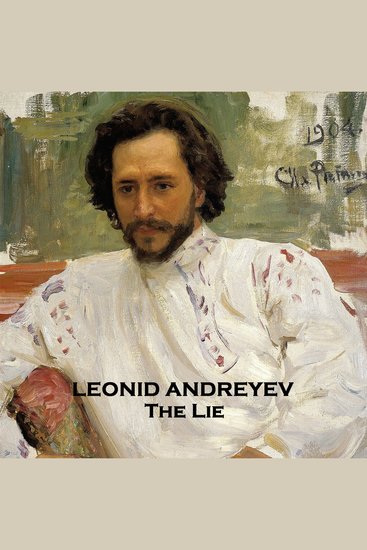
  • The Lie - From their pens to your ears genius in every story - cover

    The Lie - From their pens to...

    Leonid Andreyev

    • 0
    • 0
    • 0
    Leonid Nikolaievich Andreyev was born on 21st August in Oryol, Russia to a middle-class family of Polish, Ukranian and Finnish ancestry. 
    He studied law in Moscow before working as a police-court reporter for a daily newspaper.  His literary efforts at this time were confined to poetry and those he did try to get published were all rejected.  
    In 1898 his first short story ‘Bargamot and Garaska’, published in the ‘Kurier’ newspaper caught the attention and friendship of Maxim Gorky.  Andreyev now discarded any other career path apart from that of author. 
    His first collection of short stories appeared in 1901 and sold over a quarter of a million copies.  He was a sensation. Using his interest in psychology and psychiatry gave him an almost unrivalled ability to delve into the human psyche and create astonishing characters. 
    During the first Russian revolution Andreyev was a staunch defender of democratic ideals and many of his stories reflected the heated mood of the times. With the 1905 Revolution’s failure his work became pessimistic and despairing. By the beginning of the following decade he began losing his audience to new literary movements such as the Futurists. 
    He published little after 1914 except political writings, instead working as the literary editor of the ‘Russian Will’ newspaper.  When the Bolsheviks took power he sensed catastrophe was coming and moved to Finland where he spent his last years in poverty distraught at the outcome of the Revolution. 
    Leonid Andreyev died of heart failure on 12th September 1919 at the age of 48 in Mustamäki, Finland. 
    His classic story ‘Lazarus’ brilliantly tells the story of Christ’s disciple, forced to wander the earth for all time is both chilling and heart-breaking in its Russian setting.
    Voir livre