Rejoignez-nous pour un voyage dans le monde des livres!
Ajouter ce livre à l'électronique
Grey
Ecrivez un nouveau commentaire Default profile 50px
Grey
Abonnez-vous pour lire le livre complet ou lisez les premières pages gratuitement!
All characters reduced
Dubliners - cover

Dubliners

JAMES JOYCE

Maison d'édition: Ancient Chapters

  • 0
  • 0
  • 0

Synopsis

A remarkable collection of stories that captures the emotions, routines, and hidden tensions of ordinary life in Dublin.

Through a series of interconnected tales, James Joyce explores the experiences of people from different walks of life—children, workers, dreamers, and individuals facing moments of change or realization. Each story reveals quiet emotional depth beneath everyday situations.

The collection examines themes of identity, isolation, ambition, and personal awakening. Joyce's subtle storytelling and sharp observations bring realism and humanity to every character, creating moments that feel intimate and deeply authentic.

Rich in atmosphere and psychological insight, Dubliners paints a vivid picture of a city and its people while exploring universal emotions and struggles. Its influence on modern literature remains profound.

Written by James Joyce, this classic collection continues to resonate with readers through its honesty and literary brilliance.

Step into the lives, memories, and quiet revelations of Dublin—download your copy today.
Disponible depuis: 12/05/2026.
Longueur d'impression: 215 pages.
D'autres livres qui pourraient vous intéresser

  • Philaster - cover

    Philaster

    Beaumont and Fletcher

    • 0
    • 0
    • 0
    Philaster, a collaboration between Francis Beaumont and John Fletcher, is a celebrated masterpiece of early Jacobean drama, combining romance, intrigue, and political tension into a compelling tragicomedy. First performed in 1609, the play exemplifies the sophisticated theatrical style of its era, blending poetic language, dramatic suspense, and intricate plotting to explore love, loyalty, and honor in a courtly setting.
    
    The story revolves around Philaster, the virtuous and courageous young prince of a fictional kingdom, whose life is upended by political intrigue and romantic rivalry. In the midst of courtly corruption and conspiracies, Philaster secretly loves the noblewoman Arethusa, whose beauty and virtue draw the attention of the scheming and ambitious nobleman, the Duke of Calabria. The Duke's envy and manipulation set in motion a series of misunderstandings, threats, and near-tragic events that test the limits of loyalty, courage, and devotion.
    
    Beaumont and Fletcher masterfully blend elements of tragedy and comedy, creating a narrative that balances intense emotional stakes with moments of levity and wit. Themes of honor, fidelity, and the consequences of jealousy are explored through a rich cast of characters, including loyal friends, conniving villains, and the steadfast heroine Arethusa, whose intelligence and courage play a pivotal role in resolving the conflict.
    
    The language of Philaster is lyrical and elegant, reflecting the poetic sophistication of Jacobean theatre. The play's dramatic structure—full of suspense, mistaken identities, and daring rescues—keeps audiences engaged while highlighting the moral and emotional dilemmas faced by the characters. The blend of romance and political intrigue ensures that the story resonates both as a personal drama and a commentary on the complexities of power, loyalty, and human desire.
    
    Philaster remains a cornerstone of early modern English drama, admired for its stylistic brilliance, compelling characters, and enduring themes. It is a must-read for lovers of Renaissance theatre, classic tragicomedy, and the rich tradition of English poetic drama, offering a timeless exploration of love, honor, and the human capacity for courage and integrity in the face of danger and deceit.
    Voir livre
  • When This Is Over - A Blueprint for Creating Your Own Production and the Original Playscript - cover

    When This Is Over - A Blueprint...

    Ned Glasier, Three Company,...

    • 0
    • 0
    • 0
    A group of teenagers, their lives shaped by billions of seemingly random events going back to before they were born, come together onstage to share stories about their past, their present, and what might lie ahead.
    When This Is Over is a uniquely personal, theatrical celebration of hope, possibility and imagination. It's about how we can work with chaos, and embrace our collective imagination as we prepare for a deeply uncertain future – together.
    Originally conceived by Company Three – and developed alongside more than fifty other youth theatres across the UK – When This Is Over is a play designed to be created and performed by teenage casts, drawing directly on their own life experiences and the stories they want to tell. As with Company Three's widely performed youth-theatre play Brainstorm, the script is a blueprint for an amazing theatrical adventure.
    This published edition contains a series of exercises and activities for schools, youth-theatre groups and community companies to create and perform their own unique productions, and also features the complete script of Company Three's version, which was performed at The Yard, London, in 2022.
    When This Is Over was named Community Project of the Year at The Stage Awards, and Outstanding Drama Initiative at the Music and Drama Education Awards.
    Voir livre
  • Emaux et Camees - cover

    Emaux et Camees

    Théophile Gauthier

    • 0
    • 0
    • 0
    Emaux et Camées by Théophile Gautier is a celebrated collection of poetry that stands as a defining work of the nineteenth-century aesthetic movement. Renowned for its precision, elegance, and devotion to artistic beauty, this volume reflects Gautier's belief in "art for art's sake"—the idea that art exists not to moralize or instruct, but to embody pure form and refined expression.
    
    The title, which translates to Enamels and Cameos, evokes miniature works of art—carefully crafted, polished, and enduring. In the same spirit, each poem in this collection is meticulously shaped, displaying Gautier's mastery of rhythm, imagery, and structure. His verses are vivid and sculptural, transforming fleeting moments into lasting artistic impressions. Like finely carved cameos, the poems capture scenes, emotions, and reflections with delicate precision.
    
    Throughout the collection, Gautier explores themes of beauty, mythology, love, mortality, art, and memory. Classical influences blend seamlessly with romantic sensibilities, creating a body of work that feels both timeless and deeply personal. Statues, paintings, landscapes, and historical figures come alive through his lyrical craftsmanship, revealing a poet deeply attuned to visual and sensory detail.
    
    Unlike more overtly emotional or political poetry of his era, Gautier's work often maintains a controlled and polished tone. His language is exacting and musical, emphasizing balance and harmony. Yet beneath the surface refinement lies profound contemplation—meditations on the permanence of art compared to the fragility of human life, and on the enduring power of beauty in a changing world.
    
    Emaux et Camées is widely regarded as one of Gautier's finest achievements and a cornerstone of French poetic tradition. Its influence extended beyond literature, shaping later movements that valued aesthetic purity and stylistic perfection. Readers encountering this collection will discover poetry that invites careful appreciation—verses that shimmer with clarity, artistry, and enduring grace.
    
    Elegant, reflective, and masterfully composed, Emaux et Camées remains a timeless tribute to the transformative power of artistic expression.
    Voir livre
  • The Night Before - Incredible 19th Century psychological poem about a mans final hours before exectuion - cover

    The Night Before - Incredible...

    Edward Arlington Robinson

    • 0
    • 0
    • 0
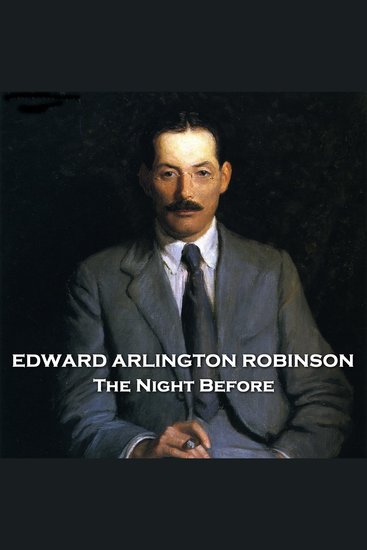
    Edwin Arlington Robinson was born on the 22nd December 1869 in Tide in Lincoln County, Maine.  
    His childhood was described by him as ‘stark and unhappy’.  His name was drawn out of a hat from a fellow vacationer from Arlington Massachusetts when fellow holiday makers decided that his parents had waited long enough at 6 months to name him.  It was a name he despised and reflects the station to which his parents had placed him; their great hope at his birth were that he was a girl to complement their two sons. 
    His pessimistic mood carried him to adulthood and a doomed encounter with Emma Loehen Shepherd who constantly encouraged his poetry.  Edwin was thought too young to be her companion and so his elder, middle brother, Herman was assigned to her.  It was a great blow to Edwin and during their marriage on February 12th, 1890, he stayed home and wrote ‘Cortege’ 
    In the fall of 1891 Edwin entered Harvard, taking classes in English, French and Shakespeare.  He felt at ease with the Ivy League and made great efforts to be published in one of the Harvard literary journals.  Indeed, the Harvard Advocate published ‘Ballade of a Ship’ but then his career appeared to stall.  His father died and although he returned to Harvard for a second year it was to be his last but also the start of some life-long friendships. 
    In 1893 he returned to Gardiner Maine as the man of the household.  Herman by this time had become an alcoholic, having suffered business failures, and was now to become estranged from Emma. 
    Edwin began farming whilst he wrote and quickly developed a close relationship with Emma who had now moved back to Gardiner after Herman’s death with her children. 
    Although he proposed twice, he was rejected and in consequence moved to New York to start afresh. 
    But it was a salutary experience. Although surrounded by artists he had little money and life was difficult. 
    In 1896 he published his own book, ‘The Torrent and the Night Before’, paying 100 dollars for 500 copies.  Edwin wanted it to be a surprise for his Mother, but days before its arrival she died of diphtheria. 
    His second volume, ‘The Children of the Night’, had a wider circulation.  At the behest of President Roosevelt, whose son was an avid admirer, he was given a job in 1905 at the New York Customs Office although it appears his real job was “to help American letters”. 
    Either way his success began to widen and his influence proper.  During the 1920s he won the Pulitzer Prize for Poetry on three separate occasions. In 1922 for ‘Collected Poems’ again in 1925 for ‘The Man Who Died Twice’ and finally in 1928 for ‘Tristram’. 
    During the last twenty years of his life he became a regular summer resident at the MacDowell Colony in New Hampshire, where he became the object of fascination by several women.  But he never married. 
    Edwin Arlington Robinson died of cancer on the 6th April 1935 in the New York Hospital in New York. He was 65.
    Voir livre
  • Dad Era - cover

    Dad Era

    Jordan Abel

    • 0
    • 0
    • 0
    An irreverent, laugh-out-loud pastiche of free verse, hallmark card, bad truism, picture book, advice website, and meditative reflection on fatherhood. 
    This collection compels readers to ask what it means to share a heart with another human in a world on the precipice of destruction. Although Abel doesn't have an answer and likely never will, he understands deeply that ‘the bond between a parent and child can sometimes be explained with words.’ Here – brilliant, hilarious, and loving – are those words. 
    Dad Era explores Jordan Abel's role as a father to his daughter, Phoenix, and his relationship to popular and often toxic constructions of ‘fatherhood’ on the internet. Breaking apart the idiomatic registers that define parenting today using distortion, contrast, sequencing, and palimpsest, all qualities that have come to define his oeuvre, Abel explores what it means to live, laugh, and yes, father ‘in a world without dads.’ 
    Voir livre
  • The Red Shoes - cover

    The Red Shoes

    Nancy Harris

    • 0
    • 0
    • 0
    'What's wrong with wanting to dance?'
    When an orphaned young woman is taken in by some local do-gooders, she is expected to be seen and not heard.
    Dazzled by a pair of beautiful shoes, she sees in them an opportunity to shine – but soon her feet betray her, taking her to places she does not wish to go.
    Nancy Harris's version of The Red Shoes is a contemporary retelling of Hans Christian Andersen's extraordinary fairytale of dance, desire and destruction. It was first performed at the Gate Theatre, Dublin, in 2017 and revived in the version published here in 2024 at the Swan Theatre, Stratford-upon-Avon, by the Royal Shakespeare Company, directed by Kimberley Rampersad.
    Voir livre