Begleiten Sie uns auf eine literarische Weltreise!
Buch zum Bücherregal hinzufügen
Grey
Einen neuen Kommentar schreiben Default profile 50px
Grey
Jetzt das ganze Buch im Abo oder die ersten Seiten gratis lesen!
All characters reduced
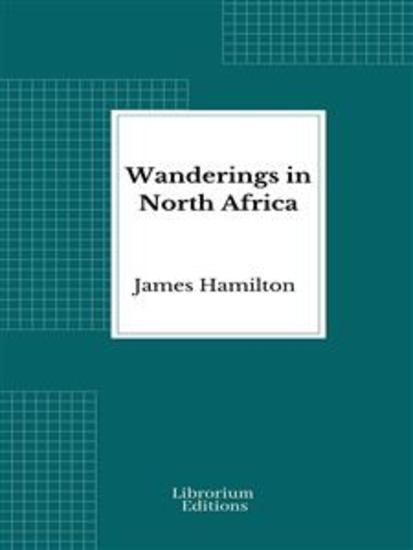
Wanderings in North Africa - cover

Wanderings in North Africa

James Hamilton

Verlag: Librorium Editions

  • 0
  • 0
  • 0

Beschreibung

A few words of preface concerning a country so little known as that in which these pages were written may, perhaps, be useful to the reader. For the sake of those who may be interested in its past history or present condition, I shall indicate the sources which will supply further information.
Cyrenaica, or, as it was called under the Ptolemys, Pentapolis, is situated on the northern coast of Africa, between Carthage and Egypt. In its commercial importance it once almost rivalled the former, and in the fertility of its soil, the latter. Its early political vicissitudes are little known in detail, nearly all the works which were specially dedicated to its history having disappeared in the wreck of ages, among which the most to be regretted is the Book on the Republic of Cyrene, which Aristotle inserted in his Politics.
Verfügbar seit: 20.07.2023.


Weitere Bücher, die Sie mögen werden

  • To Walk It Is To See It - 1 Couple 98 Days 1400 Miles on Europe's GR5 - cover

    To Walk It Is To See It - 1...

    Kathy Elkind

    • 0
    • 0
    • 0
    In 2018, Kathy Elkind and her husband decided to take a grown-up “gap year” in Europe and walk the 1,400-mile Grande Randonnée Cinq (GR5) across The Netherlands, Belgium, Luxembourg, and France. 
    At fifty-seven, Kathy has chosen comfort over hardship: she and Jim get to indulge in warm beds and delicious regional food every night and croissants in the mornings. But the GR5 is not all comfort. Walking day after day for ninety-eight days brings sickness, accommodation struggles, language barriers, and storm-shrouded mountains in the Alps. As the days unfold, however, she discovers her own wise strength and comes to the gratifying realization that a long marriage is like a long trail: there are ups and downs and it takes hard work to keep going, but the beauty along the way is staggering. 
    Written with raw honesty and compassion and rich with dazzling scenery, To Walk It Is To See It will inspire you to lace up your walking shoes and discover your own path. 
    “Showing us the importance of adventure and wonder throughout our lives, Elkind's wise and funny book will have you reaching for your bootlaces and backpack.” 
    Kerri Andrews, author of Wanderers: A History of Women Walking 
    "Full of profound personal insights and sharp observations of the world around her, Elkind's journey is a joy to follow."  
    Ben Shattuck author of Six Walks: In the Footsteps of Henry David Thoreau
    Zum Buch
  • Journey Through the Ancient Trade Routes: A New World History - Embark on Epic Adventures: Discover Ancient Trade Routes with Our Engaging World History Audiobook! - cover

    Journey Through the Ancient...

    Ethan Blackwood

    • 0
    • 0
    • 0
    Journey Through the Ancient Trade Routes: A New World History 
    ⭐⭐ Simplified Audio Guide ⭐⭐ 
    Are you ready to expand your knowledge of history, culture, and adventure through ancient trade routes? 
    Seeking a comprehensive guide that delves into the world of ancient commerce and civilizations? 
    Your search ends here! 
    This guide serves as your definitive companion for deepening your understanding, enhancing your skills, and engaging in interactive learning. With this, you're geared for success. 
    Updated with the latest insights and discoveries in the field. 
    Key features of this enriched guide: 
    - Profound insights about ancient trade routes and their significance 
    - Detailed explanation of the history, culture, and adventure through ancient trade 
    - Effective strategies for exploring and understanding ancient commerce and its influence on civilizations 
    Our guide distinguishes itself through comprehensive coverage, essential for mastering the subject. Concepts aren't merely skimmed; they are delved into with precision. 
    Please note that this guide is an independent resource for your benefit. 
    Designed with a clear structure and easy-to-understand language, our journey through ancient trade routes ensures smooth transitions between topics. Say goodbye to dense jargon and welcome clear, precise, and technically accurate content. 
    So, why wait? Click the BUY NOW button, secure your guide, and begin your journey through the ancient trade routes today!
    Zum Buch
  • The Wari Empire - Pre-Incan Conquerors and the Engineers of South America - cover

    The Wari Empire - Pre-Incan...

    Rolf Hedger

    • 0
    • 0
    • 0
    The Wari Empire emerged as one of the most influential pre-Incan civilizations in the Andean region, setting the foundation for future Andean states, including the Inca. Its origins can be traced back to the highlands of present-day Peru, where early societies laid the groundwork for its rise. The unique combination of environmental adaptation, cultural influences, and political innovation allowed the Wari to establish a powerful state that would dominate much of the central Andes for centuries. 
    Before the Wari civilization took shape, the Andean region was home to various cultures that contributed to its development. Among these, the Chavín culture, which thrived from around 900 to 200 BCE, played a crucial role in spreading religious and artistic traditions that later influenced Wari art and iconography. The Nazca civilization, known for its intricate geoglyphs and advanced irrigation techniques, also left an imprint on Wari agricultural and engineering practices. However, it was the lesser-known Huarpa culture of the Ayacucho Valley that provided the most direct influence on early Wari society. The Huarpa people developed small-scale irrigation systems, terraced farming, and distinct ceramic styles, all of which became defining features of Wari civilization. 
    Sometime between 500 and 600 CE, the Wari began to expand beyond their heartland in the Ayacucho region. This expansion was driven by both environmental necessity and strategic ambition. The high-altitude valleys of the central Andes provided fertile land for agriculture, but they were also subject to fluctuating climatic conditions. To mitigate these challenges, Wari elites developed large-scale irrigation systems and storage facilities, ensuring food security for growing populations. This ability to manage resources effectively gave them an advantage over neighboring groups, allowing them to assert dominance through both diplomacy and military conquest.
    Zum Buch
  • Why You Should Visit Europe’s Most Beautiful Cities - cover

    Why You Should Visit Europe’s...

    Mark Ferdinand

    • 0
    • 0
    • 0
    Europe is home to some of the most breathtaking cities in the world—places where history, art, and culture are woven into every street and skyline. From grand capitals to hidden gems, these cities offer a tapestry of experiences that will leave you inspired and enchanted. 
    Mark Ferdinand takes you on a journey through Europe’s most beautiful urban landscapes: the elegance of Paris, the canals of Venice, the Gothic spires of Prague, the timeless romance of Vienna, and many more. Along the way, he highlights not just the iconic sights but also the little details that give each city its unique character. Whether you’re planning your next trip or simply dreaming of European adventures, this book is your guide to discovering the cities that define beauty.
    Zum Buch
  • The Irish Troubles - Conflict and Peace in Northern Ireland - cover

    The Irish Troubles - Conflict...

    Nova Ashford

    • 0
    • 0
    • 0
    The deep divisions that came to define the Troubles in Northern Ireland have their roots in centuries of conflict, conquest, and colonization. The split between the largely Catholic Irish population and the Protestant settlers brought by British rule laid the groundwork for enduring hostility. This divide was not merely religious but deeply political and cultural, with Catholic nationalists largely advocating for a united Ireland, while Protestant unionists were loyal to the British crown and sought to remain part of the United Kingdom. These opposing identities hardened over time, especially in the north, where British colonization during the 16th and 17th centuries planted a Protestant presence in predominantly Catholic lands, most notably in the province of Ulster. 
    The 1921 partition of Ireland formalized the division, creating Northern Ireland as a separate political entity within the United Kingdom. While the south eventually became the Republic of Ireland, the north remained under British control with a Protestant-majority government. This arrangement was viewed by many Catholics as both illegitimate and oppressive, fostering a sense of exclusion and marginalization. Protestants, in turn, felt under siege by the threat of Irish republicanism and feared losing their political and cultural dominance. The new state was marked from the beginning by systemic discrimination against the Catholic minority in areas such as housing, employment, and political representation. 
    Tensions simmered for decades, occasionally flaring into violence, but it was in the 1960s that the situation began to unravel. Inspired by civil rights movements elsewhere, Northern Irish Catholics began organizing protests demanding equal treatment and an end to institutionalized bias. The state’s heavy-handed response to these demonstrations, combined with Protestant fears of losing control, only intensified the divide.
    Zum Buch
  • Trip to Russia - cover

    Trip to Russia

    Stefan Zweig

    • 0
    • 0
    • 0
    "What journey within our immediate world today would be remotely as interesting, enchanting, instructive and exciting as that to Russia? While our Europe, and especially the capitals, are subject to the inexorably contemporary process of mutual assimilation and resemblance, Russia remains utterly unparalleled." Stephen Zweig, 1928. After Stefan Zweig's bourgeois world collapsed with the First World War, he went searching for alternative forms of society, which culminated in a journey through the at that time still young Soviet Union. His perceptions and impressions during the trip remained ambivalent and moved between the generally prevailing glorification of the USSR by parts of the Western European intelligentsia and the harsh reality of life among the population. Stefan Zweig's non-political trip to the USSR is probably one of the most extraordinary travelogues of the 1920s and appears today almost 90 years later as a kaleidoscope into a past that is once again up-to-date.
    Zum Buch