Begleiten Sie uns auf eine literarische Weltreise!
Buch zum Bücherregal hinzufügen
Grey
Einen neuen Kommentar schreiben Default profile 50px
Grey
Jetzt das ganze Buch im Abo oder die ersten Seiten gratis lesen!
All characters reduced
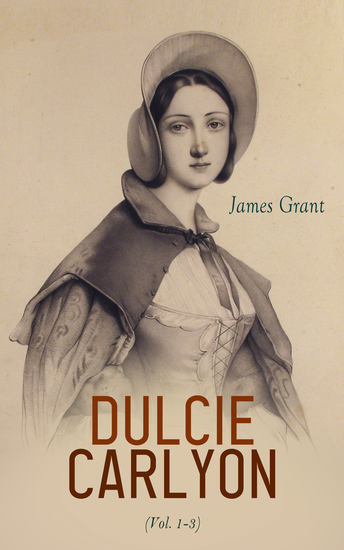
Dulcie Carlyon (Vol 1-3) - Historical Novel - cover

Dulcie Carlyon (Vol 1-3) - Historical Novel

James Grant

Verlag: e-artnow

  • 0
  • 0
  • 0

Beschreibung

Dulcie Carlyon is a historical novel set in Europe and Africa against the Anglo-Zulu war between British Empire and the Zulu Kingdom. It follows the story of a British regiment that goes to war and a young Devonshire damsel Dulcie, whose beloved Florian is on the way to Africa.
Verfügbar seit: 15.09.2022.
Drucklänge: 540 Seiten.

Weitere Bücher, die Sie mögen werden

  • Internal Family Systems Guide to Recovery from Eating Disorders An - Healing Part by Part - cover

    Internal Family Systems Guide to...

    Amy Yandel Grabowski

    • 0
    • 0
    • 0
    Drawing on the evidence-based Internal Family System (IFS) therapy model, An Internal Family Systems Guide to Recovery from Eating Disorders: Healing Part by Part addresses the necessity of healing the eating disorder sufferer's three groups of inner "Parts": the Mentors, the Advocates, and the Kids. In order to reconnect to their sense of Self and to achieve an inner balance necessary for recovery, the listener learns to address the unique needs of each of their "Parts." Written in an accessible style, this book combines compassionate examples from the author's client cases and her own recovery with a step-by-step framework for identifying and healing the listeners' Parts using the IFS model. Each chapter ends with questions for the listener to answer to further enhance their personal recovery. An Internal Family Systems Guide to Recovery from Eating Disorders: Healing Part by Part will be essential to mental health professionals treating clients with eating disorders and to the clients themselves.
    Zum Buch
  • Grace Can Lead Us Home - A Christian Call to End Homelessness - cover

    Grace Can Lead Us Home - A...

    Kevin Nye

    • 0
    • 0
    • 0
    On any given night, more than half a million Americans and Canadians find themselves sleeping on the streets, in shelters, cars, and other places not meant for human habitation. Yet as this crisis continues to grow, it remains one of the least talked about—especially in churches. Even where compassion and empathy exist, the complexities around homelessness can make us feel stuck, overwhelmed, or numb to the existence of unhoused people in our cities and neighborhoods.  Reporting back from his work in homeless services, minister and advocate Kevin Nye introduces readers to the Christ he’s met in tents, shelters, and drop-in centers. He demystifies homelessness by journeying into complex issues like affordable housing, mental illness, addiction, and more, while reimagining our theological approach to these matters and educating us on how they intersect with homelessness.  This thorough and intimate book shows us that from the margins, Jesus has something to teach us all about grace—something that could change the landscape of homelessness entirely if we’re ready to hear it.  
    Zum Buch
  • Battle of Agincourt The: The History and Legacy of the Hundred Years’ War’s Most Famous Battle - cover

    Battle of Agincourt The: The...

    Editors Charles River

    • 0
    • 0
    • 0
    Although it ended over 550 years ago, the Hundred Years’ War still looms large in the historical consciousness of England and France, even if the name of the famous war is a misnomer. Actually a series of separate conflicts between the English and French monarchies, interspersed with periods of peace, its historical image is an odd one, in part because its origins were based on royal claims that dated back centuries and the English and French remained adversaries for nearly 400 years after it ended.  
    	That said, the war was transformative in many respects, and the impact it had on the geopolitical situation of Europe cannot be overstated. While some might think of the war as being a continuation of the feudal tradition of knights and peasants, the Hundred Years’ War revolutionized Western European warfare, and it truly helped to usher in the concept of nationalism on the continent. In England, it is remembered as a period of grandeur and success, even though the English lost the war and huge swathes of territory with it, while the French remember it as a strategic victory that ensured the continued independence of France and the denial of English hegemony. The legacy of the war has lived on ever since, helping determine how England became politically severed from the continent, how the knightly chivalric tradition slid into irrelevance, and how battlefield dominance can still leave a nation a loser in war.  
    	The mythology of the humble but determined English infantry was born out of the mud of Agincourt and the success of English peasant longbowmen against the ostentatiously upper-class French men-at-arms. Today, when the English think of the war, they are more likely to ignore the burning cottages and the payment of ransoms and instead remember the brave words put into Henry V's mouth centuries later by Shakespeare: “Once more unto the breach, dear friends, once more.”
    Zum Buch
  • The Planning Fallacy - Underestimating the Time and Costs Required for Tasks - cover

    The Planning Fallacy -...

    William Rands

    • 0
    • 0
    • 0
    The allure of optimism has been a driving force behind humanity’s greatest achievements. It propels innovation, inspires ambition, and fosters resilience in the face of adversity. Yet, this same optimism can lead us astray, particularly when it comes to planning and executing tasks. The belief that everything will unfold as envisioned, without significant setbacks or challenges, is an enticing illusion. This overconfidence, while comforting, often masks the reality of time and resource constraints, resulting in a phenomenon known as the planning fallacy. 
    At its core, the planning fallacy arises from our tendency to underestimate the time, effort, and costs required to complete tasks, regardless of past experiences. Even seasoned professionals and experienced teams are not immune to this bias, often succumbing to unrealistic timelines and budgets. The hidden costs of this fallacy ripple through personal lives, businesses, and large-scale projects, leaving behind missed deadlines, financial overruns, and unmet expectations. 
    On an individual level, the planning fallacy can manifest in simple daily scenarios. People frequently underestimate how long it will take to commute, complete errands, or prepare for events. This miscalculation leads to stress, frustration, and a constant feeling of being behind. In professional settings, it becomes even more pronounced, as teams juggle complex projects with high stakes. Unrealistic deadlines can push employees to their limits, fostering burnout and reducing overall productivity.
    Zum Buch
  • The Fall of Rome - Causes and Consequences - cover

    The Fall of Rome - Causes and...

    Rogan Fish

    • 0
    • 0
    • 0
    The decline of the Roman Empire is one of the most studied events in world history, with numerous scholars and historians seeking to explain the causes and contributing factors that led to its fall. It is a complex process that unfolded over centuries, involving a combination of internal weaknesses and external pressures. Although the empire had been a dominant force for centuries, by the 5th century AD, it was struggling to maintain its territorial integrity and power. Several key elements contributed to this gradual decline. 
    One of the primary causes of the empire's decline was economic instability. Over time, the Roman economy became strained under the weight of military expansion, government spending, and inefficient management. Inflation began to plague the empire as the government devalued its currency to finance its military campaigns and public works. Additionally, the empire faced a growing reliance on slave labor, which hindered innovation and economic development. As the economy weakened, the cost of maintaining the empire’s vast infrastructure and military forces became increasingly difficult to manage, leading to a cycle of financial crises. 
    Political corruption and instability were also central to the empire's decline. Throughout its later years, the Roman government became riddled with corruption, particularly within the ruling elite. Emperors were often chosen based on their ability to maintain power rather than their administrative abilities, leading to a lack of effective leadership. The Senate, once a powerful institution, lost its influence, and political factions within the empire vied for control, often undermining efforts to address the empire’s growing problems. This fragmentation of political power weakened the central authority, making it difficult to implement coherent policies across the empire.
    Zum Buch
  • Radical Cartography - How Changing Our Maps Can Change Our World - cover

    Radical Cartography - How...

    William Rankin

    • 0
    • 0
    • 0
    A thought-provoking exploration of how maps shape our understanding of the world 
    Cartographer and historian William Rankin argues that it's time to reimagine what a map can be and how it can be used. Maps are not neutral visualizations of facts. They are innately political, defining how the world is divided, what becomes visible and what stays hidden, and whose voices are heard. What matters isn't just the topics or the data, but how maps make arguments about how the world works. And the consequences are enormous. A map's visual argument can change how cities are designed and how rivers flow, how wars are fought and how land claims are settled, how children learn about race and how colonialism becomes a habit of mind. Maps don't just show us information—they help construct our world.Brimming with vibrant maps, including many "radical" maps created by Rankin himself and by other cutting-edge mapmakers, Radical Cartography exposes the consequences of how maps represent boundaries, layers, people, projections, color, scale, and time. Challenging the map as a tool of the status quo, Rankin empowers listeners to embrace three unexpected values for the future of cartography: uncertainty, multiplicity, and subjectivity. Changing the tools—changing the maps—can change the questions we ask, the answers we accept, and the world we build.
    Zum Buch