Begleiten Sie uns auf eine literarische Weltreise!
Buch zum Bücherregal hinzufügen
Grey
Einen neuen Kommentar schreiben Default profile 50px
Grey
Jetzt das ganze Buch im Abo oder die ersten Seiten gratis lesen!
All characters reduced
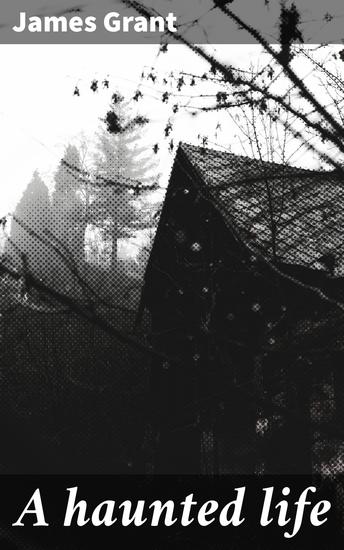
A haunted life - An Eerie Tale of Haunting Minds and Literary Ghosts - cover

A haunted life - An Eerie Tale of Haunting Minds and Literary Ghosts

James Grant

Verlag: Good Press

  • 0
  • 0
  • 0

Beschreibung

In "A Haunted Life," James Grant masterfully interweaves memoir, psychological insight, and a touch of the supernatural to explore the intricacies of human emotion and memory. The narrative, rich in vivid imagery and lyrical prose, delves deeply into the author'Äôs tumultuous past, reflecting on the ghosts of regret and the specters of past relationships that echo through his life. Rooted in the context of contemporary existential literature, Grant presents a haunting yet illuminating exploration of how one'Äôs past shapes their identity, inviting readers to confront their own haunting experiences with profound empathy. James Grant, known for his nuanced psychological narratives, draws upon his own life experiences to inform this poignant work. His earlier explorations into trauma and recovery resonate throughout the text, suggesting that the specters we face are integral to our personal narratives. Having grappled with the burdens of his past, Grant emerges with a compelling voice that invites introspection and connection through shared struggles. This book is highly recommended for readers seeking a deeply reflective journey into the human psyche. "A Haunted Life" invites audiences not only to witness Grant's haunting explorations but also to examine their own lives through a lens of vulnerability and resilience, making it a potent addition to the canon of contemporary memoirs.
Verfügbar seit: 09.07.2023.
Drucklänge: 128 Seiten.

Weitere Bücher, die Sie mögen werden

  • Edgar Allen Poe: THE CASK OF AMONTILLIADO - cover

    Edgar Allen Poe: THE CASK OF...

    Edgar Allan Poe

    • 0
    • 0
    • 0
    The story, set in an unnamed Italian city at carnival time, is about a man taking fatal revenge on a friend who, he believes, has insulted him. Like several of Poe's stories, and in keeping with the 19th-century fascination with the subject, the narrative follows a person being buried alive – in this case, by immurement. As in "The Black Cat" and "The Tell-Tale Heart", Poe conveys the story from the murderer's perspective.
    Zum Buch
  • The Dead Secret - cover

    The Dead Secret

    Wilkie Collins

    • 0
    • 0
    • 0
    "The Dead Secret: A Novel" by Wilkie Collins is a fictional work written in the mid-19th century. The story centers around Captain Treverton and his wife, Mrs. Treverton, as well as Sarah Leeson, a troubled lady's maid with a mysterious past.  
    The opening chapters create a tense atmosphere filled with secrets, focusing on the dying moments of Mrs. Treverton, who calls for Sarah to make a final request that could change everything for those who remain. The beginning of "The Dead Secret" sets a dramatic tone, introducing an unsettling situation as Mrs. Treverton's attendants anxiously await her passing.  
    As Mrs. Treverton shares her last wishes with Sarah, it becomes evident that there is a significant secret connecting them, one that carries the weight of sorrow and regret. The portrayal of Mrs. Treverton's declining health and appearance, along with Sarah's nervous and pitying demeanor, builds palpable tension. This tension escalates as Mrs. Treverton insists on revealing her secret to her husband and demands that Sarah witness her final disclosures, leading to a critical turning point that will have lasting consequences for everyone involved.
    Zum Buch
  • The Eyes of the Panther - An early example of werewolf fiction - cover

    The Eyes of the Panther - An...

    Ambrose Bierce

    • 0
    • 0
    • 0
    Ambrose Gwinnett Bierce was born on 24th June 1842 at Horse Cave Creek in Meigs County, Ohio. His parents were poor but they introduced him to literature at an early age, instilling in him a deep appreciation of books, the written word and the elegance of language.  
     
    Growing up in Koscuisko County, Indiana poverty and religion were defining features of his childhood, and he would later describe his parents as “unwashed savages” and fanatically religious, showing him little affection but always quick to punish. He came to resent religion, and his introduction to literature appears to be their only positive effect. 
     
    At age 15 Bierce left home to become a printer’s devil, mixing ink and fetching type at The Northern Indian, a small Ohio paper. Falsely accused of theft he returned to his farm and spent time sending out work in the hopes of being published. 
     
    His Uncle Lucius advised he be sent to the Kentucky Military Institute. A year later he was commissioned as an Officer.  As the Civil War started Bierce enlisted in the 9th Indiana Infantry Regiment.  
     
    In April 1862 Bierce fought at the Battle of Shiloh, an experience which, though terrifying, became the source of several short stories. Two years later he sustained a serious head wound and was off duty for several months. He was discharged in early 1865.  
     
    A later expedition to inspect military outposts across the Great Plains took him all the way to San Francisco. He remained there to become involved with publishing and editing and to marry, Mary Ellen on Christmas Day 1871.  They had a child, Day, the following year.  
     
    In 1872 the family moved to England for 3 years where he wrote for Fun magazine. His son, Leigh, was born, and first book, ‘The Fiend’s Delight’, was published. 
    They returned to San Francisco and to work for a number of papers where he gained admiration for his crime reporting. In 1887 he began a column at the William Randolph Hearst’s San Francisco Examiner.  
     
    Bierce’s marriage fell apart when he discovered compromising letters to his wife from a secret admirer. The following year, 1889 his son Day committed suicide, depressed by romantic rejection. 
     
    In 1891 Bierce wrote and published the collection of 26 short stories which included ‘An Occurrence at Owl Creek Bridge’.  Success and further works including poetry followed.  
     
    Bierce with Hearst’s resources helped uncover a financial plot by a railroad to turn 130 million dollars of loans into a handout. Confronted by the railroad and asked to name his price Bierce answered “my price is $130 million dollars. If, when you are ready to pay, I happen to be out of town, you may hand it over to my friend, the Treasurer of the United States”.  
     
    He now began his first foray as a fabulist, publishing ‘Fantastic Fables’ in 1899.  But tragedy again struck two years later when his second son Leigh died of pneumonia relating to his alcoholism. 
     
    He continued to write short stories and poetry and also published ‘The Devil’s Dictionary’.  
     
    At the age of 71, in 1913 Bierce departed from Washington, D.C., for a tour of the battlefields where he had fought during the civil war. At the city of Chihuahua he wrote his last known communication, a letter to a friend. It’s closing words were “as to me, I leave here tomorrow for an unknown destination,” Ambrose Bierce then vanished without trace.
    Zum Buch
  • Dust Storms May Exist - cover

    Dust Storms May Exist

    Ed Teja

    • 0
    • 0
    • 0
    They come in fast and block out the sun. 
    Dust storms pop up out of nowhere and are a danger for drivers on the open highways of the southwest. 
    But when you can't see what is in front of you maybe, with a little help, a fresh pair of eyes, you see something new. Something that might not even be there other times, something that is only accessible when dust storms may exist! 
    A compelling story of an encounter with other possibilities.
    Zum Buch
  • The Open Door - An acclaimed example of the classic Victorian ghost story - cover

    The Open Door - An acclaimed...

    Margaret Oliphant

    • 0
    • 0
    • 0
    Margaret Oliphant Wilson was born on 4th April 1828 in East Lothian in Scotland but spent her childhood in Midlothian, Glasgow and Liverpool.   
     
    She wrote from a young age and in 1849 had her first novel about the Scottish Free Church movement, a cause her parents sympathized with, published.  Her next, ‘Caleb Field’, a couple of years later, led to a lifelong association with Blackwood Magazine to which she contributed more than a 100 articles and reviews. 
     
    In May 1852, she married her cousin, Frank Wilson Oliphant, an artist working in stained glass, and settled in Camden, London. Together they had six children but tragically three died in infancy.   
     
    Unfortunately, Frank developed tuberculosis and so they moved in January 1859 to Florence, and then south to Rome, where he died. Margaret was devastated and was left with the burden of supporting herself and their three children.  
     
    She returned to England and with her prolific literary work increased her commercial reputation and the size of her reading audience.  Margaret worked tirelessly to sustain her popularity with her supernatural tales and historical fiction. 
     
    Unfortunately, her family life continued to be fraught with tragedies due to the further death of her one remaining daughter, financial ruin for her alcoholic brother and unfulfilled ambitions for her two sons followed by their deaths in 1890 and 1894.  She had settled in Windsor near Eton where her sons had been educated in 1866 and was buried there following her death on 25th June, 1897. 
     
    Despite the short time she lived in Scotland, much of her writing displays strong connections in terms of settings, themes and its oral tradition.   
     
    Margaret was admired for her range of supernatural tales, which resonated with her fascination for the afterlife and given her own experience, provided a sense of comfort to those grieving.   
     
    In this story a family’s return from India to Scotland is soon brought to a state of tension when their fragile son experiences hallucinations.  The pursuit of the truth brings many consequences.
    Zum Buch
  • The Island of the Fay - cover

    The Island of the Fay

    SAMPI Books, Edgar Allan Poe

    • 0
    • 0
    • 0
    In "The Island of the Fay", Edgar Allan Poe describes the narrator's contemplation on the inaudible music of nature, observing a fairy on a mystical island. The tale explores themes of isolation, natural beauty and the permeability between the seen and the hidden.
    Zum Buch