Begleiten Sie uns auf eine literarische Weltreise!
Buch zum Bücherregal hinzufügen
Grey
Einen neuen Kommentar schreiben Default profile 50px
Grey
Jetzt das ganze Buch im Abo oder die ersten Seiten gratis lesen!
All characters reduced
Short Studies on Great Subjects - Enriched edition - cover

Short Studies on Great Subjects - Enriched edition

James Anthony Froude

Verlag: DigiCat

  • 0
  • 0
  • 0

Beschreibung

In "Short Studies on Great Subjects," James Anthony Froude presents a series of essays that delve into a variety of significant themes, including history, philosophy, and morality. Richly infused with Froude's characteristic prose, the work demonstrates a mastery of rhetorical devices and a knack for narrative elegance. Each essay reflects his deep engagement with the intellectual currents of the Victorian era, engaging with the tensions between empirical observation and moral reflection. Through critical analyses of figures such as Martin Luther and William Shakespeare, Froude anchors his discussions in a historical context while simultaneously inviting modern readers to reflect on the underlying human conditions that transcend time. James Anthony Froude (1818-1894) was not only a prominent historian but also a social critic and biographer whose breadth of knowledge informs his writings. Educated at Oxford, his experiences as a journalist and editor shaped his worldview, leading him to explore topics that resonate deeply with societal concerns. Froude's keen insights into human nature and his critical engagement with contemporary thought reveal a man deeply invested in the moral and intellectual advancement of society. "Short Studies on Great Subjects" is a compelling invitation for readers who seek to engage with the complexities of human thought and history. Froude's penetrating analysis encourages reflection on fundamental issues that, while rooted in the past, continue to shape our present and future. This book is a must-read for anyone interested in the intersections of literature, morality, and historical analysis.

In this enriched edition, we have carefully created added value for your reading experience:
- A comprehensive Introduction outlines these selected works' unifying features, themes, or stylistic evolutions.
- A Historical Context section situates the works in their broader era—social currents, cultural trends, and key events that underpin their creation.
- A concise Synopsis (Selection) offers an accessible overview of the included texts, helping readers navigate plotlines and main ideas without revealing critical twists.
- A unified Analysis examines recurring motifs and stylistic hallmarks across the collection, tying the stories together while spotlighting the different work's strengths.
- Reflection questions inspire deeper contemplation of the author's overarching message, inviting readers to draw connections among different texts and relate them to modern contexts.
- Lastly, our hand‐picked Memorable Quotes distill pivotal lines and turning points, serving as touchstones for the collection's central themes.
Verfügbar seit: 01.08.2022.
Drucklänge: 467 Seiten.

Weitere Bücher, die Sie mögen werden

  • Selfless Leadership - A Complete Guide to Awakening the Servant Leader Within - cover

    Selfless Leadership - A Complete...

    Katrijn Van Oudheusden

    • 0
    • 0
    • 0
    You already have all you need for servant leadership within: 
    Selfless service is our true nature beyond the ego. 
    In this practical, transformational book, you're invited on a complete self-coaching journey to authentic and effortless servant leadership. 
    You will learn: 
    The four insights into your true nature as selfless service. 
    Sixteen transformational practices guaranteed to awaken selfless service in you. 
    How to do the most meaningful work you will ever do, without having to work on yourself endlessly or follow a demanding spiritual path. 
    You can be a servant leader right now, in the job you already do with the skills you already have. This book will show you how.
    Zum Buch
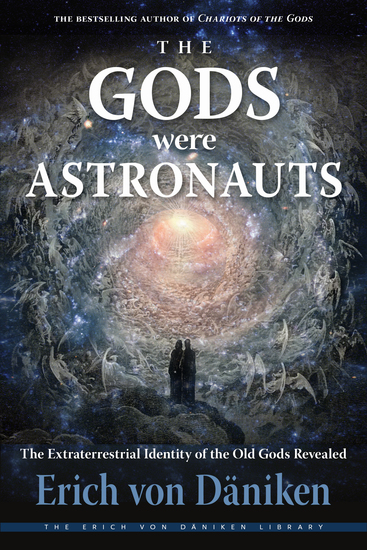
  • The Gods Were Astronauts - The Extraterrestrial Identity of the Old Gods Revealed - cover

    The Gods Were Astronauts - The...

    Erich von Däniken

    • 0
    • 0
    • 0
    Bestselling author Erich von Däniken explores the evidence of ancient visitors treated as gods in religious scripture and mythology. His findings shake the foundations of both science and faith. Why do nearly all the world’s major religions share similar myths and legends? Whether it’s the Old Testament, ancient legends, or the creation myths of New Zealand’s natives, you come across similar stories everywhere. Erich von Däniken, author of the international bestseller Chariots of the Gods, believes he knows the answer—and it is as wondrous and awe-inspiring as it is controversial: The winged angels populating the Bible, the Koran, and other religious texts from cultures the world over were, in reality, extraterrestrials who visited the Earth in ages long past. Who were the gods of ancient lore? How can the contradictions in the Bible be explained? Why are the pagodas of Myanmar (formerly Burma) so amazingly similar to space-capable rockets? Erich von Däniken provides convincing new and surprising interpretations and answers that fundamentally contradict both the teachings of religion and current science. His astonishing conclusion: The gods were not metaphysical beings that humans created in their imagination, but extraterrestrial intelligences that have left their traces all over the Earth. He offers persuasive evidence that actual living beings inspired the legends that became the basis for many of our religious traditions.
    Zum Buch
  • Reconciling - A Lifelong Struggle to Belong - cover

    Reconciling - A Lifelong...

    Scott Steedman, Larry Grant

    • 0
    • 0
    • 0
    It's taken most of Larry Grant's long life for his extraordinary heritage to be appreciated. He was born in a hop field outside Vancouver in 1936, the son of a Musqueam cultural leader and an immigrant from a village in Guangdong, China. In 1940, when the Indian agent discovered that their mother had married a non-status man, Larry and his two siblings were stripped of their status. With one stroke of the pen, they were disenfranchised—no longer recognized as Indigenous. 
     
    Reconciling is a series of conversations between Larry and writer Scott Steedman as they visit pivotal geographical places together. Larry tells the story of his life, including his thoughts on reconciliation and the path forward for First Nations and Canada. His life echoes the barely known story of Vancouver and spans key events of the last two centuries, including Chinese immigration and the Head Tax, the ravages of residential school and now Indigenous revival and the accompanying change in worldview. 
     
    When Larry talks about reconciliation, he uses the verb reconciling, an ongoing, unfinished process we're all going through. "I have been reconciling my whole life, with my inner self," he explains. "To not belong was forced upon me by the colonial society that surrounded me. But reconciling with myself is part of all that."
    Zum Buch
  • The Self - A Very Short Introduction - cover

    The Self - A Very Short...

    Marya Schechtman

    • 0
    • 0
    • 0
    'Know thyself' is said to have been one of the maxims carved into the Temple of Apollo at Delphi. On the face of it, this does not seem like a very difficult task. My self is with me at every moment of every day, I have access to its inner thoughts and feelings, and I am hardly liable to mistake someone else for me. At the same time, however, the self is surprisingly elusive and opaque. Our understanding of the self is replete with puzzles and paradoxes: I cannot be anyone but who I am, and yet everyone will acknowledge that there are circumstances in which being oneself is a difficult task. If I change enough, I can be said to have become a different person. I cannot get away from myself, and yet I can find and lose myself. 


    In this Very Short Introduction, Marya Schechtman uses insights from philosophy, psychology, psychiatry, sociology, and popular thought to consider some of the most compelling and puzzling questions about the self, including questions about what kind of object a self is if it is an object at all, what it means to be oneself and why it is important, what kinds of changes the self can and cannot survive, whether a self can be separated from its body, whether more than one self can exist in a single body, and what role engagement with the environment and with other selves plays in constituting and maintaining the self.
    Zum Buch
  • How to Have a Life - An Ancient Guide to Using Our Time Wisely - cover

    How to Have a Life - An Ancient...

    Séneca

    • 0
    • 0
    • 0
    A vibrant new translation of Seneca's "On the Shortness of Life," a pointed reminder to make the most of our time 


    Who doesn't worry sometimes that smart phones, the Internet, and TV are robbing us of time and preventing us from having a life? How can we make the most of our time on earth? In the first century AD, the Stoic philosopher Seneca the Younger offered one of the most famous answers to that question in his essay "On the Shortness of Life"—a work that has more to teach us today than ever before. In How to Have a Life, James Romm presents a vibrant new translation of Seneca's brilliant essay, plus two Senecan letters on the same theme, complete with an inviting introduction. 


    With devastating satiric wit, skillfully captured in this translation, Seneca lampoons the ways we squander our time and fail to realize how precious it is. We don't allow people to steal our money, yet we allow them to plunder our time, or else we give it away ourselves in useless, idle pursuits. Seneca also describes how we can make better use of our brief days and years. In the process, he argues, we can make our lives longer, or even everlasting, because to live a real life is to attain a kind of immortality.
    Zum Buch
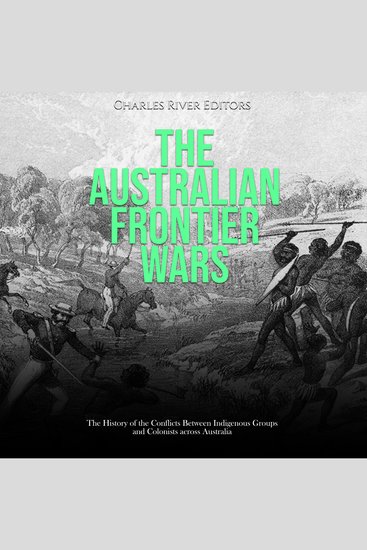
  • Australian Frontier Wars The: The History of the Conflicts Between Indigenous Groups and Colonists across Australia - cover

    Australian Frontier Wars The:...

    Editors Charles River

    • 0
    • 0
    • 0
    A land of almost 3 million square miles has lain since time immemorial on the southern flank of the planet, so isolated that it remained entirely outside of European knowledge until 1770. However, the first human footprints on this vast territory were felt 70,000 years earlier, as people began to cross the periodic land bridges and the short sea crossings from Southeast Asia. 
    The history of the indigenous inhabitants of Australia, known in contemporary anthropology as the “Aboriginal and Torres Strait Islander people of Australia,” is a complex and continually evolving field of study, and it has been colored by politics. For generations after the arrival of whites in Australia, the Aboriginal people were disregarded and marginalized, largely because they offered little in the way of a labor resource, and they occupied land required for European settlement. 
    At the same time, it is a misconception that indigenous Australians meekly accepted the invasion of their country by the British, for they did not. They certainly resisted, but as far as colonial wars during that era went, the frontier conflicts of Australia did not warrant a great deal of attention. Indigenous Australians were hardly a warlike people, and without central organization, or political cohesion beyond scattered family groups, they succumbed to the orchestrated advance of white settlement with passionate, but futile resistance. In many instances, aggressive clashes between the two groups simply gave the white colonists reasonable cause to inflict a style of genocide on the Aborigines that stood in the way of progress. 
    Zum Buch