Begleiten Sie uns auf eine literarische Weltreise!
Buch zum Bücherregal hinzufügen
Grey
Einen neuen Kommentar schreiben Default profile 50px
Grey
Jetzt das ganze Buch im Abo oder die ersten Seiten gratis lesen!
All characters reduced
Proverbial Evidence Trends - cover

Proverbial Evidence Trends

Jade Earing

Übersetzer A AI

Verlag: Publifye

  • 0
  • 0
  • 0

Beschreibung

Proverbial Evidence Trends explores the fascinating world of proverbs, those concise sayings that offer a window into cultural trends and societal values. The book analyzes how these seemingly simple phrases reflect complex narratives, revealing insights into collective human consciousness.

 
One intriguing fact is that proverbs, predating written language, serve as cultural cornerstones, preserving evolving social norms and moral codes. Another is the concept of semantic variation, where the meaning of a proverb shifts across time and cultures, demonstrating language evolution.

 
This book takes a unique approach by systematically analyzing proverb usage patterns, combining quantitative data with qualitative interpretation to uncover significant cultural trends. It begins by introducing fundamental concepts of proverb analysis, then develops the idea of semantic variation, and finally examines cross-cultural adaptation.

 
By studying how proverbs adapt and evolve across linguistic boundaries, the book provides a deeper understanding of shared identities. It's a valuable resource for those interested in linguistics, cultural studies, and the subtle ways language shapes our understanding of the world.
Verfügbar seit: 18.02.2025.
Drucklänge: 69 Seiten.

Weitere Bücher, die Sie mögen werden

  • Disentangled - Taming Your Thoughts and Feelings to Live Freely for Jesus - cover

    Disentangled - Taming Your...

    Jo hnson

    • 0
    • 0
    • 0
    Pair biblical insight and psychological tools to better manage your thoughts and emotions as you seek to become more like Christ.Apply biblical insights using tools from modern psychology to manage your thoughts and emotions.Jesus calls Christians to live for him, but it’s hard! A tangle of distracting thoughts and painful emotions can trip us up and stop us from being the people we long to be.Christian neuropsychologist Jo Johnson pairs biblical insight with the tools of psychology to offer a freeing way forward. Through her positive, practical, down-to-earth perspective, you will:Better understand your inner lifeLearn to manage your thoughts, memories, desires, and emotionsCombat overthinking and gain emotional resilienceTake charge of your behavior by applying psychological tools and techniquesBe encouraged to look to Jesus and rely on the help of the Spirit every dayDriven by the desire to become more like Christ, this book takes your inner struggles seriously while offering the hope of the gospel.You will be encouraged to throw off everything that hinders and the sin that so easily entangles, fixing your eyes on Jesus as you run the race (Hebrews 12:1)!Each chapter concludes with action steps and prompts to worship.
    Zum Buch
  • Roman Society and Culture - A Comprehensive Guide - cover

    Roman Society and Culture - A...

    Rogan Fish

    • 0
    • 0
    • 0
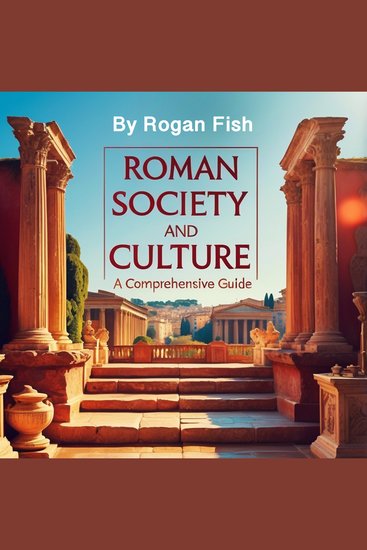
    Roman society, one of the most influential civilizations in human history, was built upon a complex and well-structured foundation that evolved over centuries. The origins of Roman civilization can be traced back to the early settlements along the Tiber River, where communities of farmers and shepherds gradually coalesced into the city-state of Rome. As Rome expanded, both geographically and politically, its social structure grew more intricate, reflecting a blend of indigenous customs and influences from conquered territories. 
    At the heart of Roman society was a rigid social hierarchy, essential to maintaining order and stability. This structure was divided primarily into two main classes: the patricians and the plebeians. The patricians were the elite, consisting of noble families who claimed descent from Rome's founding fathers. They held significant political power and owned vast lands. In contrast, the plebeians represented the common people, including farmers, craftsmen, and laborers. Though initially excluded from many aspects of governance, the plebeians gradually secured political rights through persistent social struggles, leading to the establishment of the office of the Tribune, which protected their interests. 
    Apart from these major classes, Roman society also included a growing number of slaves, who were often prisoners of war or born into servitude. Slavery was integral to the Roman economy, with slaves performing various tasks, from domestic duties to skilled labor in workshops. Despite their lack of freedom, some slaves, particularly those with specialized skills, could earn their emancipation, gaining the status of freedmen and integrating into the lower echelons of society.
    Zum Buch
  • Loyalty - The Faithful Allegiance - cover

    Loyalty - The Faithful Allegiance

    Esther Jameson

    • 0
    • 0
    • 0
    Loyalty is a concept that resonates deeply with human nature, transcending time, culture, and geography. It is often regarded as one of the highest virtues, forming the foundation of relationships, societies, and organizations. At its core, loyalty is an unwavering allegiance to a person, cause, or institution, and it involves a commitment that goes beyond mere obligation. It is about dedication, trust, and an emotional bond that fosters a sense of responsibility and attachment. 
    Defining loyalty can be complex because it manifests in various forms and is subject to different interpretations depending on the context. In personal relationships, loyalty can mean remaining faithful to a partner, supporting friends through tough times, or staying committed to family. In a broader societal context, it can refer to allegiance to a nation, loyalty to a set of values, or even devotion to an idea or belief system. Despite these differences, the essence of loyalty remains consistent: it is the willingness to stand by someone or something, even in difficult or challenging times. 
    One important aspect of loyalty is trust. Without trust, loyalty cannot truly exist. Trust is the foundation upon which loyalty is built, and it is what keeps the bond strong over time. Loyalty requires faith that the person or cause to which one is loyal will not betray that trust. This mutual trust creates a sense of security and dependability, making loyalty a powerful force that binds individuals together.
    Zum Buch
  • A Rare Recording of John R Brinkley Vol 2 - cover

    A Rare Recording of John R...

    John R. Brinkley

    • 0
    • 0
    • 0
    John R. Brinkley (July 8, 1885 – May 26, 1942) became nationally known as the "goat gland doctor" for his controversial medical practice that promised virility for his male patients. He was a pioneer in radio broadcasting and advertising, as he promoted his services to his large listening audience. Despite detractors and critics in the medical community thoroughly discrediting his methods, Brinkley operated clinics and hospitals in several states for two decades. When opposition from the organized medical community resulted in revocation of his radio and medical license he turned to politics, with two failed runs for the governorship of Kansas. Brinkley's rise to fame and fortune was as precipitous as his eventual fall: At the height of his career he had amassed millions of dollars; yet he died sick and nearly penniless, as a result of a number of malpractice, wrongful death and fraud suits brought against him.
    Zum Buch
  • The Holodomor - Stalin's Famine Genocide - cover

    The Holodomor - Stalin's Famine...

    Sarah Willards

    • 0
    • 0
    • 0
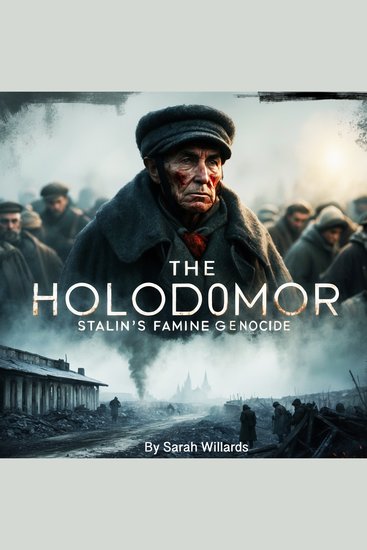
    The Holodomor, one of the most tragic events in Ukrainian history, refers to the man-made famine that devastated Ukraine from 1932 to 1933. The name "Holodomor" itself is derived from two Ukrainian words: "holod," meaning hunger, and "moryty," meaning extermination. This term emphasizes the belief that the famine was deliberately engineered by Joseph Stalin's Soviet government as part of a broader effort to suppress Ukrainian nationalism and enforce Soviet control. 
    The historical context of the Holodomor is deeply intertwined with the policies of Soviet Russia during the early 20th century. Under Stalin’s rule, the Soviet Union sought rapid industrialization and forced collectivization of agriculture, a process that involved the consolidation of individual farms into large collective ones. These policies were highly disruptive and led to widespread resistance, especially in Ukraine, where peasants valued their land and traditional agricultural practices. 
    In response to this resistance, Stalin imposed harsh measures on Ukraine, including the confiscation of grain, livestock, and other foodstuffs, which were sent to feed other parts of the Soviet Union. This created a devastating shortage of food in Ukraine, which was compounded by the harsh climate and poor harvests. Despite the widespread suffering and starvation, the Soviet government did little to alleviate the crisis and instead imposed strict controls on food distribution. In some cases, officials even enforced internal borders, preventing starving people from fleeing to neighboring regions in search of food.
    Zum Buch
  • According To Plan - The Elites' Secret Plan to Sabotage America - cover

    According To Plan - The Elites'...

    Kevin D. Freeman

    • 0
    • 0
    • 0
    It seems so much is going wrong in America. Some say it’s because our leaders are incompetent. Others think it’s merely a coincidence. But to millions of concerned Americans, those simplistic explanations no longer ring true. 
    Instead, they sense something else is going on… 
    Kevin Freeman is one of them. Drawing on his deep expertise in investigative analysis, he took a hard look at all that America is going through. Piecing together historical evidence and current events, he made a shocking discovery: 
    The crises now facing America are happening according to plan. 
    Decades in the making, it is a plan to take down the greatest obstacle to totalitarianism the world has ever known: the United States. And it’s a plan that will succeed—unless we join together now to save America.
    Zum Buch