Begleiten Sie uns auf eine literarische Weltreise!
Buch zum Bücherregal hinzufügen
Grey
Einen neuen Kommentar schreiben Default profile 50px
Grey
Jetzt das ganze Buch im Abo oder die ersten Seiten gratis lesen!
All characters reduced
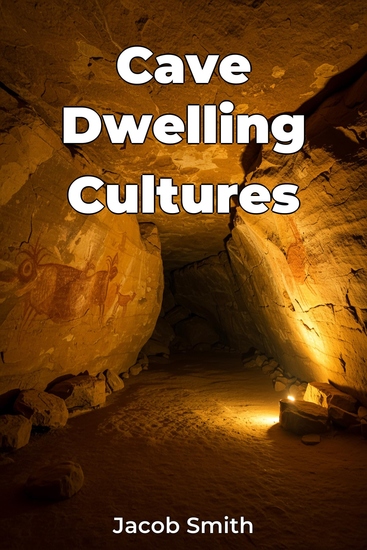
Cave Dwelling Cultures - cover

Cave Dwelling Cultures

Jacob Smith

Übersetzer A AI

Verlag: Publifye

  • 0
  • 0
  • 0

Beschreibung

Cave Dwelling Cultures explores the fascinating world of subterranean settlements, revealing how indigenous groups adapted and thrived in cave environments. This book examines the unique interaction between humanity and the geological world, highlighting the resourcefulness required for survival, and challenging conventional narratives of human development that often overlook these less visible societies. From the Yucatan Maya's use of caves for habitation and ritual to the Aboriginal Australian cave paintings that reveal deep spiritual connections and ancestral stories, the book unearths compelling evidence of human ingenuity.

 
The book synthesizes findings from archaeology, anthropology, and geology, providing a holistic picture of life within caves. It begins by establishing the significance of cave dwelling in human history and then delves into specific case studies, also including the San people of South Africa and their use of caves for shelter and artistic expression. These diverse cultures showcase common threads of adaptation, innovation, and resilience.

 
The book distinguishes itself through its interdisciplinary approach, offering a nuanced understanding of these often-misunderstood societies and their cultural adaptation. By drawing from archaeological excavations, ethnographic studies, and geological surveys, Cave Dwelling Cultures presents a multi-faceted understanding of these societies. It provides insights into sustainable living practices and tackles controversies in cave archaeology, such as the interpretation of rock art.

 
The book progresses by exploring the geographical distribution of cave-dwelling cultures, and then analyzing specific indigenous groups, before drawing comparisons and contrasts.
Verfügbar seit: 29.03.2025.
Drucklänge: 59 Seiten.
Weitere Bücher, die Sie mögen werden

  • The Mysterious Forces of Civilization - cover

    The Mysterious Forces of...

    Abdu’l-Bahá ‘Abbás

    • 0
    • 0
    • 0
    The Mysterious Forces of Civilization (Persian: Risálih-i-Madaníyyih) is a work written before 1875 by ‘Abbás Effendí, known as ‘Abdu’l-Bahá (the Servant of Bahá) (1844-1921). The Persian text was first lithographed in Bombay in 1882 and printed in Cairo in 1911. ‘Abdu’l-Bahá was the eldest son and appointed successor of Bahá’u’lláh, the Founder of the Bahá’í Faith. The original text of this work was written and published anonymously, and the first English translation (by Johanna Dawud) was published in London in 1910 and Chicago in 1918, under the title ‘Mysterious Forces of Civilization’ written by "an Eminent Bahai Philosopher." This audiobook is based on the 1918 edition. Another translation was completed by Marzieh Gail and published in 1957, with an introduction by Horace Holley. The title was re-translated as “The Secret of Divine Civilization”. The book was widely known in its time as an attempt to improve the degraded condition of Persia (Iran). The author frequently references current issues that were being debated, such as whether to modernize and accept Western technology, or to reject Western culture and rely on technology developed in Persia and the Islamic world. (Summary adapted from Wikipedia)
    Zum Buch
  • Montcalm and Wolfe - cover

    Montcalm and Wolfe

    Jr. Francis Parkman

    • 0
    • 0
    • 0
    Not Yet Available
    Zum Buch
  • R Programming - R Basics for Beginners - cover

    R Programming - R Basics for...

    Andy Vickler

    • 0
    • 0
    • 0
    R is an open-source statistical environment and programming language that has grown in popularity for data management and analysis in various industries. “R” Programming teaches you all the R you'll ever need in a rapid and painless manner. This accessible tutorial taught you your way around a list with no previous programming expertise and loads of practical examples, step-by-step exercises, and sample code. This book covers the most significant modeling and prediction methods, as well as their applications. 
    Learn how to use R to transform raw data into knowledge, understanding, and insight. This book introduces you to R, RStudio, and the tidyverse, a set of R tools that work together to make data research simple, fluent, and enjoyable. This book is meant to get you practicing data science as fast as possible, even if you have no prior programming expertise. You'll get a comprehensive grasp of the data science cycle and the fundamental tools you'll need to handle the details. 
    R is becoming more well-known by the day, as large institutions embrace it as a standard. Its popularity stems partly from the fact that it is a free tool replacing expensive statistical software products that may take an undue amount of time to master. Furthermore, R allows a user to do complicated statistical analyses with only a few keystrokes, making advanced studies accessible and clear to a broad audience. 
    Learn how to import data, construct and dismantle data objects, traverse R's environment system, develop your own functions, and utilize all of R's programming tools with this book. This book will not only teach you how to program but also how to use R for more than simply displaying and analyzing data. 
    The book is highly informative with lots of code, and also I added tons of pictures of how the code will look in r studio. Following the book, you will be able to start Rstudio and use the program smoothly.
    Zum Buch
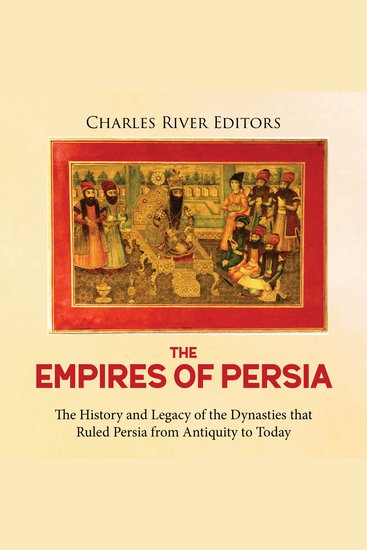
  • Empires of Persia The: The History and Legacy of the Dynasties that Ruled Persia from Antiquity to Today - cover

    Empires of Persia The: The...

    Editors Charles River

    • 0
    • 0
    • 0
    Lying in the middle of a plain in modern day Iran is a forgotten ancient city: Persepolis. Built two and a half thousand years ago, it was known in its day as the richest city under the sun. Persepolis was the capital of Achaemenid Persian Empire, the largest empire the world had ever seen, but after its destruction, it was largely forgotten for nearly 2,000 years, and the lives and achievements of those who built it were almost entirely erased from history. Alexander the Great’s troops razed the city to the ground in a drunken riot to celebrate the conquest of the capital, after which time and sand buried it for centuries. 
    The Parthian people created an empire that lasted almost 500 years, from the mid-3rd century BCE until 224 CE, and it stretched from the Euphrates River in the west to Central Asia and the borders of Bactria in the east. In fact, the expansive empire challenged the Romans on numerous occasions for supremacy in the Near East. 
    During the first half of the 1st millennium CE, an empire arose in Persia that extended its power and influence to Mesopotamia in the east, Arabia in the south, the Caucasus Mountains in the north, and as far east as India. This empire, known alternatively as the Sasanian Empire or Sassanid Empire, was the last of three great dynasties in Persia—the Achaemenid and the Parthian being the first two dynasties—before the rise of Islam. 
    Amid the upheaval in the Islamic world following Muhammad’s death, the Umayyad Caliphate lasted for less than a century, but in that time it managed to become one of the most influential of the major caliphates established following him. 	The Umayyads would be replaced by the far more intelligent and crafty Abbasids, who managed to wield powerful tools like propaganda to undermine their opponents, but eventually, the Ottomans would consolidate control of the area for nearly 500 years.  
    Zum Buch
  • Timaeus - Plato’s Vision of the Cosmos – A Dialogue on Creation Nature and the Divine Mind - cover

    Timaeus - Plato’s Vision of the...

    Plato, Tim Zengerink

    • 0
    • 0
    • 0
    What if a single night’s conversation could reveal the secret anatomy of the cosmos? 
    Press play and join Socrates, Timaeus, Critias, and Hermocrates as they: 
    •	Unfold a Cosmic Origin Story – Hear the Demiurge mold the universe like a potter at the wheel. 
    •	Map the Four Elements – Vivid narration turns Plato’s geometric atoms into scenes you can picture and feel. 
    •	Bridge Myth and Reason – Follow arguments that glide from divine mythos to rigorous logos without missing a beat. 
    •	Spark Personal Reflection – Pauses and subtle tone shifts give you space to contemplate your place in a living, breathing universe. 
    Ideal for commutes, stargazing evenings, or late-night philosophizing, this immersive performance lets Plato’s grand design resonate in the theater of your mind.
    Zum Buch
  • The Gift - cover

    The Gift

    Mike Monsoon

    • 0
    • 0
    • 0
    What's the ultimate gift you could give your best friend? Money, a holiday, your boyfriend?! Greg is horrified when he forgets to get his best friend, Geoff, a birthday gift. When his friend suggests an alternative, it will not only alter their friendship forever, it could change his whole life.  
    New passions will be unleashed, secret fantasies and desires. This will be a night that Greg and his boyfriend Lee will never forget, for very different reasons.
    Zum Buch