Join us on a literary world trip!
Add this book to bookshelf
Grey
Write a new comment Default profile 50px
Grey
Subscribe to read the full book or read the first pages for free!
All characters reduced
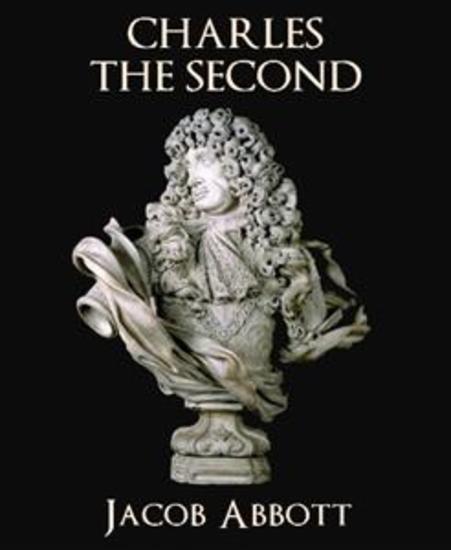
Charles the Second - cover

Charles the Second

Jacob Abbott

Publisher: BookRix

  • 0
  • 0
  • 0

Summary

Charles II was monarch of the three kingdoms of England, Scotland, and Ireland. Charles II's father, King Charles I, was executed at Whitehall on 30 January 1649, at the climax of the English Civil War. Although the Parliament of Scotland proclaimed Charles II King of Great Britain and Ireland in Edinburgh on 6 February 1649, the English Parliament instead passed a statute that made any such proclamation unlawful. England entered the period known as the English Interregnum or the English Commonwealth, and the country was a de facto republic, led by Oliver Cromwell. Cromwell defeated Charles II at the Battle of Worcester on 3 September 1651, and Charles fled to mainland Europe. Cromwell became virtual dictator of England, Scotland and Ireland, and Charles spent the next nine years in exile in France, the United Provinces and the Spanish Netherlands.

Charles II was popularly known as the Merry Monarch, in reference to both the liveliness and hedonism of his court and the general relief at the return to normality after over a decade of rule by Oliver Cromwell and the Puritans. Charles's wife, Catherine of Braganza, bore no live children, but Charles acknowledged at least twelve illegitimate children by various mistresses. As his illegitimate children were excluded from the succession, he was succeeded by his brother James.
Available since: 12/19/2023.
Print length: 226 pages.

Other books that might interest you

  • Mike Mentzer - American Odysseus - cover

    Mike Mentzer - American Odysseus

    John Little

    • 0
    • 1
    • 0
    REBEL. PHILOSOPHER. BODYBUILDING ICON.
    		 
    Mike Mentzer was a strikingly handsome man with a brilliant mind and a “perfect” physique — the first bodybuilder to receive a perfect score in both amateur and professional competitions. In the late ’70s, Mentzer rose to the very top of his sport (despite the efforts made by industry power brokers, such as Arnold Schwarzenegger), was featured in GQ magazine, and profiled on national television. But he was also a man who wrestled with mental illness his entire life and ended up living on the streets and being sent to prison. Just when it seemed his career was over, he found it within himself to reboot his intellect and revolutionize bodybuilding training, arguing bodybuilders should not forsake their mental development in favor of developing their bodies. He became a pariah in the fitness industry (which only cared about selling supplements and other products) but a hero to legions of fans who earnestly sought truth.
    		 
    Mike Mentzer: American Odysseus is the first biography of Mike Mentzer to appear in North America written by his close friend of 21 years, John Little, “one of the leading fitness researchers in North America” (Iron Man magazine). Drawing upon audio recordings, letters, diary excerpts, as well as interviews with those closest to him, this is the true story of one man who stood up to an entire industry — and paid the ultimate price.
    Show book
  • Bury the Dust - a Zen diary - cover

    Bury the Dust - a Zen diary

    Brian Lynch

    • 0
    • 1
    • 0
    As Brian Lynch begins writing Bury the Dust in Dublin, a movie he scripted, Love and Rage, starring Daniel Craig, is being edited in Berlin by its outstanding director, Cathal Black. The film looks good – not surprising since it was shot by Slawomir Idziak, cinematographer for Kieslowski's The Double Life of Veronique and Three Colours Blue. Meanwhile, the BBC loves the script Lynch is writing for them about the 18th century poet William Cowper. A contract is on the way. Caught in a Free State, his TV series about German spies in Ireland during World War 2, has sold all over the world. Crooked in the Car Seat, compared by the novelist Colm Tóibín to James Joyce's Exiles, has been nominated for best play in the Dublin Theatre Festival. In 1985, Samuel Beckett, praising Lynch's 'exceptional talent', has nominated him for election to Aosdána, the Irish government body set up to honour artists.
    
    What could possibly go wrong? Everything. Or nothing.
    
    Written in a garden shed beside a defective septic tank, Bury the Dust provides some of the answers. Or none?
    
    The diary relies on many philosophical texts, from Kierkegaard to Wong Kiew Kit, the noted Kung Fu teacher. Wong is the author of The Complete Book of Zen, which says that you shouldn't meditate if you are 'suffering from frequent physical pain, manic-depression or imbecility'. Ruled out on at least two counts but undeterred, although he's unable to cross his legs in the Lotus position, Lynch sits down to follow the advice of the ancient Chinese poet Han Shan: 'Think of what does not think'. Only a fool could write a thoughtless book. Is this it?
    Bury the Dust - a Zen Diary is dedicated to the memory of Maura O'Halloran, the author of Pure Heart, Enlightened Mind, whom Lynch describes, though she died at the age of twenty-seven, as perhaps 'the most interesting Irishwoman of her generation'.
    Show book