Begleiten Sie uns auf eine literarische Weltreise!
Buch zum Bücherregal hinzufügen
Grey
Einen neuen Kommentar schreiben Default profile 50px
Grey
Jetzt das ganze Buch im Abo oder die ersten Seiten gratis lesen!
All characters reduced
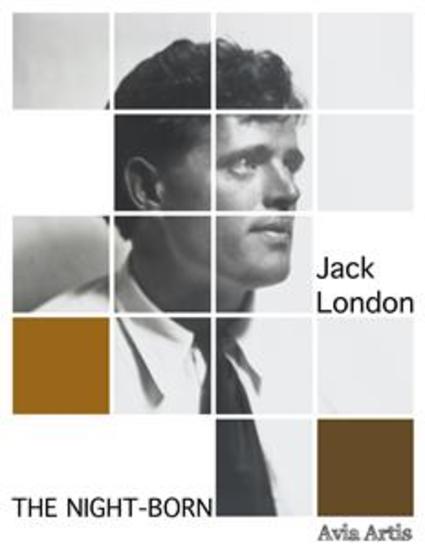
The Night-born - cover

The Night-born

Jack London

Verlag: Avia Artis

  • 0
  • 0
  • 0

Beschreibung

“The Night-born” is a book by Jack London, an American novelist. A pioneer of commercial fiction and an innovator in the genre that would later become known as science fiction.

The Night-born is a series of short stories by Jack London. It consists of ten moving and thrilling stories such as: The Night-Born, The Madness of John Harned, When the World was Young or To Kill A Man.
Verfügbar seit: 03.12.2021.

Weitere Bücher, die Sie mögen werden

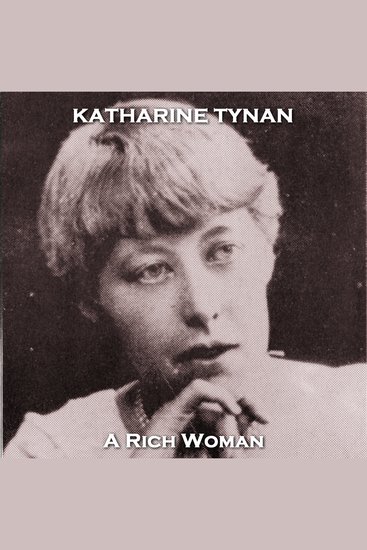
  • A Rich Woman - From their pens to your ears genius in every story - cover

    A Rich Woman - From their pens...

    Katharine Tynan

    • 0
    • 0
    • 0
    Katharine Tynan was born on 23rd January 1859 into a large family in Clondalkin, County Dublin. 
    The family business was cattle rearing and the farmhouse, set with the mountains for a backdrop, was a wonderful world for a young mind to learn and imagine. 
    She was educated at the convent school, St Catherine of Sienna, in Drogheda.  A stubborn streak inhibited her ability to learn as easily as the school wished. However she did learn on her own terms and soon began to take her ‘forbidden literature’, hidden in her clothing, to her loft in a stable hideaway.  
    Until she turned seventeen nothing appeared to point to a literary career.  But some verse printed in a Dublin newspaper changed everything. It led to a sonnet being printed in the Spectator.  Thereafter the Graphic published several others and even paid a half guinea for the privilege.   
    In 1884 Katharine dispatched herself to London and made an abiding friendship in Alice Meynell.  Alice was an established poet and helped, with her husband Wilfred, to publish many poets. The following year it was arranged for the publication of her first poetry volume, ‘Louise de la Vallière’.  
    She formed valuable friendships with the poets Gerard Manley Hopkins, William Butler Yeats and later Francis Ledwidge.  
    As she gathered friends and contacts into her life her literary output began to gather pace. Katharine had begun to write prose for the Speaker and for the Scots and National Observer.  
    In 1892 she married Henry Albert Hinkson, a fellow writer and a barrister.  They moved to England and had five children although two were to tragically die in infancy.   
    By now her output was prolific and ranged from poetry to novels to short stories.  It would later include a biography and further extend to editing and reviewing.   
    In 1912 the family returned to Claremorris, County Mayo, when her husband was appointed magistrate, a post he held until his early death in 1919.     
    Tynan is sometimes grouped amongst the War Poets of the First World War. Her experience was not direct but as a Mother with one son serving in France and another in Palestine, the emotions, fears and doubts are expressed in a beautiful and heart-felt way.  
    Involved in the Irish Literary Revival, Tynan expressed concern for feminist causes, the poor, and the effects of World War I in her work. She also meditated on her Catholic faith. 
    She is said to have written over 100 novels, 12 collections of short stories, plays and many volumes of enduring poetry as well as five volumes of autobiography. 
    Katharine Tynan Hinkson died at age 72 on 2nd April 1931 in London and is buried in Kensal Green Cemetery.
    Zum Buch

  • Aunt Susanna's Thanksgiving Dinner (Unabridged) - cover

    Aunt Susanna's Thanksgiving...

    L. M. Montgomery

    • 0
    • 0
    • 0
    Lucy Maud Montgomery (November 30, 1874 - April 24, 1942), published as L. M. Montgomery, was a Canadian author best known for a series of novels beginning in 1908 with Anne of Green Gables. The book was an immediate success. The title character, orphan Anne Shirley, made Montgomery famous in her lifetime and gave her an international following.
    Aunt Susanna's Thanksgiving Dinner: "Here's Aunt Susanna, girls," said Laura who was sitting by the north window nothing but north light does for Laura who is the artist of our talented family. Each of us has a little pet new-fledged talent which we are faithfully cultivating in the hope that it will amount to something and soar highly some day.
    Zum Buch
  • Ghost in a Coach - A Short Story Collection - A tale of classic Victorian and Edwardian ghost stories taking place in and around the mode of transport of the time - cover

    Ghost in a Coach - A Short Story...

    Amelia Edwards

    • 0
    • 0
    • 0
    Men and women have many wild fears that are very unlikely to ever come true except perhaps in a dream that lurches into a nightmare that seems so real that it must be real. 
     
    Perhaps being a fellow traveller in a coach or a train carriage and realising, whether in a sudden jolt or a slowly rising uneasy feeling of horror, that your fellow occupants might not actually be from this world, but more probably from the next, would be such a situation. 
     
    We delighted to now put you in such good company!  Indeed Amelia Edwards, E F Benson, Violet Hunt, Rudyard Kipling and the incisive talents of many others would definitely like you along for the ride.
    Zum Buch
  • Calling Things by Their Right Names (Unabridged) - cover

    Calling Things by Their Right...

    Booker T. Washington

    • 0
    • 0
    • 0
    Booker Taliaferro Washington (April 5, 1856 - November 14, 1915) was an American educator, author, orator, and adviser to several presidents of the United States. Between 1890 and 1915, Washington was the dominant leader in the African American community and of the contemporary black elite. Washington was from the last generation of black American leaders born into slavery and became the leading voice of the former slaves and their descendants. They were newly oppressed in the South by disenfranchisement and the Jim Crow discriminatory laws enacted in the post-Reconstruction Southern states in the late 19th and early 20th centuries.
    CALLING THINGS BY THEIR RIGHT NAMES: A few evenings ago I talked with you about the importance of learning to be simple, humble and child-like before going out into the world. You should remain in school until you get to the point where you feel that you do not know anything, where you feel that you are willing to learn from any one who can teach you.
    Zum Buch
  • Sherlock Holmes: His Last Bow - cover

    Sherlock Holmes: His Last Bow

    Sir Arthur Conan Doyle

    • 0
    • 0
    • 0
    His Last Bow is one of the 56 Sherlock Holmes short stories written by Sir Arthur Conan Doyle and one of eight stories in the volume His Last Bow. 
    Sir Arthur Conan Doyle (May 22, 1859-July 7, 1930) was a British author most noted for his stories about the detective Sherlock Holmes, which are generally considered a major innovation in the field of crime fiction. 
    Public Domain (P)2017 Listen & Live Audio
    Zum Buch
  • Twenty-Six Men and a Girl - From their pens to your ears genius in every story - cover

    Twenty-Six Men and a Girl - From...

    Maxim Gorky

    • 0
    • 0
    • 0
    Alexei Maximovich Peshkov was born on 28th March 1868, in Nizhny Novgorod, Russia. 
    Better known as Maxim Gorky he was orphaned at 11 and ran away from home at 12.  At 19 he had already attempted suicide and thereafter travelled, by foot, across the Russian Empire for 5 years. 
    His first book ‘Essays & Stories’ in 1898 was a sensation and so began a long career as an author of short stories, novels and plays.  Gorky saw writing as a moral and political act that would help to change the unjust world around him.  He was an ardent early advocate of the emerging Marxist movement and publicly opposed the Tsarist regime leading several times to his arrest.  
    In 1904 he began his own theatre but the censor banned every play and Gorky was forced to abandon the project. 
    But Gorky was a financially successful author, editor, and playwright and gave monies to political parties as well as for civil rights and social reform.  The brutal shooting of workers, which set in motion the Revolution of 1905, pushed Gorky more decisively toward radical solutions.  
    In 1906 he went to the United States to raise funds for the Bolsheviks. Those experiences including a scandal over travelling with his lover and not his wife deepened his contempt for the ‘bourgeois soul.’ 
    Gorky now moved to Capri in Italy, both for health reasons and to escape the increasingly repressive times in Russia.  
    An amnesty for the 300th anniversary of the Romanov dynasty saw him return to Russia in 1914. His politics remained close to the Bolshevik cause.  But soon, after the 1918 revolution, his essays referred to Lenin as a tyrant for his senseless arrests and repression.  He was soon appealing to the outside world for food aid after the catastrophic crop failure. 
    In October 1921 Gorky returned to Italy, now in Fascist hands, and settled in Sorrento until 1932.  His health worsened with the onset of tuberculosis. 
    He wrote several successful books there but now decided to find an understanding with the communist regime. Stalin invited him home and his return was hailed as a major propaganda victory.  He was decorated with the Order of Lenin, and a province, a park, and various streets re-named in his honour. 
    But he had his faults too.  In 1933, Gorky co-edited a book on the White Sea-Baltic Canal and denied even a single prisoner died during its construction, but thousands had. As well, knowing that some Nazis were homosexual, a phrase was attributed to him that said ‘exterminate all homosexuals and fascism will vanish’.  Although he was himself was quoting another he was decidedly homophobic. 
    With the increase of Stalinist repression in 1935 Gorky was placed under unannounced house arrest. 
    Maxim Gorky died on the 18th June 1936 from pneumonia.  He was 68. 
    Stalin and Molotov were among those who carried Gorky's urn of ashes at his funeral.
    Zum Buch