Rejoignez-nous pour un voyage dans le monde des livres!
Ajouter ce livre à l'électronique
Grey
Ecrivez un nouveau commentaire Default profile 50px
Grey
Abonnez-vous pour lire le livre complet ou lisez les premières pages gratuitement!
All characters reduced
The Call of the Wild + White Fang + The Son of the Wolf (3 Unabridged Classics) - Enriched edition - cover

The Call of the Wild + White Fang + The Son of the Wolf (3 Unabridged Classics) - Enriched edition

Jack London

Maison d'édition: DigiCat

  • 0
  • 0
  • 0

Synopsis

Jack London's 'The Call of the Wild,' 'White Fang,' and 'The Son of the Wolf' comprise a compelling anthology of unabridged classics that transport readers to the rugged landscapes of the Yukon and the raw wilderness of the American frontier. Written in London's dynamic, visceral prose, these interconnected tales explore themes of survival, instinct, and the primal bond between humans and animals. The narratives use rich, evocative language that immerses the reader in the elemental struggle for existence, reflecting the author's keen observation of nature and human behavior amid the backdrop of the Gold Rush era, a time of profound social and environmental transformation. Jack London (1876-1916), an emblematic figure of American literature, drew extensively from his experiences as a gold prospector and a sailor. His firsthand encounters with the unforgiving Alaskan wilderness deeply inform his narratives, imbuing them with authenticity and passion. London's own tumultuous life, marked by poverty, adventure, and insatiable curiosity about the human spirit, positioned him to explore the intricate relationships of life and death against the stark, often brutal realities of nature. For readers seeking a profound exploration of resilience and the animalistic truths underlying the human condition, this collection stands as a timeless testament to London's literary genius. Each story serves not only as entertainment but also as an insightful commentary on naturalism and existentialism, making it essential reading for anyone intrigued by the complexities of life and the wilderness.

In this enriched edition, we have carefully created added value for your reading experience:
- A comprehensive Introduction outlines these selected works' unifying features, themes, or stylistic evolutions.
- The Author Biography highlights personal milestones and literary influences that shape the entire body of writing.
- A Historical Context section situates the works in their broader era—social currents, cultural trends, and key events that underpin their creation.
- A concise Synopsis (Selection) offers an accessible overview of the included texts, helping readers navigate plotlines and main ideas without revealing critical twists.
- A unified Analysis examines recurring motifs and stylistic hallmarks across the collection, tying the stories together while spotlighting the different work's strengths.
- Reflection questions inspire deeper contemplation of the author's overarching message, inviting readers to draw connections among different texts and relate them to modern contexts.
- Lastly, our hand‐picked Memorable Quotes distill pivotal lines and turning points, serving as touchstones for the collection's central themes.
Disponible depuis: 13/11/2023.
Longueur d'impression: 1143 pages.
D'autres livres qui pourraient vous intéresser

  • Benediction - From their pens to your ears genius in every story - cover

    Benediction - From their pens to...

    F. Scott Fitzgerald

    • 0
    • 0
    • 0
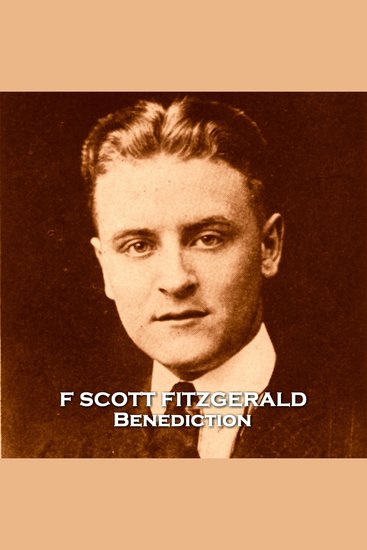
    Francis Scott Key Fitzgerald was born on 24th September 1896 in Saint Paul, Minnesota into an upper-middle class family. Whilst his mother was pregnant with him, his two young sisters tragically died.  Fitzgerald once said this was when his destiny as a writer was ordained. 
    His intelligence and talent was recognised from an early age, with his first story, about a detective being published in the school magazine when he was just 13.   
    In 1913 he enrolled at Princeton but his devotion to his own literary pursuits resulted in him leaving and, rather bizarrely, joining the Army.  In 1918, stationed at Fort Sheridan near Montgomery, Alabama he met and became infatuated and then inseparable from Zelda Sayre.  Initially though she refused to marry him but with the success of ‘This Side of Paradise’, the fame and the flow of money enabled them both to begin a gilded life.  For them this was The Jazz Age.  For Fitzgerald he was already an alcoholic. 
    He continued to write with great mastery and the titles of his novels and many of his 164 short stories are household names.  The Great Gatsby, often cited as The Great American Novel was published to mixed reviews.  As America moved from the Great Depression to the slaughter of the Second World War his works and himself were seen as far too entwined with the decadent twenties. The world had moved on and he hadn’t.   
    Further tragedy was never far from his life. Zelda after years of erratic and now intolerable behaviour was committed to an institution in 1936.  His own sales began to decline and he became a hack for hire in Hollywood, dependent on increasing amounts of booze and the weekly pay check.  His drunken state had often resulted in arrest or hospitalisation, further imperiling his talents.   Despite his contribution to many MGM films he received only one credit. 
    The end came all too soon for one of America’s greatest ever writers.  On 21st December 1940, at only 44 years of age in Hollywood, F Scott Fitzgerald succumbed to a heart attack.
    Voir livre
  • Bullet-proof - From their pens to your ears genius in every story - cover

    Bullet-proof - From their pens...

    Bernard Capes

    • 0
    • 0
    • 0
    Bernard Edward Joseph Capes was born on the 30th August 1854 in London.  He was one of 11 children. 
    His early work was as a journalist and this developed into writing many short stories for the periodicals of the time including Blackwood's, Cassell's, Cornhill Magazine, Illustrated London News, Macmillan's Magazine, Mall Magazine, Pearson's Magazine, The Idler, and The Queen. 
    It took him many years to decide that writing full-time could be a sustainable career path.  His initial success came with ‘The Mill of Silence’.  As well as being published it garnered second prize at a competition sponsored by the Chicago Record.  He exceeded that by winning it the following year with ‘The Lake of Wine’.   
    Capes quickly became both prolific and popular.  As well as his stories and articles for the periodicals he wrote around 40 volumes across novels, poetry, history as well as romance and mystery novels. 
    Bernard Capes died on 2nd November 1918 in the flu epidemic.
    Voir livre
  • In Our Time - cover

    In Our Time

    Ernest Hemingway

    • 0
    • 0
    • 0
    In Our Time is the title of Ernest Hemingway's first collection of short stories, published in 1925. The collection is known for its spare language and oblique depiction of emotion, through a style known as Hemingway's "theory of omission". In Our Time was widely praised for its simple and precise use of language to convey a wide range of complex emotions, and earned Hemingway a place among the most promising American writers of that period. Now recognized as one of the most important short story collections of twentieth-century literature, In Our Time provides key insights into Hemingway's later works.
    Voir livre
  • Adventures of Huckleberry Finn - cover

    Adventures of Huckleberry Finn

    Mark Twain

    • 0
    • 0
    • 0
    He runs from civilization—and discovers what it truly means to be human.
    Drifting down the Mississippi River on a raft, young Huck Finn escapes a world of cruelty and hypocrisy alongside Jim, a man seeking freedom of his own. As they travel through danger, humor, and quiet moments of reflection, Huck is forced to question the values he has been taught—and to choose between society's rules and his own conscience.
    
    Widely regarded as "the great American novel," this timeless classic blends sharp satire with deep compassion. Mark Twain's vivid storytelling captures the voice of youth, the struggle for moral truth, and the enduring power of friendship against injustice.
    
    If you love adventurous storytelling with heart, humor, and lasting meaning, this novel remains as powerful and relevant as ever.
    
    Open the book—and follow the river toward freedom, courage, and truth.
    Voir livre
  • Browdean Farm - From their pens to your ears genius in every story - cover

    Browdean Farm - From their pens...

    A M Burrage

    • 0
    • 0
    • 0
    Alfred McLelland Burrage was born in Hillingdon, Middlesex on 1st July, 1889. His father and uncle were both writers, primarily of boy’s fiction, and by age 16 AM Burrage had joined them.  The young man had ambitions to write for the adult market too.  The money was better and so was his writing. 
    From 1890 to 1914, prior to the mainstream appeal of cinema and radio the printed word, mainly in magazines, was the foremost mass entertainment.  AM Burrage quickly became a master of the market publishing his stories regularly across a number of publications. 
    By the start of the Great War Burrage was well established but in 1916 he was conscripted to fight on the Western Front. He continued to write during these years documenting his experiences in the classic book War is War by Ex-Private X. 
    For the remainder of his life Burrage was rarely printed in book form but continued to write and be published on a prodigious scale in magazines and newspapers.  In this volume we concentrate on his supernatural stories which are, by common consent, some of the best ever written.  Succinct yet full of character each reveals a twist and a flavour that is unsettling…..sometimes menacing….always disturbing.
    Voir livre
  • After the Funeral - From their pens to your ears genius in every story - cover

    After the Funeral - From their...

    Mary Butts

    • 0
    • 0
    • 0
    Mary Frances Butts was born on 13th December 1890 in Poole, Dorset. 
    Her early years were spent at Salterns, an 18th-century house overlooking Poole Harbour.  Sadly in 1905 her father died, and she was sent for boarding at St Leonard's school for girls in St Andrews. 
    Her mother remarried and, from 1909, Mary studied at Westfield College in London, and here, first became aware of her bisexual feelings.  She was sent down for organising a trip to Epsom races and only completed her degree in 1914 when she graduated from the London School of Economics.  By then Mary had become an admirer of the occultist Aleister Crowley and she was given a co-authorship credit on his ‘Magick (Book 4)’. 
    In 1916, she began the diary which would now detail her future life and be a constant reference point for her observations and her absorbing experiences. 
    During World War I, she was doing social work for the London County Council in Hackney Wick, and involved in a lesbian relationship.  Life changed after meeting the modernist poet, John Rodker and they married in 1918. 
    In 1921 she spent 3 months at Aleister Crowley's Abbey of Thelema in Sicily; she found the practices dreadful and also acquired a drug habit.  Mary now spent time writing in Dorset, including her celebrated book of short stories ‘Speed the Plough’ which saw fully develop her unique Modernist prose style. 
    Europe now beckoned and several years were spent in Paris befriending many artists and writing further extraordinary stories.   
    She was continually sought after by literary magazines and also published several short story collections as books. Although a Modernist writer she worked in other genres but is essentially only known for her short stories.  Mary was deeply committed to nature conservation and wrote several pamphlets attacking the growing pollution of the countryside. 
    In 1927, she divorced and the following year her novel ‘Armed with Madness’ was published.  A further marriage followed in 1930 and time was spent attempting to settle in London and Newcastle before setting up home on the western tip of Cornwall.  By 1934 the marriage had failed. 
    Mary Butts died on 5th March 1937, at the West Cornwall Hospital, Penzance, after an operation for a perforated gastric ulcer. She was 46.
    Voir livre