Join us on a literary world trip!
Add this book to bookshelf
Grey
Write a new comment Default profile 50px
Grey
Subscribe to read the full book or read the first pages for free!
All characters reduced
Lost Face - cover

Lost Face

Jack London

Publisher: epf

  • 0
  • 0
  • 0

Summary

Lost Face is a collection of seven short stories by Jack London. It takes its name from the first short story in the book, about a European adventurer in the Yukon who outwits his (American) Indian captors' plans to torture him. The book includes London's best-known short story, "To Build a Fire".
Available since: 03/21/2025.

Other books that might interest you

  • The Classic Collection of Philip K Dick Science Fiction Short Stories - The Crystal Crypt The Eyes Have It Beyond the Door The Defenders The Gun and others - cover

    The Classic Collection of Philip...

    Philip K. Dick

    • 0
    • 0
    • 0
    Philip Kindred Dick (December 16, 1928 – March 2, 1982), often referred to by his initials PKD, was an American science fiction writer. He wrote 44 novels and about 121 short stories, most of which appeared in science fiction magazines during his lifetime. His fiction explored varied philosophical and social questions such as the nature of reality, perception, human nature, and identity, and commonly featured characters struggling against elements such as alternate realities, illusory environments, monopolistic corporations, drug abuse, authoritarian governments, and altered states of consciousness.  
     Born in Chicago, Dick moved to the San Francisco Bay Area with his family at a young age. He began publishing science fiction stories in 1952, at age 23. He found little commercial success until his alternative history novel The Man in the High Castle (1962) earned him acclaim, including a Hugo Award for Best Novel, when he was 33.[6] He followed with science fiction novels such as Do Androids Dream of Electric Sheep? (1968) and Ubik (1969). His 1974 novel Flow My Tears, the Policeman Said won the John W. Campbell Memorial Award for Best Science Fiction Novel. 
       
     The Crystal Crypt 
     The Eyes Have It 
     Beyond the Door 
     Beyond Lies the Wub 
     The Defenders 
     The Gun 
     Tony and the Beetles 
     The Hanging Stranger 
     Adjustment Team 
     Of Withered Apples 
     Survey Team 
     The Crawlers 
     Meddler 
     Souvenir 
     Human Is
    Show book
  • 3 Stories About - Poverty & Struggle - A trio of classic tales perfect for a commute walk or quiet night in - cover

    3 Stories About - Poverty &...

    Anton Chekhov, O Henry, Mary Mackay

    • 0
    • 0
    • 0
    There is something about the number 3.    
     
    The Ancient Greeks believed 3 was the perfect number, and in China 3 has always been a lucky number, and they know a thing or two.   
     
    Most religions also have 3 this and 3 that and, of course, in these more modern times, three’s a crowd may be too many, except when it’s a ménage à trois.  It seems good things usually come in threes. 
     
    Whatever history and culture says WE think 3, a hat-trick of stories, is a great number to explore themes and literary avenues that classic authors were so adept at creating. 
     
    From their pens to your your ears.  
     
    01 - 3 Stories About - Poverty & Struggle 
    02 - The Gift of the Magi by O Henry 
    03 - Vanka by Anton Chekhov 
    04  - The Hired Baby, A Romance of the London Streets by Mary Mackay writing as Marie Corelli
    Show book
  • The Serpent in the Cave - cover

    The Serpent in the Cave

    Emilio Salgari

    • 0
    • 0
    • 0
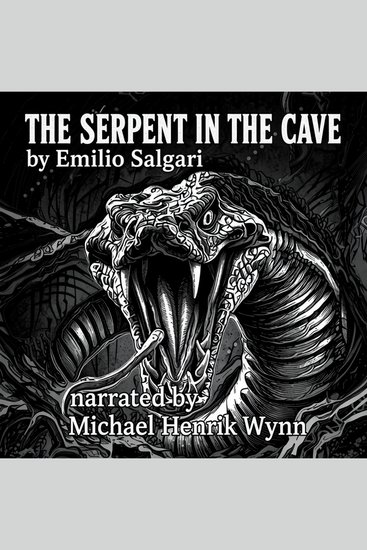
    Michael Henrik Wynn, the editor of the educational net radio stream Historyradio.org, narrates a classic boys’ adventure by Emilio Salgari (1862–1911), one of Italy’s most prolific and bestselling authors. Set in the jungles of the Amazon, the tale follows hunters in pursuit of a legendary serpent of colossal size. 
     
    The story brims with action-filled passages reminiscent of Indiana Jones and draws listeners into an exotic landscape where forked tongues and sharp teeth lurk in dark caves. 
     
    Salgari was an armchair adventurer of the worst kind, and his descriptions of indigenous peoples are marked by the prejudices common in his day. Yet, because his yarn is so preposterous and grounded in practically no first-hand experience, it is perhaps possible to forgive as mere entertainment. 
     
    This is a journey with the “grandfather” of Italian popular fiction—the Italian counterpart to Karl May (1842–1912) in Germany and H. Rider Haggard (1856–1925) in Britain.  
     
    This is an updated version of audiobook published in 2025. 
     
    The short intro was adapted from a creative commons flamenco performance at YouTube.
    Show book
  • A Lickpenny Lover - From their pens to your ears genius in every story - cover

    A Lickpenny Lover - From their...

    O Henry

    • 0
    • 0
    • 0
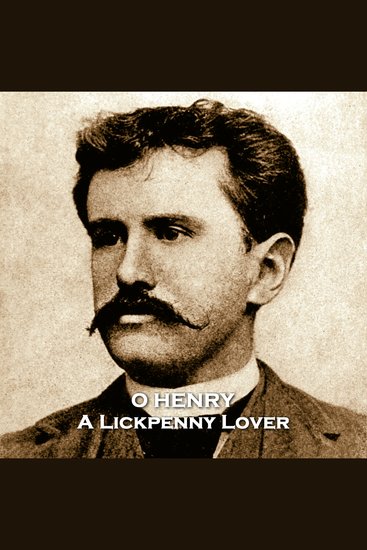
    William Sydney Porter was born on 11th September 1862 in Greensboro, North Carolina. At age 3 his mother died from tuberculosis. From an early age it was clear Porter had a large appetite for reading as he absorbed the world around him. 
    He first attended at a school run by his aunt before enrolling at the Lindsey Street High School and then worked at his uncle’s drugstore and gained a pharmacists’ license in 1881.  
    A persistent cough took him to Texas in the hope that a change of climate would help his symptoms. He took on various types of work, initially from ranch hand and cook and then as varied as pharmacist, draftsman, bank teller and journalist. He also began to write, though for now, purely as a hobby. 
    He was a member of several singing and dramatic groups when he met 17 year old Athol Estes, daughter of a wealthy Austin family. Despite her mother’s objection owing to Athol’s tuberculosis, they began courting and in July 1887, they eloped and soon married. 
    Athol, impressed by his writing, encouraged him to get them published. A job as a draftsman at the Texas General Land Office paid a healthy $100 dollars per month and life was good. 
    But then life turned cruel. His son died a few hours after birth although a daughter, Margaret, came the following year.  His job had to be vacated but another was found at the First National Bank of Austin. The bank operated informally and Porter was careless in keeping the books. He lost that job but began writing for the humourous weekly The Rolling Stone and the Houston Post. Some time later the federal Bank auditors went through his former accounts and he was arrested on charges of embezzlement. 
    Porter fled the day before his trial to Honduras. Holed up for several months he began to write.  Athol had become too ill to travel to meet him and learning that her health was deteriorating he surrendered to the court in February 1897.  Bail was obtained so that he could stay with Athol during her final days.  
    Porter was sentenced to five years at the Ohio Penitentiary in Columbus. His pharmacy qualifications got him the job of night druggist.  His sentence also gave him time to write and publish fourteen short stories. In December 1899 in McClure’s Magazine he published a short story as O Henry.  
    He was released two years early in July 1901, and reunited with Margaret, now 11, in Pittsburgh.  He now began his most prolific period of writing; a short story per week for the New York World, while also publishing works in other magazines.  Eventually over 600 of his short stories were published. 
    Porter was a heavy drinker and in 1908 his health, which had deteriorated for several years, took a dramatic turn for the worse, as did his writing.  
    O Henry died of cirrhosis of the liver complicated by diabetes and an enlarged heart on 5th June 1910.
    Show book
  • The Crucifixion of the Outcast - cover

    The Crucifixion of the Outcast

    W. B. Yeats

    • 0
    • 0
    • 0
    In The Crucifixion of the Outcast, W.B. Yeats weaves a haunting parable of injustice, piety, and the tragic fate of visionaries scorned by society. Set in a mythic version of early Christian Ireland, the story follows a devout, ragged poet who begs for sanctuary from a monastery — only to find rejection, ridicule, and ultimate martyrdom at the hands of those who claim to follow Christ. 
    This powerful tale explores the hypocrisy of religious institutions, the alienation of the artist, and the price of true spiritual conviction. Rich with allegory and poetic symbolism, Yeats paints a bleak but beautiful portrait of the eternal outcast — one whose death becomes his final and purest act of devotion. 
    Perfect for fans of literary allegory, Irish folklore, and philosophical fiction, The Crucifixion of the Outcast is both a social critique and a deeply moving spiritual meditation.
    Show book
  • How to Live to be 200 - From their pens to your ears genius in every story - cover

    How to Live to be 200 - From...

    Stephen Leacock

    • 0
    • 0
    • 0
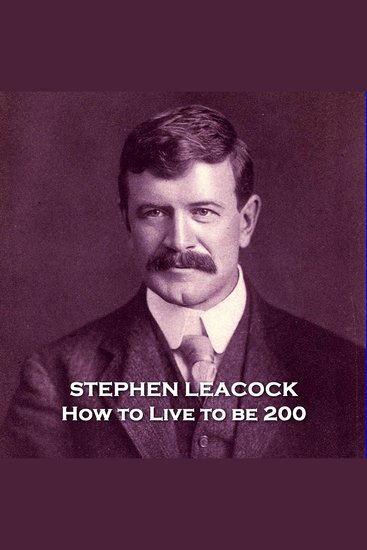
    Stephen P H Butler Leacock FRSC was born on 30th December 1869 in Swanmore, near Southampton, England.  He was the third of eleven children. 
    The family emigrated to Canada in 1876, settling on a 100-acre farm in Sutton, Ontario.  There Leacock was home-schooled until, funded by his grandfather, he was enrolled into the elite private school Upper Canada College in Toronto.  Academically he was very strong.  In 1887, at age 17, he became head boy and then proceeded on to the University of Toronto to study languages and literature.  Despite completing two years of study in only one, he was obliged to leave the university because his father, an alcoholic, had abandoned the family and finances could not be stretched to continue his attendance.  Leacock now enrolled in a three-month course at Strathroy Collegiate Institute to become a qualified high school teacher with a regular income. 
    He worked at Upper Canada College from 1889 through 1899 and later resumed his studies part-time at the University of Toronto, graduating with a B A in 1891.  It was during this period that he was first published in The Varsity, a campus newspaper.  But his passion was now economics and political theory.  In 1899 he enrolled for postgraduate studies at the University of Chicago and earned his PhD in 1903. 
    Leacock had married Beatrix Hamilton in 1900 and 15 years later the couple had their only child, Stephen.  In time father and son developed a love-hate relationship, partially caused by his son’s diminutive stature of only four feet.  
    Accepting a post at McGill University Leacock would remain there until he retired in 1936.  In 1906, he wrote ‘Elements of Political Science’, quickly adopted as a standard textbook for the next two decades and his most profitable book.  He also began public speaking and lecturing, and took a year's leave of absence in 1907 to speak throughout Canada on the subject of national unity.  
    Leacock had submitted humourous articles to the Toronto magazine Grip in 1894, and was soon published in other Canadian and US magazines.  In 1910, he printed privately a collection of these as ‘Literary Lapses’.  Acquired by the British publisher, John Lane, it was released in London and New York.   He was now a commercially successful writer.  There soon followed ‘Nonsense Novels’ (1911) and the sentimental favourite, ‘Sunshine Sketches of a Little Town’ (1912).  His ‘Arcadian Adventures with the Idle Rich’ (1914) is a darker collection that satirizes city life.  Collections of sketches continued to be published almost annually, filled with a mixture of light-hearted whimsy, parody, nonsense, and satire. 
    In later life, he wrote on the art of humour writing and published biographies on Twain and Dickens.  Together with continued speaking tours he also added to his non-fiction with many well-regarded and award-winning volumes on Canada. 
    Politically Leacock was a social conservative and a partisan Conservative.  He opposed women’s right to vote and had a varied record on non-English immigration.  He was a champion of Empire but an advocate of social welfare legislation and wealth redistribution, but he often caused friction with his racist views towards blacks and Indigenous peoples. 
    Leacock has for some time been forgotten as an economist, but it’s often quoted that in 1911 more people had heard of him than had heard of Canada.  For the decade after 1915 Leacock was the most popular humorist in the English-speaking world. 
    Stephen Leacock died on 28th March 1944 of throat cancer in Toronto, Canada.  He was 74.  He was buried in the St George the Martyr Churchyard, Sutton, Ontario.
    Show book