Rejoignez-nous pour un voyage dans le monde des livres!
Ajouter ce livre à l'électronique
Grey
Ecrivez un nouveau commentaire Default profile 50px
Grey
Abonnez-vous pour lire le livre complet ou lisez les premières pages gratuitement!
All characters reduced
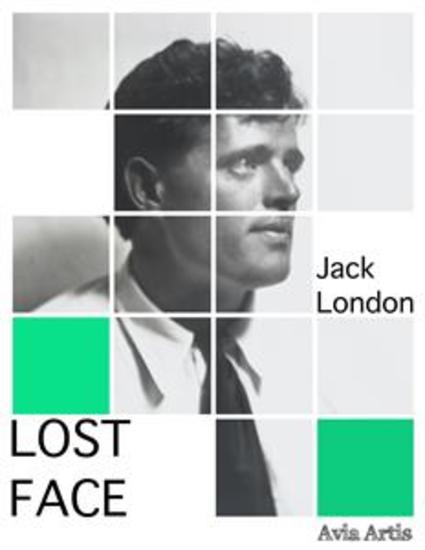
Lost Face - cover

Lost Face

Jack London

Maison d'édition: Avia Artis

  • 0
  • 0
  • 0

Synopsis

“Lost Face” is a book by Jack London, an American novelist. A pioneer of commercial fiction and an innovator in the genre that would later become known as science fiction.

Lost Face is a collection of seven short stories by Jack London. It takes its name from the first short story in the book, about a European adventurer in the Yukon who outwits his (American) Indian captors' plans to torture him. The book includes London's best-known short story, "To Build a Fire".
Disponible depuis: 03/12/2021.


D'autres livres qui pourraient vous intéresser

  • The Mysteries of Udolpho - cover

    The Mysteries of Udolpho

    Ann Radcliffe

    • 0
    • 0
    • 0
    The novel follows the story of Emily St. Aubert, an orphaned young woman, who finds herself entangled in a web of mysteries and intrigues. As she navigates through the eerie and foreboding landscapes of the European countryside, she encounters dark castles, secret passages, and a series of mysterious events that challenge her sanity and understanding of reality. Themes of love, betrayal, and the supernatural are interwoven as Emily unravels the secrets surrounding the castle of Udolpho.
    Voir livre
  • August Heat - From their pens to your ears genius in every story - cover

    August Heat - From their pens to...

    W F Harvey

    • 0
    • 0
    • 0
    William Fryer Harvey AM was born on 14th April 1885 into a wealthy Quaker family in Leeds, West Yorkshire. 
    He was educated at the Quaker Bootham School in Yorkshire and Leighton Park School in Reading before university at Balliol College, Oxford.  
    His health was fragile and he poured his energies into writing short stories and in 1910 published his first collection ‘Midnight House’. 
    In the Great War he was with the Friends' Ambulance Unit and then served as a surgeon-lieutenant in the Royal Navy.  There he received the Albert Medal for Lifesaving but lung damage received at that time troubled him for the rest of his life. 
    He continued to write short stories, and even a memoir, but by 1925 ill health had forced his retirement to any outside work.  Three years later he published his second collection which contained his macabre classic ‘The Beast with Five fingers’, only one more collection would come from his pen in his lifetime. 
    For many years of his life he now lived in Switzerland with his wife but a yearning to be home saw them come back to England in 1935. 
    W F Harvey died in Letchworth on the 4th June 1937. He was 52.
    Voir livre
  • How Watson Learnt the Trick - cover

    How Watson Learnt the Trick

    Arthur Conan Doyle

    • 0
    • 0
    • 0
    How Watson Learnt the Trick is a Sherlock Holmes parody written by Arthur Conan Doyle in 1924. It concerns Doctor Watson attempting to demonstrate to Holmes how he has learned the latter's "superficial trick" of logical deduction by giving a summary of Holmes' current state of mind and plans for the day ahead, only for Holmes to then reveal that every single one of Watson's deductions is incorrect.Conan Doyle was one of several authors commissioned to provide books for the library of Queen Mary's Dolls' House; others included J. M. Barrie, Thomas Hardy, Rudyard Kipling and W. Somerset Maugham. Conan Doyle was provided with a book approximately 1.5" x 1.25" (3.75 cm x 3.15 cm) into which he wrote the 503-word story of How Watson Learned the Trick by hand, taking up 34 pages. The original manuscript is still part of the Dolls' House library.
    Voir livre
  • A Legend - From their pens to your ears genius in every story - cover

    A Legend - From their pens to...

    Alexander Kuprin

    • 0
    • 0
    • 0
    Alexander Kuprin was born in Narovchat, Penza in Russia on 7th September 1870. 
    At 3 his Father died and he and mother moved to Moscow. By 10 he was enrolled at the Second Moscow Military High School and there his interest in literature began. The Alexander Military Academy followed and two years later he was a sub-lieutenant and posted to an Infantry Regiment for a further four years. 
    Despite his duties he was a now a keen writer and published his first short story at this time. His military duties also garnered him experiences for his breakthrough work ‘The Duel’.  Leaving the military he left for Kiev to work for local newspapers.  He continued to publish both stories and novels and by 1901 he was in St Petersburg becoming part of a group that included Chekhov, Ivan Bunin, Maxim Gorky and Leonid Andreyev.  
    In the years that followed further controversial works and acclaim followed.  His comments on the regime meant he was also put under secret police surveillance.   
    As World War I erupted, Kuprin opened a military hospital but was then given command of an infantry company in Finland. He was soon discharged on grounds of ill health.  
    The October Revolution saw him praise Lenin, but he warned that the Bolsheviks threatened Russian culture and might cause further widespread suffering to the peasants.  As Civil War raged he took his family to Helsinki and then on to Paris. 
    Exile saw his talents decline further and his succumbing to alcoholism. He became lonely and withdrawn. The family's poverty increased his malaise.   
    In May 1937, the Kuprin’s returned to Moscow.  He now saw his work published but wrote almost nothing new.  In 1938 his health rapidly deteriorated.  Already suffering from a kidney problems and sclerosis, he had now developed cancer of the oesophagus.  
    Alexander Kuprin died on 25th August 1938.
    Voir livre
  • Top 10 Short Stories The - The 19th Century - The English - The top ten short stories written from 1800 - 1899 by English authors - cover

    Top 10 Short Stories The - The...

    George Eliot

    • 0
    • 0
    • 0
    Short stories have always been a sort of instant access into an author’s brain, their soul and heart.  A few pages can lift our lives into locations, people and experiences with a sweep of landscape, narration, feelings and emotions that is difficult to achieve elsewhere. 
     
    In this series we try to offer up tried and trusted ‘Top Tens’ across many different themes and authors. But any anthology will immediately throw up the questions – Why that story? Why that author?  
     
    The theme itself will form the boundaries for our stories which range from well-known classics, newly told, to stories that modern times have overlooked but perfectly exemplify the theme.  Throughout the volume our authors whether of instant recognition or new to you are all leviathans of literature. 
     
    Some you may disagree with but they will get you thinking; about our choices and about those you would have made.  If this volume takes you on a path to discover more of these miniature masterpieces then we have all gained something. 
     
    In this Century England assembles more of the world’s territories, people and materials for her own Empire.  The arts also flourish with names in this volume that are bywords for talent beyond the reach of almost all other writers.  An ever hungry audience demands yet more and more. 
     
    1 - The Top 10 - The 19th Century - The English - An Introduction 
    2 - The Lifted Veil - Part 1 by George Eliot 
    3 - The Lifted Veil - Part 2 by George Eliot 
    4 - The Signalman by Charles Dickens 
    5 - The Man Who Would Be King - Part 1 by Rudyard Kipling 
    6 - The Man Who Would Be King - Part 2 by Rudyard Kipling 
    7 - The Magic Shop by H G Wells 
    8 - The Withered Arm by Thomas Hardy 
    9 - The Old Nurse's Story by Elizabeth Gaskell 
    10 - A Little Dinner At Timmin's by William Makepeace Thackeray 
    11 - Father Giles of Ballymoy by Anthony Trollope 
    12 - Lost Hearts by M R James 
    13 - A Terribly Strange Bed by Wilkie Collins
    Voir livre
  • On Getting a Home (Unabridged) - cover

    On Getting a Home (Unabridged)

    Booker T. Washington

    • 0
    • 0
    • 0
    Booker Taliaferro Washington (April 5, 1856 - November 14, 1915) was an American educator, author, orator, and adviser to several presidents of the United States. Between 1890 and 1915, Washington was the dominant leader in the African American community and of the contemporary black elite. Washington was from the last generation of black American leaders born into slavery and became the leading voice of the former slaves and their descendants. They were newly oppressed in the South by disenfranchisement and the Jim Crow discriminatory laws enacted in the post-Reconstruction Southern states in the late 19th and early 20th centuries.
    ON GETTING A HOME: Every coloured man owes it to himself, and to his children as well, to secure a home just as soon as possible. No matter how small the plot of ground may be, or how humble the dwelling placed on it, something that can be called a home should be secured without delay.
    Voir livre