Rejoignez-nous pour un voyage dans le monde des livres!
Ajouter ce livre à l'électronique
Grey
Ecrivez un nouveau commentaire Default profile 50px
Grey
Abonnez-vous pour lire le livre complet ou lisez les premières pages gratuitement!
All characters reduced
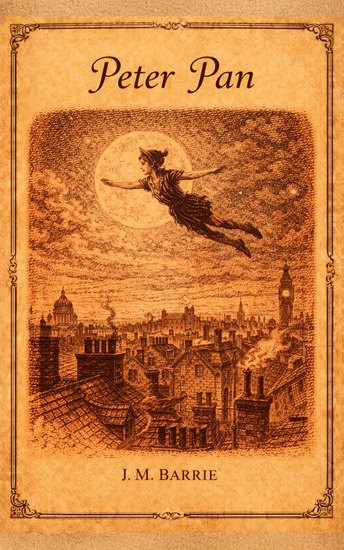
Peter Pan - cover

Peter Pan

J. M. Barrie

Maison d'édition: CLXBX

  • 0
  • 0
  • 0

Synopsis

Enter a world where children never grow up and adventure waits just beyond the nursery window. Peter Pan by J.M. Barrie is a timeless tale of imagination, courage, and the bittersweet beauty of childhood. Filled with pirates, fairies, mermaids, and daring escapades, this beloved classic continues to enchant readers of all ages.

The story begins in London, where Wendy Darling and her brothers, John and Michael, are visited by the mischievous and magical Peter Pan—a boy who refuses to grow up. With a sprinkle of fairy dust from the spirited Tinker Bell, the children soar through the night sky to Neverland, a fantastical island where adventure reigns and danger lurks around every corner.

In Neverland, they meet the Lost Boys, a band of children under Peter's leadership, as well as a colorful cast of characters including the brave Tiger Lily and the fearsome Captain Hook. Hook, with his iron hook for a hand and deep grudge against Peter, is determined to defeat the boy who cut off his hand and fed it to a crocodile—one that now follows him relentlessly, marked by the ticking of a swallowed clock.

As Wendy takes on a nurturing role among the Lost Boys, she begins to understand the tension between the carefree freedom of childhood and the responsibilities of growing up. Through thrilling battles, daring rescues, and quiet moments of longing, Barrie explores themes of innocence, imagination, loyalty, and the passage of time.

Both whimsical and poignant, Peter Pan captures the wonder of youth while acknowledging its fleeting nature. With lyrical storytelling and unforgettable characters, J.M. Barrie creates a magical world that reminds readers of the power of belief, the joy of storytelling, and the enduring desire to hold onto childhood—if only for a little while longer.
Disponible depuis: 14/02/2026.
Longueur d'impression: 106 pages.
D'autres livres qui pourraient vous intéresser

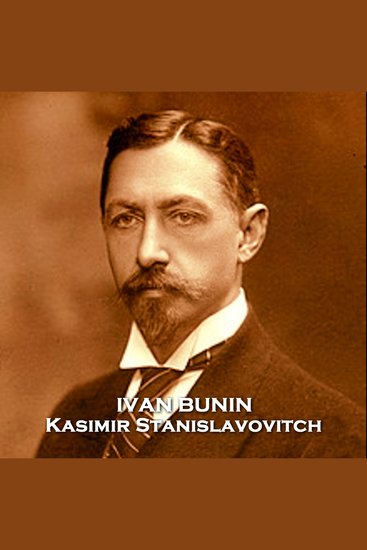
  • Kasimir Stanislavovitch - From their pens to your ears genius in every story - cover

    Kasimir Stanislavovitch - From...

    Ivan Bunin

    • 0
    • 0
    • 0
    Ivan Alekseyevich Bunin was born on 22nd October 1870 in Voronezh province, in the South-West of the Russian Empire. 
    His early life was plagued by his Father’s gambling habits which caused his education to be erratic and the family to lose most of their wealth. 
    Bunin published his first poem in 1887 in St Petersburg and later in Oryol he worked for the local paper and became its editor, handily allowing him to publish his own poems and short stories.  There he met and married Varvara Pashchenko.  Ivan Bunin's debut book of poetry ‘Poems (1887–1891)’ was published in 1891. 
    This poetry and his translation of Longfellow garnered him his first Pushkin Prize.  Now he switched to writing prose and his novella ‘Antonov Apples’ is regarded as his first masterpiece.  Many more would follow. 
    The October Revolution of 1905 found Bunin in the Crimea.  Scenes of ‘class struggle’ he saw more as the oppressed people's craving for anarchy and destruction. 
    In November 1906 he began a passionate affair with Vera Muromtseva, within a few months they were touring through Egypt and Palestine.  ‘The Bird's Shadow’ collection was the result.   
    His second Pushkin Prize came in 1909 for Poems (1903–1906) and further translations.  He was now elected to the prestigious Russian Academy. 
    More widespread fame came in 1910 with ‘The Village’, a controversial and bleak portrayal of Russian country life.  Travel too beckoned them back to the Middle East, Ceylon (now Sri Lanka) and for winters in Capri with their friend Maxim Gorky.  
    That friendship suddenly ended in April 1917 as the revolution began to ferment in war-ravaged Russia.  After the Bolsheviks took power and the upheavals continued, he decided to leave Russia, finally achieving that in early 1920.  
    It would take some time to heal the wounds and stress he had been under and for his writing to begin again.  Settled in France, Bunin published many of his previous works and collections of novellas.  He also made regular contributions to the Russian emigre press.  
    Although reluctant to become involved in politics, Bunin was now feted as both a writer and the figurehead of non-Bolshevik Russian values and traditions.  In 1933 he became the first Russian to be awarded the Nobel Prize for Literature ‘for following through and developing with chastity and artfulness the traditions of Russian classic prose.’  
    In 1938 Bunin began working on the celebrated cycle of nostalgic, and erotically themed stories known Dark Avenues (or Dark Alleys).  
    As World War II broke out he chose to remain in Grasse spending the war at his remote Villa Jeanette, high in the mountains.  
    Ivan Bunin was a staunch anti-Nazi, and often, under difficult conditions, sheltered fugitives after Vichy was occupied by the Germans.  He wrote but did not publish during these years until on August 23rd the Nazi’s fled Grasse without a fight.  The next day the Americans came.  
    In May 1945 he returned to Paris and, apart from convalescing at times in Juan-les-Pins, he stayed for the rest of his life. 
    After 1948, with his health deteriorating, Bunin concentrated upon writing his memoirs and a book on Chekhov.  His last years were overshadowed by bitterness and despair at the situation in Russia and the treatment of its peoples.  He was suffering now from asthma, bronchitis and chronic pneumonia. 
    Ivan Alekseyevich Bunin died in a Paris attic flat on 8th November 1953.  Heart failure, cardiac asthma and pulmonary sclerosis were given as the causes of death.  He was 83.
    Voir livre
  • The Mysterious Stranger - cover

    The Mysterious Stranger

    Mark Twain

    • 0
    • 0
    • 0
    The Mysterious Stranger is a story by Mark Twain that tells the tale of a mysterious stranger who comes to a small town and changes the lives of its residents. It is difficult to understand what exactly is happening. However, it seems as though the stranger is a force for good, and he helps the townspeople to become better people. Ultimately, the mystery of the stranger's identity remains unsolved, but his impact on the town is clear.
    Voir livre
  • Oroonoko - cover

    Oroonoko

    Aphra Behn

    • 0
    • 0
    • 0
    Oroonoko, one of the earliest English novels, tells the tragic tale of an African prince enslaved in the European colony of Surinam. Noble and courageous, Oroonoko is captured through deceit and sold into bondage, where he endures the brutal realities of slavery while clinging to his dignity and love for the beautiful slave Imoinda. Behn’s narrative blends romance, political critique, and early abolitionist sentiment, offering both admiration for her hero and a complex portrayal of colonial power. A poignant and controversial work, it remains a landmark in literature for its exploration of race, honor, and human rights in the 17th-century world.
    Voir livre
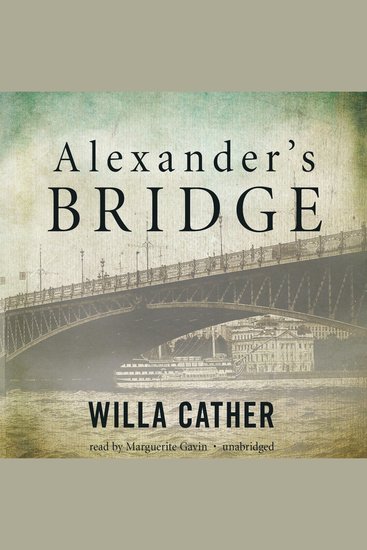
  • Alexander’s Bridge - cover

    Alexander’s Bridge

    Willa Cather

    • 0
    • 0
    • 0
    There is a pleasure in listening to the imagery of Alexander’s Bridge that is similar to viewing a beautiful watercolor, as in the following description of a Boston street in late afternoon: “The sun sank rapidly; the silvery light had faded from the bare boughs and the watery twilight was setting in when Wilson at last walked down the hill, descending into cooler and cooler depths of grayish shadow.” 
    Against this delicate imagery, Willa Cather renders the tough inner terrain of a man in mid-life crisis. Bartley Alexander is a master bridge engineer. At forty-three he is at the height of his power, comfortable with success and all it brings. Yet he yearns for the lost vibrancy of his youth. He leads a double life, veering between his beautiful, accomplished wife and his mistress, an actress he knew as a student in Paris. This conflict creates a crack in the structure of his life which ultimately undermines him.
    Voir livre
  • The Return of Don Quixote - A Novel - cover

    The Return of Don Quixote - A Novel

    G.K. Chesterton

    • 0
    • 0
    • 0
    'Men do not differ much about what things they will call evils; they differ enormously about what evils they will call excusable.'
    The Return of Don Quixote rose to critical acclaim at the time of publication in 1927, with several readers lauding its quick wit and social depth. Today, it has become one of G.K. Chesterton's lesser-known gems.
    
    Set in the early twentieth century, The Return of Don Quixote centres on the character of Michael Herne, a gentle, quiet librarian. When Michael finds himself cast as a king in a medieval play, he reluctantly fulfils the role. But after the play's end, peculiar things start to occur: Michael begins donning armour, adopts chivalric ideals and boldly questions the hypocrisies of modern society. As Michael rallies for a movement that tackles misplaced power and dishonour, it's clear that a new Don Quixote is in town… As funny as it is thought-provoking, Chesterton's lost classic is a tribute to chivalrous and courageous spirits. This audiobook edition is brilliantly brought to life by Ben Allen.
    Gilbert Keith Chesterton (1874 – 1936) was an English novelist, philosopher, journalist and critic. A Christian apologist, he is famed for creating the fictional priest-detective Father Brown. His writing was also renowned for his sense of humour: known as 'the prince of paradox', Chesterton often turned common sayings upside down. Admired by several of his literary contemporaries, Chesterton's work is still widely read today.
    Voir livre
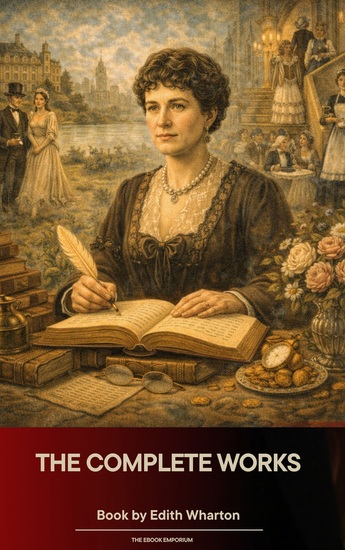
  • The Complete Works of Edith Wharton - cover

    The Complete Works of Edith Wharton

    Edith Wharton

    • 0
    • 0
    • 0
    What lies beneath the elegance of high society?
    
    The Complete Works of Edith Wharton gathers the full literary legacy of one of America's greatest novelists and the first woman to win the Pulitzer Prize for Fiction. With piercing insight and psychological precision, Wharton exposed the hidden rules, emotional restraints, and quiet tragedies of upper-class life in America and Europe.
    
    This comprehensive collection includes her major novels, short stories, and novellas—exploring themes of love and duty, freedom and convention, wealth and isolation. From the rigid social codes of New York's elite to intimate portraits of individuals trapped by circumstance, Wharton's writing reveals how society shapes—and often limits—human happiness.
    
    Elegant, unsentimental, and deeply humane, her work stands at the crossroads of realism and modern psychological fiction.
    
    Inside this eBook, you'll explore:
    
    All novels and short fiction by Edith Wharton in one collection
    
    Sharp social criticism and emotional realism
    
    Iconic works such as The Age of Innocence and Ethan Frome
    
    A cornerstone collection of American literary realism
    
    Studied worldwide and admired for over a century, Edith Wharton's works remain essential reading for anyone interested in classic fiction, social history, and the inner lives of women and men.
    
    Step into a world where beauty masks constraint and truth waits beneath manners. Buy now and experience the complete works of Edith Wharton.
    Voir livre