Begleiten Sie uns auf eine literarische Weltreise!
Buch zum Bücherregal hinzufügen
Grey
Einen neuen Kommentar schreiben Default profile 50px
Grey
Jetzt das ganze Buch im Abo oder die ersten Seiten gratis lesen!
All characters reduced
Tragedy at Ravensthorpe - cover

Tragedy at Ravensthorpe

J. J. Connington

Verlag: Good Press

  • 0
  • 0
  • 0

Beschreibung

In "Tragedy at Ravensthorpe," J. J. Connington masterfully weaves a complex narrative that entwines classic detective fiction with rich psychological depth. Set against the backdrop of an English country estate, the novel delves into the mysterious death of a local resident, unraveling layers of familial strife and social intrigue. Connington's literary style is characterized by meticulous attention to detail and a keen understanding of human motivations, offering readers a suspenseful blend of plot-driven narrative and character exploration, reminiscent of contemporaries such as Agatha Christie and Dorothy L. Sayers. J. J. Connington, a pseudonym for the prolific British author Alfred Walter Stewart, was a mathematician and an avid mystery enthusiast. His academic background and love for puzzles fueled his passion for crafting intricate plots that challenge the reader's deductive reasoning. Connington's keen observation of society's nuances and human behaviors are integral to his storytelling, reflecting the author's engagement with early 20th-century literary trends in detective fiction. This novel is an essential read for enthusiasts of classic mystery literature and those who appreciate a narrative steeped in both character study and suspense. Connington's ability to create a palpable atmosphere of tension and his skill in plotting make "Tragedy at Ravensthorpe" not only a gripping story but also a compelling exploration of the human condition.
Verfügbar seit: 24.04.2025.
Drucklänge: 200 Seiten.
Weitere Bücher, die Sie mögen werden

  • John Charrington's Wedding - A womans worst fears come true with a supernatural twist - cover

    John Charrington's Wedding - A...

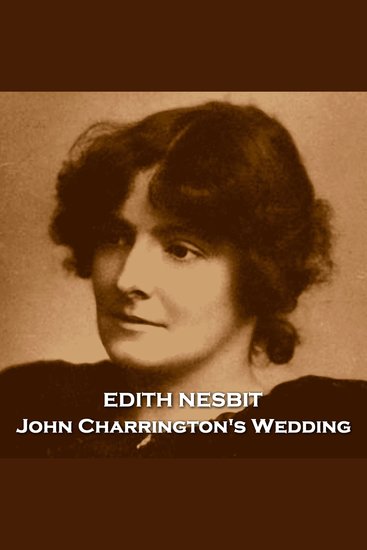
    Edith Nesbit

    • 0
    • 0
    • 0
    Edith Nesbit was born on the 15th August 1858 in Kennington, then part of Surrey.   
     
    Due to the health issues and tuberculosis of her sister Mary, Nesbit’s early life was one of constant changes of house both in England and on the continent. 
     
    At age 17, Nesbit met Hubert Bland and they married three years later―whilst she was 7 months pregnant.  Bland also kept his affair with another woman going throughout their marriage and the two children of that relationship were raised by Nesbit as well as her own three with Bland. 
     
    Together they were founder members of the Fabian Society in 1884 naming their son Fabian in its honour.  They also edited the Society's journal; ‘Today’.  Nesbit was an active lecturer and prolific writer on socialism during those years but gradually her work for them dwindled as her career as a children’s writer grew.  Her most famous success was ‘The Railway Children’ but she was also very prolific and greatly accomplished in poetry, short stories―especially her macabre ghost and supernatural stories―and novels for adults.  
     
    In February 1917, some three years after the death of Bland she married Thomas ‘the Skipper’ Tucker in Woolwich, where he was a ship's engineer on the Woolwich Ferry. 
     
    Edith Nesbit died from lung cancer on the 4th May 1924 at her house ‘The Long Boat’ at Jesson, St Mary's Bay, New Romney in Kent.  She was 65.
    Zum Buch
  • Les Misérables: Volume 5: Jean Valjean - Book 9: Supreme Shadow Supreme Dawn (Unabridged) - cover

    Les Misérables: Volume 5: Jean...

    Victor Hugo

    • 0
    • 0
    • 0
    Victor-Marie Hugo (26 February 1802 - 22 May 1885) was a French poet, novelist, essayist, playwright, and dramatist of the Romantic movement. During a literary career that spanned more than sixty years, he wrote abundantly in an exceptional variety of genres: lyrics, satires, epics, philosophical poems, epigrams, novels, history, critical essays, political speeches, funeral orations, diaries, and letters public and private, as well as dramas in verse and prose.
    BOOK 9: SUPREME SHADOW, SUPREME DAWN: It is a terrible thing to be happy! How content one is! How all-sufficient one finds it! How, being in possession of the false object of life, happiness, one forgets the true object, duty! Let us say, however, that the reader would do wrong were he to blame Marius.
    Zum Buch
  • Roger Malvin's Burial - cover

    Roger Malvin's Burial

    Nathaniel Hawthorne

    • 0
    • 0
    • 0
    There are stories that stay quiet, even after you finish them. Roger Malvin's Burial is one of those. It's not about war, though it begins there. It's about what a man carries when no one's watching—what he tells no one, not even himself. Hawthorne doesn't accuse. He simply opens a door and lets us stand in the silence. This story doesn't resolve. It echoes.
    Zum Buch
  • Mother A (Unabridged) - cover

    Mother A (Unabridged)

    James Joyce

    • 0
    • 0
    • 0
    James Augustine Aloysius Joyce (2 February 1882 - 13 January 1941) was an Irish novelist, short story writer, poet and literary critic. He contributed to the modernist avant-garde movement and is regarded as one of the most influential and important writers of the 20th century.
    A MOTHER: Mr Holohan, assistant secretary of the Eire Abu Society, had been walking up and down Dublin for nearly a month, with his hands and pockets full of dirty pieces of paper, arranging about the series of concerts.
    Zum Buch
  • The Wrecker - cover

    The Wrecker

    Robert Louis Stevenson

    • 0
    • 0
    • 0
    First published in 1892 and co-written with Lloyd Osbourne, The Wrecker is a gripping tale of mystery, adventure, and moral ambiguity set against the vast, unpredictable expanse of the Pacific.
    
    When Loudon Dodd, a struggling artist living in Paris, unexpectedly inherits a modest fortune, he uses it to invest in what seems like a promising opportunity: the purchase of a wrecked ship stranded on a remote Pacific island. What begins as a speculative business venture quickly spirals into a dangerous quest to uncover the truth behind the ship's destruction and the sinister events surrounding it.
    
    As Dodd journeys from Europe to the islands of the South Seas, he is drawn into a web of deception, greed, and hidden crimes. Along the way, he encounters a vivid cast of characters—adventurers, con men, traders, and outcasts—each with their own secrets and motives. The deeper Dodd investigates, the clearer it becomes that the wreck is no accident, and that powerful forces will go to great lengths to keep the truth buried.
    
    Blending elements of detective fiction, maritime adventure, and psychological drama, The Wrecker explores the darker side of human ambition and the ethical compromises people make in the pursuit of wealth and power. Stevenson's masterful storytelling brings to life exotic locales, tense confrontations, and a steadily unfolding mystery that challenges the protagonist's ideals and courage.
    
    Rich in atmosphere and suspense, The Wrecker stands as a compelling example of Stevenson's ability to move beyond straightforward adventure into complex moral terrain. It is a novel that examines not only the perils of the sea, but also the treacherous depths of the human soul—making it an enduring and thought-provoking read for lovers of classic literature and mystery alike.
    Zum Buch
  • Anna Karenina (Part 3) - cover

    Anna Karenina (Part 3)

    Leo Tolstoy

    • 0
    • 0
    • 0
    Part 3: Kostya continues working on his estate, a setting closely tied to his spiritual thoughts and struggles. He wrestles with the idea of falseness, wondering how he should go about ridding himself of it, and criticizing what he feels is falseness in others. He develops ideas relating to agriculture, and the unique relationship between the agricultural laborer and his native land and culture. He comes to believe that the agricultural reforms of Europe will not work in Russia because of the unique culture and personality of the Russian peasant.
    Anna Karenina is a novel by the Russian author Leo Tolstoy, first published in book form in 1878. Many writers consider Anna Karenina the greatest work of literature ever, and Tolstoy himself called it his first true novel. It was initially released in serial installments from 1873 to 1877 in the periodical The Russian Messenger.
    Zum Buch