Rejoignez-nous pour un voyage dans le monde des livres!
Ajouter ce livre à l'électronique
Grey
Ecrivez un nouveau commentaire Default profile 50px
Grey
Abonnez-vous pour lire le livre complet ou lisez les premières pages gratuitement!
All characters reduced
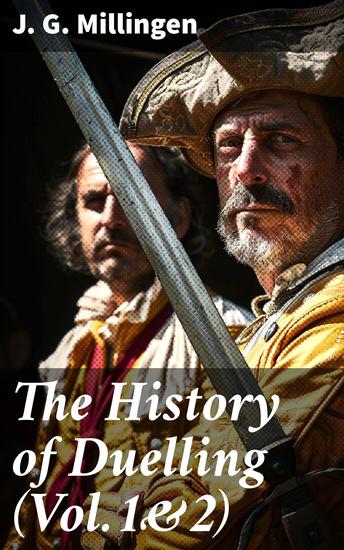
The History of Duelling (Vol1&2) - Complete Edition - cover

The History of Duelling (Vol1&2) - Complete Edition

J. G. Millingen

Maison d'édition: Good Press

  • 0
  • 0
  • 0

Synopsis

In "The History of Duelling (Vol. 1 & 2)," J. G. Millingen intricately examines the evolution of the practice of dueling, tracing its origins from ancient customs to the societal intricacies of the 19th century. Millingen adopts a meticulous narrative style, combining historical analysis with rich anecdotes that illuminate the moral, legal, and cultural implications of dueling. The two-volume work situates the duel within broader philosophical discourses of honor and masculinity, unraveling its role in shaping social hierarchies and personal vendettas. Each chapter is steeped in primary sources that provide authenticity, contributing to the scholarly rigor typically expected in historical discourse. J. G. Millingen, once a prominent physician and a valued member of the intellectual community, had an enduring fascination with cultural practices that define societal interactions. His background affords him a keen insight into the personal and psychological motivations that drove individuals to duel, underscoring the tensions between personal honor and societal expectation. Millingen'Äôs diverse interests allow for a multifaceted approach to understanding the duel's place in history, reflecting the complexity of human behavior in conflict resolution. This compelling study is essential reading for historians, sociologists, and those intrigued by the intricacies of human conflict. Millingen's penetrating analysis and engaging prose make a profound contribution to the literature on honor culture, and will leave readers with a deeper appreciation of the historical significance of dueling as a social institution.
Disponible depuis: 13/12/2023.
Longueur d'impression: 496 pages.


D'autres livres qui pourraient vous intéresser

  • Phoney War The: The History of the Uneasy Calm along the Western Front at the Start of World War II - cover

    Phoney War The: The History of...

    Editors Charles River

    • 0
    • 0
    • 0
    Though the French would be decisively defeated soon after the Nazi invasion of Belgium and France in early 1940, they had not sat on their hands. As the power of Nazi Germany grew alarmingly during the 1930s, the French sought means to defend their territory against the rising menace of the Thousand Year Reich. As architects of the most punitive measures in the Treaty of Versailles following World War I, France was the most natural target for German retribution, so the Maginot Line, a series of interconnected strongpoints and fortifications running along much of France's eastern border, helped allay French fears of invasion.  
    	The popular legend of the Maginot Line portrays the frontier defenses as a useless “white elephant” project that was prompted by a gross misapprehension of warfare's new realities in the mid-20th century and quickly overwhelmed by the forceful advance of the German blitzkrieg. English idiom today invokes this vision of the Maginot Line as a metaphor for any defensive measure strongly believed in but actually useless. Indeed, usages such as “Maginot Line mentality,” describing an overly defensive, reactive mindset, perpetuate the legend. As a French author and military liaison with the British, Andre Maurois, wrote about his disillusionment with the defensive line he originally enthusiastically supported: “We know now that the Maginot line-complex was a dangerous disease of the mind; but I publish this as it was written in January, 1940.”  
    This was what brought about the stasis along the Western Front near the end of 1939, a short period of time now referred to as the Phoney War, during which the Western Allies awaited some sort of action by the Nazis. Ultimately, the Allies had not expected the Germans would be able to move armored units through the Ardennes Forests, a heavily wooded region spanning parts of Belgium, France and the Netherlands. 
    Voir livre
  • Uncover Superspreaders: Secrets to Social Influence - "Boost your ability to influence others! Dive into captivating audio lessons for mastering social dynamics today" - cover

    Uncover Superspreaders: Secrets...

    Lysander Vexley

    • 0
    • 0
    • 0
    Uncover SUPERSPREADERS: Secrets to Social Influence 
    ⭐⭐ Simplified Guide & Explanations Included ⭐⭐ 
    Are you eager to advance in your career and enhance your understanding by mastering the principles of social influence? 
    Searching for a thorough resource that encompasses everything you need to understand how ideas shape society and influence behavior? 
    Your quest ends here! 
    This guide stands as your ultimate resource for deepening your comprehension, applying your knowledge, and engaging in practical exercises. With this, you are fully prepared for success. 
    Updated to reflect the latest in social influence research. 
    Key features of this comprehensive guide: 
    - In-depth insights into the effects of social influence 
    - Detailed explanations of how ideas shape society 
    - Effective strategies for understanding and applying these concepts 
    Our guide stands out due to its extensive coverage, crucial for your journey towards mastery. Key ideas are explored in detail rather than glossed over. 
    Please note that this guide is an independent resource and is not affiliated with any official social influence entity. 
    Crafted with a clear structure and accessible language, our Social Influence Guide ensures seamless transitions between topics. Say goodbye to confusing jargon and embrace clear, precise, and technically accurate content. 
    So, why hold back? Click the BUY NOW button, secure your guide, and embark on your path to mastering social influence! 
    Join us on this enlightening journey today!
    Voir livre
  • Governing by Fake News - cover

    Governing by Fake News

    Jacques Baud

    • 0
    • 0
    • 0
    What are Islamic State is seeking to create a civil war in France; that Syrian President Bashar al-Assad used chemical weapons; that Vladimir Putin is trying to destabilise our democracies; that terrorism has struck France, not for what it does, but for what it is; that the genocide in Darfur has claimed 400,000 victims?... Literally none, but these assertions are enough to establish the foreign policy of Western countries. The author, a former agent of the Swiss strategic intelligence service, reviews the main contemporary conflicts that Western countries have managed with fake news over the last thirty years. Jacques Baud, a colonel, chemical and nuclear weapons expert, trained in counter-terrorism and counter-guerrilla warfare, designed the Geneva International Centre for Humanitarian Demining (GICHD) and its Information Management System for Mine Action (IMSMA). In the service of the United Nations, he served as Chief of Doctrine for Peacekeeping Operations in New York, and was engaged in Africa. In NATO, he led the fight against the proliferation of small arms. He is the author of several books on intelligence, asymmetric warfare and terrorism. 
    This audiobook is read by a synthesized voice.
    Voir livre
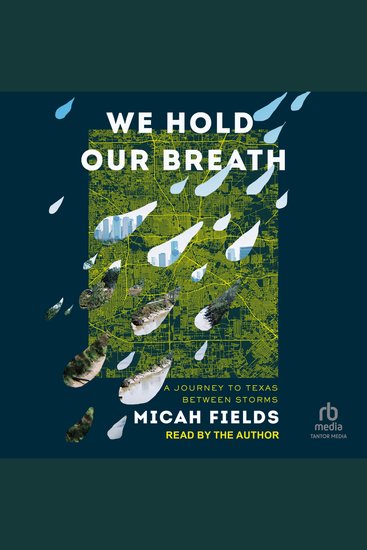
  • We Hold Our Breath - A Journey to Texas Between Storms - cover

    We Hold Our Breath - A Journey...

    Micah Fields

    • 0
    • 0
    • 0
    Developed as the commercial hub of the Texas cotton and sugarcane industries, Houston was designed for profit, not stability. Its first residents razed swamplands into submission to construct a maze of highways and suburbs, giving the city a sprawling, centerless energy as storms and floods rattled coastal Texas. 


    When Hurricane Harvey made landfall in 2017, Fields set off from his home in Iowa back to the battered city of his childhood to rescue his mother. Fields tracks the devastation of Hurricane Harvey, one storm in a long lineage that threatens the fourth largest city in America. 


    Fields depicts the history of Houston with reverence and lyrical certainty, investigating the conflicting facets of Texan identity that are steeped in racial subjugation, environmental collapse, and capitalist greed. He writes of the development of the modern city in the wake of the destruction of Galveston in 1900; of the oil booms and busts that shaped the city; of the unchecked lust for growth that makes Houston so expressive of the American dream. 


    We Hold Our Breath is a portrait of a city that exists despite it all, a city whose story has always been one of war waged relentlessly against water.
    Voir livre
  • UAPs and the Nuclear Puzzle - Visitations National Security and the Need for Transparency (Incidents That Demand Investigation and Disclosure) - cover

    UAPs and the Nuclear Puzzle -...

    Robert Salas

    • 0
    • 0
    • 0
    “UAPs and the Nuclear Puzzle will help inform the public and move us forward on our journey toward a new understanding of history, UAP, and of our own true nature with respect to the larger reality that is revealing itself to us.” —Leslie Kean, bestselling author of UFOs: Generals, Pilots, and Government Officials Go on the Record   “I can’t overstate the significance of military testimony from witnesses such as former launch control officer Robert Salas. It’s brave folks like him who have kept me pushing for further government transparency on what may turn out to be the biggest story in modern times.” —James Fox, director and producer of Moment of Contact   Robert Salas, a retired United States Air Force officer, witnessed firsthand a UAP (unidentified aerial phenomenon) while visiting and disabling nuclear missiles. He shares his experience as well as the many incidents of similar visits during the last eighty years that have been covered up.   In 1969, the US Air Force issued a statement that read‚ “No UFO reported, investigated, and evaluated by the Air Force was ever an indication of threat to our national security.” This statement has been proven untrue by the testimony of many military officers and airmen and the documentation of incidents involving UFOs and nuclear weapons, testimonies of which the US Air Force was fully aware. UAPs and the Nuclear Puzzle details many of these testimonies—some for the first time.
    Voir livre
  • Captain John Franklin and Sir Ernest Shackleton: The History of Britain’s Most Famous Polar Explorers and Their Expeditions - cover

    Captain John Franklin and Sir...

    Editors Charles River

    • 0
    • 0
    • 0
    After the discovery of the Americas, several European countries were interested in finding the route, and nations from France to Spain sent out explorers searching for the mysterious route. While these voyages did not reveal the hoped for route, they did result in large parts of both North and South America being mapped, and as more of the new land mass was determined, the parameters of the search for such a route were narrowed. By the 18th century, explorers began to seek such a route to the north, looking for the legendary Northwest Passage.  
    	Eventually, some countries lost interest, but England remained determined, and the masters of the waves continued to send ship after ship and crew after crew across the Atlantic. By the early 19th century, the search was taking expeditions to the Arctic, and each time a team returned to England telling stories of how it was stymied by ice or bad weather, another team confidently went out, certain that it would be the one to make it through.  
    	This ultimately led to the voyage of Captain John Franklin, who left Britain in 1845 for the Arctic in the hopes of completing mapping the Northwest Passage. Instead of returning with spices and silks, Franklin and his men disappeared, leaving behind them a mystery that plagued the English conscience for decades. Ironically, the ill-fated trip only became more legendary when its mystery was solved than it was when it remained a curiosity. It was a tale of ice and cold, starvation and desperation, and a tragically fatal one.  
    	Shackleton’s place in history is not the one he set out to make, but his extraordinary deeds have made his contributions to early exploration of Antarctica indelible. Despite the victor’s wreath eventually going to another, Shackleton’s name is essential to any discussion of Antarctic exploration, based on personal heroism more than logistical triumphs.
    Voir livre