Rejoignez-nous pour un voyage dans le monde des livres!
Ajouter ce livre à l'électronique
Grey
Ecrivez un nouveau commentaire Default profile 50px
Grey
Abonnez-vous pour lire le livre complet ou lisez les premières pages gratuitement!
All characters reduced
Thoughts on Slavery and Cheap Sugar - A Letter to the Members and Friends of the British and Foreign Anti-Slavery Society - cover

Thoughts on Slavery and Cheap Sugar - A Letter to the Members and Friends of the British and Foreign Anti-Slavery Society

J. Ewing Ritchie

Maison d'édition: DigiCat

  • 0
  • 0
  • 0

Synopsis

In "Thoughts on Slavery and Cheap Sugar," J. Ewing Ritchie delves into the intricate relationship between the sugar industry and the moral implications of slavery during the 19th century. Through a combination of persuasive rhetoric and meticulous analysis, Ritchie presents a powerful indictment of the economic systems that perpetuate human suffering. Employing a clear, accessible prose style, he weaves together historical context with vivid illustrations that reveal the brutality of slavery while critiquing the societal complicity in the consumption of cheap sugar. The work serves as both a cogent argument and a call to ethical action amidst the prevailing attitudes of his time. J. Ewing Ritchie, a prominent social commentator and journalist of the Victorian era, was deeply influenced by the socio-political climate of his day. His career in journalism provided him with a platform to express his views on pressing social issues, and his opposition to slavery was fueled by a moral sensibility informed by religious beliefs and strong humanitarian principles. Ritchie's engagement with the abolitionist movement underscores his commitment to social justice, making this work a significant contribution to anti-slavery literature. I highly recommend "Thoughts on Slavery and Cheap Sugar" to scholars, students, and general readers interested in 19th-century social issues, ethics, and the historical intersections of commerce and human rights. Ritchie's impassioned exploration of slavery's moral implications remains relevant today, challenging us to reflect on our own consumption choices and the human cost behind them.
Disponible depuis: 16/09/2022.
Longueur d'impression: 30 pages.

D'autres livres qui pourraient vous intéresser

  • How is One to Be Entirely Free of Fear? - Malibu 1970 - Small Group Discussion 8 - cover

    How is One to Be Entirely Free...

    Jiddu Krishnamurti

    • 0
    • 0
    • 0
    What do we mean by fear? Fear of what? There are various types of fear and we need not analyse every type. But we can see that fear comes into being when our comprehension of relationship is not complete. Relationship is not only between people but between ourselves and nature, between ourselves and property, between ourselves and ideas; as long as that relationship is not fully understood, there must be fear. Life is relationship. To be is to be related and without relationship there is no life. Nothing can exist in isolation; so long as the mind is seeking isolation, there must be fear. Fear is not an abstraction; it exists only in relation to something.
    Voir livre
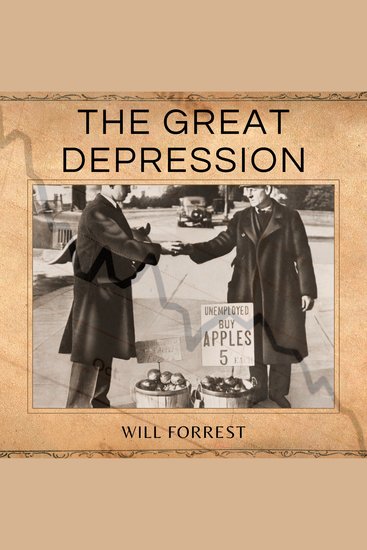
  • The Great Depression - America's Darkest Hour and it’s Influence on the United State’s Economic Cultural and Social Life - cover

    The Great Depression - America's...

    Will Forrest

    • 0
    • 0
    • 0
    Are you interested in learning about the most significant economic crisis in history? 
    The Great Depression: America's Darkest Hour and it’s influence on the United state’s economic, cultural, and social life is the perfect book for you! 
    This in-depth look at the Great Depression will give you a full understanding of the economic, cultural and social effects of the Great Depression that continue to shape our society even today. Through this book, you will gain an understanding of the reasons why the Great Depression occurred, the various efforts taken to address the crisis, and the lasting effects of the crisis on the United States economy. 
    You will also gain an understanding of how the Great Depression impacted the social and cultural life of the United States. This includes a look at the changes in lifestyle, the work of artists and writers, and the push for social reform. Finally, you will gain insight into the legacy of the Great Depression and how it continues to shape our economy, culture, and social life today. 
      
    This is the perfect book for anyone interested in learning more about the Great Depression and its far-reaching effects. Buy this book today and gain an in-depth understanding of the Great Depression and how it shaped our economic and cultural history.
    Voir livre
  • The Language of Emotions - cover

    The Language of Emotions

    Sidney Morris

    • 0
    • 0
    • 0
    The Language of Emotions: Learn the Secrets of How to Understand and Manage Your Emotions and Discover Why Emotional Intelligence is Your Key to SuccessYou’ve probably heard this old saying: if you don’t love yourself, why should you expect others to do what you can’t do for yourself. There’s a lot of truth to that. Let’s put it this way, if you are conflicted or confused about your emotions, there's a high chance you are not sending the right signals to people around you. They want to help, and they care and love you, but they can’t quite seem to reach you. I know it hurts but the truth is, it’s all your fault. People with low emotional intelligence suffer from a disconnect between what they feel and how the other people perceive them.This audiobook will teach you about emotional intelligence and how understanding and mastering can make significant positive changes in your life.Topics that will be covered are the following:- Can you really improve your emotional intelligence?- Why emotional intelligence is as crucial as IQ for personal success- How important is honesty in dealing with your emotions?- Effectively cope with toxic emotions with this one simple change- Are your emotional coping skills preventing you from being a happy person?- Are your emotional coping skills preventing you from achieving career success?- How much importance should you place on others' reading of your emotions?- What you think your feeling may not be accurate- Lack of emotional clarity might be holding you back for more fulfilling relationships- And many more!Emotional intelligence is crucial to life's success. It’s high time that you make your emotions work for you instead of against you. To learn more, scroll up and click “add to cart” now!
    Voir livre
  • Jhugian De Lal - cover

    Jhugian De Lal

    Dr. Kulwinder Kaur Minhas

    • 0
    • 0
    • 0
    The book *"Jhugian De Lal"*, written by Dr. Kulwinder Kaur Minhas, narrates the challenges faced and the successes achieved in her philanthropic efforts. It highlights the struggles encountered while working for the betterment of underprivileged children living in slums and sheds light on initiatives aimed at connecting them with education.
    Voir livre
  • Who or What is Bigfoot - A Question that Demands an Answer - cover

    Who or What is Bigfoot - A...

    Clifford L Falen Jr

    • 0
    • 0
    • 0
    This audiobook is narrated by an AI Voice.   
    What if the legends of Bigfoot, Sasquatch, and the "Wild Man" are not mere folklore, but echoes of a forgotten chapter in human and pre-human history? For author Clifford L. Falen Jr., multiple encounters and over fifteen years of intensive research, sparked by his terrifying and paradigm-shattering experiences, have led to a startling and comprehensive new theory.
    Voir livre
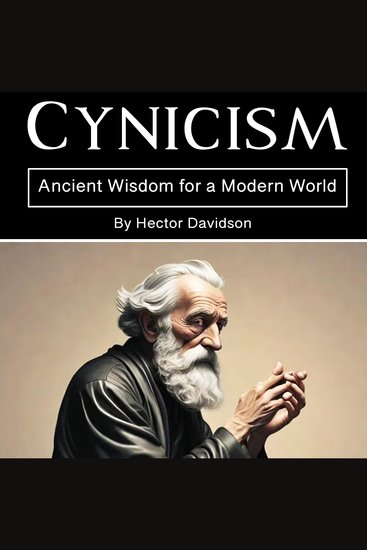
  • Cynicism - Ancient Wisdom for a Modern World - cover

    Cynicism - Ancient Wisdom for a...

    Hector Davidson

    • 0
    • 0
    • 0
    Cynicism, as a philosophical movement, originated in ancient Greece during the 4th century BCE. It emerged in response to the growing complexity of Greek social and political life, which many perceived as rife with corruption and moral decay. The movement sought to critique and challenge these structures through a radical reevaluation of values. The term "Cynicism" itself derives from the Greek word kynikos, meaning "dog-like," a reflection of the movement's provocative and unconventional practices, often likened to the traits of a dog—independent, shameless, and straightforward. 
    The seeds of Cynicism were planted by Antisthenes, a devoted student of Socrates. Rejecting the materialism and social constructs of his time, Antisthenes advocated for a life rooted in virtue as the highest good. He proposed that virtue was attainable through rigorous self-discipline and liberation from societal expectations. In his view, wealth, power, and social status were distractions that led individuals away from true happiness. Antisthenes' emphasis on asceticism laid the groundwork for Cynicism's core principles. 
    Diogenes of Sinope, the most iconic figure in Cynicism, brought the philosophy to life through his dramatic and often confrontational actions. Renowned for his extreme asceticism, he discarded conventional comforts and famously lived in a large ceramic jar, owning only a few possessions. Diogenes used his lifestyle as a form of social critique, questioning the moral foundations of his contemporaries. His legendary act of walking through the city with a lit lantern during the day, claiming to search for an honest man, remains a potent symbol of his scorn for societal hypocrisy and moral pretense. Diogenes embodied the Cynic ideal: a life of radical honesty, self-sufficiency, and rejection of superficial values.
    Voir livre