Join us on a literary world trip!
Add this book to bookshelf
Grey
Write a new comment Default profile 50px
Grey
Subscribe to read the full book or read the first pages for free!
All characters reduced
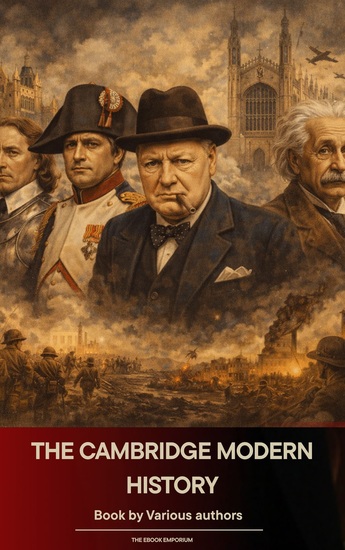
The Cambridge Modern History - cover

The Cambridge Modern History

J.B. Bury, R. Nisbet Bain, Mandell Creighton, Adolphus William Ward, Lord Acton, George Prothero

Publisher: The Ebook Emporium

  • 0
  • 0
  • 0

Summary

How did the modern world take shape?

The Cambridge Modern History is one of the most ambitious and respected historical projects ever produced. Written by leading scholars and historians, this landmark work offers a comprehensive account of global history from the late medieval period through the early twentieth century.

Covering politics, religion, economics, diplomacy, intellectual movements, and social change, the series presents history not as isolated events, but as interconnected forces shaping nations and civilizations. Its balanced, analytical approach made it a cornerstone of modern historical scholarship and a trusted reference for generations.

This Kindle edition brings together this monumental work in a clear, accessible format, ideal for study, research, or deep reading.

Inside this eBook, you'll explore:

A comprehensive scholarly history of the modern era

Contributions from distinguished historians and academics

Global perspectives on political, social, and intellectual change

A foundational reference work in historical studies

Long regarded as a classic of historical scholarship, The Cambridge Modern History remains essential reading for anyone seeking a serious understanding of how the modern world emerged.

Study the past with clarity and depth. Buy now and explore one of the great achievements of historical writing.
Available since: 01/27/2026.
Print length: 5866 pages.

Other books that might interest you

  • Yearning - Race Gender and Cultural Politics 2nd Edition - cover

    Yearning - Race Gender and...

    Bell Hooks

    • 0
    • 0
    • 0
    For bell hooks, the best cultural criticism sees no need to separate politics from the pleasure of reading. Yearning collects together some of hooks's classic and early pieces of cultural criticism from the '80s. Addressing topics like pedagogy, postmodernism, and politics, hooks examines a variety of cultural artifacts, from Spike Lee's film Do the Right Thing and Wim Wenders's film Wings of Desire to the writings of Zora Neale Hurston and Toni Morrison. The result is a poignant collection of essays which, like all of hooks's work, is above all else concerned with transforming oppressive structures of domination.
    Show book
  • Jo March and Not-Like-The-Other-Girls Trope - Little Women Podcast Presents - cover

    Jo March and...

    Niina Niskanen, Hejar Sinem

    • 0
    • 0
    • 0
    Calling all Little Women enthusiasts! Step into the enchanting world of Louisa May Alcott's timeless masterpiece with the Little Women Channel audiobook. Immerse yourself in the captivating story of the March sisters as they navigate life, love, and sisterhood. Hosted by renowned Alcott essayist Niina Niskanen. This channel offers a unique opportunity to study and explore the intricate themes and intersections that make Little Women an enduring classic. With regular visits from literary scholars and passionate fans alike, you'll be part of a vibrant community dedicated to unraveling the beauty and depth of this literary gem. Prepare to be transported into a world where dreams are pursued, friendships are cherished, and love knows no bounds. Join us on the Little Women Channel and embark on a journey that will leave you inspired and captivated. 
    Here at the Little Women channel we've got many questions about Jo's occasional not-like-the-other-girls attitude and how harmful it was for her (and how she grew out of it). Hejar and I will also be discussing Jo's and Amy's relationship and how the two sisters are actually quite similar in terms of their tempers and unconventionally. Hejar is going to talk to us about Louisa May Alcott's love for two very famous German authors, Friedrich Schiller and Goethe. We are also discussing about the possibility that our beloved Friedrich Bhaer was named after Friedrich Schiller. Schiller makes surprisingly many entries in Little Women series. He is mentioned often in discussions between Jo and Friedrich and Meg and John.
    Show book
  • The Self-Compassion Workbook for BPD - Dialectical Behavior Therapy Skills to Find Self-Forgiveness Healing and Self-Love with Borderline Personality Disorder - cover

    The Self-Compassion Workbook for...

    LCSW Amanda L. Smith

    • 0
    • 0
    • 0
    If you have borderline personality disorder (BPD), you likely struggle with unstable relationships, or live with a constant fear that you’ll be abandoned. You may experience unexpected mood swings, explosive anger, or intense emotions. And to make matters worse, you may have feelings of shame, guilt, or low self-esteem as a result of your diagnosis. You aren’t alone, and there are skills you can learn to manage your symptoms and cultivate unwavering self-compassion and self-forgiveness. This workbook can help you get started. 
    Grounded in powerful and proven-effective dialectical behavior therapy (DBT) and self-compassion, this step-by-step workbook offers evidence-based strategies to manage intense emotions and cultivate the self-acceptance needed to thrive. Using the core skills of DBT, you’ll learn to work through difficult thoughts, stay grounded in the present moment, and improve your relationships with others. You’ll also find self-compassion exercises to help you heal the stigma, shame, and feelings of unworthiness associated with BPD. 
    More and more, studies show there is a powerful link between self-compassion and emotional health. This workbook will show you how to forgive and love yourself, and build the skills needed to live a vital, fulfilling life.
    Show book
  • Enneagram - Create a Balance In Life Through the Enneagram - cover

    Enneagram - Create a Balance In...

    Kevin Hallstone

    • 0
    • 0
    • 0
    Why do we search for balance in our lives? The answer is simple, and nearly all of us know it. Some of us simply don't want to accept the truth, while some of us want to find solutions for the imbalance in our lives. The importance of balance cannot be undermined, considering that it brings with its calmness, peace, happiness, and the strength to face any kind of diversity. With balance come increased productivity and efficiency and untold happiness and joy.  
    A balanced person is physically, emotionally, and mentally healthy and lives a meaningful and contented life, regardless of the challenges he or she faces. Feelings of imbalance include mental, emotional, and physical sickness, fear, unease, discomforts of all kinds, and suffering.  
    Signs of Mental Balance  
    The answers to the following questions will help you understand if you have mental balance and stability: 
    Do you see the world and yourself clearly without the truth being warped in mire and ambiguity? 
    Do you feel swept away by the veils that cover the truths of your life? 
    Do you attempt to see the truth as it is instead of trying to explain it away with some vague explanations just to make it agree with your perception?  
    Do you deliberately use your mind as a sense organ or something that you would simply brush as an appendage that comes in the way of your life?
    Show book
  • Athenian Mind The: Aristotle's Enduring Legacy - cover

    Athenian Mind The: Aristotle's...

    Aristotle, Will Durant

    • 0
    • 0
    • 0
    The "Aristotle Collection" presents a comprehensive exploration of the profound works of one of history's greatest philosophers. Featuring "The Athenian Constitution," "Poetics," and "The Parva Naturalia," this anthology delves into Aristotle's insights on governance, literature, and the natural world. Accompanied by Will Durant's "The Story of Philosophy," which contextualizes Aristotle's contributions to Greek science and philosophy, this collection offers readers a multidimensional understanding of Aristotle's influence. Through meticulous analysis and engaging prose, it invites both scholars and enthusiasts to appreciate the timeless wisdom that continues to shape modern thought.Contents:Aristotle - The Athenian Constitution- On Life and Death- Poetics- The Parva Naturalia. Sense and Sensibilia- The Parva Naturalia. On Memory- The Parva Naturalia. On Sleep Will Durant - The Story of Philosophy: Aristotle and Greek Science
    Show book
  • The Rise and Fall of the Roman Empire - A Comprehensive History - cover

    The Rise and Fall of the Roman...

    Rogan Fish

    • 0
    • 0
    • 0
    The founding of Rome is one of the most famous legends in history, blending myth and reality to shape the origins of one of the greatest civilizations of the ancient world. According to Roman tradition, the city was established in 753 BCE by Romulus, the first king of Rome, after he and his twin brother, Remus, were rescued and raised by a she-wolf. This tale, passed down through generations, symbolized Rome’s strength, resilience, and divine favor. While the legend is deeply ingrained in Roman identity, historians believe the city’s origins were more complex, involving the gradual unification of Latin and Etruscan tribes. 
    The early formation of Rome was influenced by its strategic location along the Tiber River. The site provided access to trade routes, fresh water, and natural defenses, making it an ideal settlement for early inhabitants. Archaeological evidence suggests that small villages existed in the area long before Rome’s legendary founding, with early settlers engaging in agriculture, trade, and warfare. These early communities gradually coalesced, forming a unified society under a monarchical system. The first rulers of Rome were part of the Roman Kingdom, a period that saw the development of political institutions, religious practices, and military organization that would shape the city’s future. 
    Roman society during its early years was structured around family and clan-based systems, with the patricians, or aristocratic families, holding the majority of political power. The king was the central authority, responsible for religious duties, military leadership, and lawmaking. However, his rule was supported by a council of elders known as the Senate, which played an advisory role. Over time, tensions arose between the patricians and the common people, or plebeians, who sought greater political representation. These early power struggles foreshadowed the later conflicts that would lead to the transition from monarchy to a republic.
    Show book