Rejoignez-nous pour un voyage dans le monde des livres!
Ajouter ce livre à l'électronique
Grey
Ecrivez un nouveau commentaire Default profile 50px
Grey
Abonnez-vous pour lire le livre complet ou lisez les premières pages gratuitement!
All characters reduced
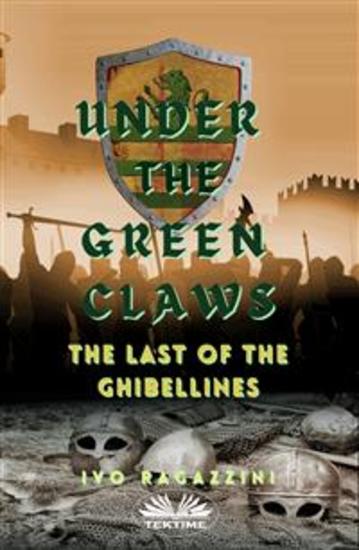
Under The Green Claws - The Last Of The Ghibellines - cover

Under The Green Claws - The Last Of The Ghibellines

Ivo Ragazzini

Maison d'édition: Tektime

  • 0
  • 0
  • 0

Synopsis

Under the green Claws is Dante's reference to an epic battle, which ended in a massacre towards the end of the thirteenth century, between a Franco-Guelph army, sent by Pope Martin IV, and the last remaining Italian Ghibellines after the death of Frederick II.
They had converged from all over Italy in Forlì, to defend it as the last remaining Ghibelline city with imperial laws. With a sensational sortie, they surprised and massacred the French army that had been besieging them for a year.
How and why this conflict came about and how things turned out will naturally be the subject of this book.
In fact it is a historical battle, brought to light by the darkness of the centuries, dedicated to the last Italian Ghibellines who, refusing to bow to the Pope, were remembered by Dante, when in the divine comedy he wrote ... and of the Franceschi a bloody pile,Under the green Claws are found.
In 1282, after a long series of conflicts between Guelphs and Ghibellines, an army organized by Pope Martin IV, made up of eighteen thousand French and Italian Guelph soldiers, was sent to Romagna to defeat the last Ghibellines once and for all who had gathered in Forlì to defend that land that they considered imperial dominion.
The last of the Italian Ghibellines, who remained faithful to the will of Emperor Frederick II, who had died thirty years earlier, converged from all over to aid the people of Forlì, who still proudly carried the imperial black eagles on a field of gold, which Frederick II himself had personally given them.
How things turned out and why such a situation came about is the subject of this book.
Even what Romagna was in ancient times is the subject of this story.
Romagna is a land rich in traditions and history that have been handed down over the centuries.
How this land was born and what Romagna was like at the time of Rome is not that difficult to discover, and in fact you will see that some of these things will be investigated in this story.
Sooner or later I will write a detailed historical account of Romagna, but the real purpose of this book is, and remains, the siege and battle involving the last of the Italian Ghibellines, which took place in Forlì towards the end of the 13th century.
As this story will inevitably account, for the first time ever, much of the information about the true origins of Forlì, which monuments and imperial traditions it inherited and why it became the last Ghibelline stronghold.
It will explain who the Ordelaffi really were and many other forgotten historical figures, such as the astrologer Guido Bonatti and the fighting friar Geremia Gotto, who were at the time present among the ranks of the Ghibelline.
Naturally, it will also tell you in detail how the Ghibellines under the command of Guido da Montefeltro, an unrivalled Italian captain at the time, defeated and massacred, in one day and one night, a French army of eighteen thousand French and Italian Guelphs who had put them to siege to submit them to the church.
This historical tale is thus dedicated to the honor and pride of the last of the Italian Ghibellines who, refusing to surrender to the force of arms, attacked and defeated, against all the odds, the thousands of soldiers who had besieged them for a year. I conclude by telling you that this book will inevitably lead you to discover many other things that have been forgotten by history, and I gladly offer it for your reading.
Enjoy this rediscovery.
PUBLISHER: TEKTIME
Disponible depuis: 27/12/2021.
Longueur d'impression: 163 pages.
D'autres livres qui pourraient vous intéresser

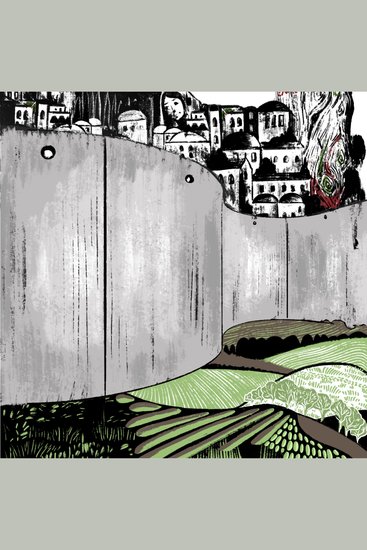
  • Emplaced Resistances in Occupied Palestine - Stories of a Village Its People and Their Land - cover

    Emplaced Resistances in Occupied...

    Suzanne H. Hammad

    • 0
    • 0
    • 0
    In this deeply personal study, Hammad illuminates an agenda of place, meaning and resistance in territorial struggles through the telling of a less-heard story of how residents of Bil'in understand their world and their lives in the occupied Palestinian West Bank landscape. Taking a case study of a contested and divided Palestinian village situated in the heart of the Occupied Palestinian Territories and known for its sustained, nonviolent protest against the separation wall that cuts through its lived spaces, Hammad examines how villagers live, experience, interpret, and attempt to resist infringements on their property and person. 
    The study considers the spectrum of ways that people resist in this context, examining not only the overt weekly protests but also the everyday acts and subjectivities of resistance of its residents, young and old. The backdrop of the protracted Palestinian-Israel conflict and Palestinians' struggle over space, place, and history- which continues to play out in the present- makes this book politically relevant and empowering as it brings voices from a secluded contested village the world.
    Voir livre
  • Being Cosmopolitan - A Political Approach - cover

    Being Cosmopolitan - A Political...

    Luke Ulas

    • 0
    • 0
    • 0
    What does it mean to be cosmopolitan? Typically, cosmopolitanism is understood as a broad moral orientation, involving some kind of commitment to global moral equality. On this understanding, to be cosmopolitan is simply to evidence that moral orientation oneself. By contrast, Being Cosmopolitan takes up a thoroughly political approach. The focus is on what it might mean, and what it is like, to be political in a distinctly cosmopolitan form. What it means to be cosmopolitan in this thoroughly political sense cannot involve appeal to any particular moral orientation, because politics is about, inter alia, the contestation of such orientations and commitments. Instead, this book offers an account that is based upon the internalization of particular kind of global "social imaginary," involving the imagination of a global public to which certain issues—or global public affairs—are understood to pertain. 


    Within which kind of global order is it possible, or comfortable, for a cosmopolitical agent to live? In answer to this question, the book argues against the viability of both a world of self-determining peoples, and of "pluralist" global visions—both of which are popular with moral cosmopolitan theorists.
    Voir livre
  • The Last Train - cover

    The Last Train

    Peter Bradley

    • 0
    • 0
    • 0
    ‘Haunting.’ Jonathan Freedland‘Powerful.’ Daniel Finkelstein 
    The profoundly moving and deeply intimate story of one Jewish family’s fate in the Holocaust, following the thread from Germany to Latvia and to Britain. 
    In November 1941, Peter Bradley's grandparents, Sally and Bertha Brandes, were deported from their home in Bamberg to their deaths in Latvia. 
    The Last Train is a profound and moving homage to Peter’s lost family and to his father who rarely spoke of the traumas through which he lived. 
    It is also his attempt to understand, through the prism of his family’s story, how the Nazis came to conceive and implement the Final Solution. 
    Why did Sally and Bertha’s fellow citizens put them on the train that carried them to the killing fields? 
    Why did the democracies which so loudly condemned Hitler’s persecution of the Jews deny them sanctuary? 
    And why, when Peter's father finally reached Britain after five terrible months in a Nazi concentration camp, was he arrested as an 'enemy alien'? 
    The quest for answers led Peter to explore the origins and evolution of an ancient hatred and the struggles against it of each generation of his family, from the Reformation, through the Enlightenment and the Age of Reform, to the catastrophe of the Holocaust. 
    This is the powerful, poignant story of Peter’s journey through family papers and archives, through works of scholarship and the testimony of survivors, and from Bavaria and Buchenwald to the mass graves of the Baltic. 
    And, reflecting on what he learned, he asks: in the events of our own times, we are all perpetrators or bystanders or resisters; which of those roles do we choose for ourselves? 
    This best and top biography and autobiography of the 20th century is a testament to survival in modern Europe. It is a chilling reminder of the past and a call to action for the future. 
    For fans of Gwen Strauss (The Nine), Tova Friedman (The Daughter of Auschwitz), Wendy Holden (Tomorrow Will Be A Good Day), Limor Regev (The Boy From Block 66), and Never Again Press (Beneath the Winds of War). 
    HarperCollins 2022
    Voir livre
  • More Foul Deeds & Suspicious Deaths in Wakefield - cover

    More Foul Deeds & Suspicious...

    Katie Taylor

    • 0
    • 1
    • 0
    A historic account of the Northern England city’s crimes, including misdeeds that shed light on past ways of life—from death by neglect to police killings.   How the body of a Wakefield murder victim was exhibited for a fee in 1853, the odd story of a Normanton miner attacked by a prosperous Crofton gentleman in 1875, the tragic death of a twenty-one-year old woman on what should have been her wedding day in 1909, and the case of the Sandal dental lecturer who killed his adopted daughter in 1966 are among the many foul deeds recounted in More Foul Deeds and Suspicious Deaths in Wakefield.   In a companion volume to Foul Deeds and Suspicious Deaths in Wakefield (2001), Kate Taylor has assembled more than fifty further accounts of horrific deaths in or near Wakefield. Some killings reflect the tensions and resentment of domestic life but there are mysteries too like the case of a man found dead in 1860 in a shallow beck with no marks of violence on him. In an incident in Horbury involving the death of a baby in 1849 it was the assistant constable pursuing the inquiries who died. The book shows something of the cultural context that can promote murder—the stigma of illegitimacy in the past and the more recent risks of glue sniffing and the appalling bullying of immigrants. Take a journey into the darker and unknown side of your area as you read More Foul Deeds and Suspicious Deaths in Wakefield.
    Voir livre
  • Taking Charge of Adult ADHD Second Edition - Proven Strategies to Succeed at Work at Home and in Relationships - cover

    Taking Charge of Adult ADHD...

    PhD Russell A. Barkley,...

    • 0
    • 0
    • 0
    If you're among the millions of adults with attention-deficit/hyperactivity disorder (ADHD), you need the latest facts about the disorder and its treatment. You need practical strategies to help develop your strengths and achieve your goals, whether on the job, in family relationships, or in personal pursuits. From renowned ADHD researcher/clinician Russell A. Barkley, this is the book for you. Dr. Barkley takes you through the process of seeking professional help, addresses frequently asked questions about medications and other treatments, and offers a wealth of advice and tips—all science-based. Featuring the latest resources and medication facts, the revised and updated second edition includes new or expanded discussions of mindfulness, emotional self-control, time management, building a successful career, maintaining a healthy lifestyle, and more. Finally, an authoritative one-stop resource to help you take back your life from ADHD.
    Voir livre
  • Hippias Major - What Is Beauty? – Plato’s Dialogue on Aesthetics and the Search for Universal Truth - cover

    Hippias Major - What Is Beauty?...

    Plato, Tim Zengerink

    • 0
    • 0
    • 0
    What if beauty isn’t just what we see—but a reflection of deeper truth? 
    In Hippias Major, Plato invites us into one of philosophy’s earliest investigations into aesthetics. Socrates questions the sophist Hippias on the definition of beauty, leading to a challenging and often humorous journey through false starts, flawed logic, and unexpected insights. 
    This modern translation delivers Plato’s wit and wisdom in accessible, engaging language, making the search for beauty as relevant today as it was in ancient Greece. 
    What you'll discover inside: 
    •	A Timeless Dialogue on Beauty – Socrates seeks a definition that transcends physical appearance 
    •	Plato’s Foundations of Aesthetics – Understand the roots of Western thought on art and form 
    •	A Sharp Critique of Superficial Wisdom – Watch Socrates expose hollow definitions of truth and beauty 
    •	A Modern, Thoughtful Translation – Designed to resonate with today’s listener while preserving Plato’s philosophical depth 
    Uncover the essence of beauty with Socrates as your guide—and see how the search for the ideal can reshape how we see the world.
    Voir livre