Begleiten Sie uns auf eine literarische Weltreise!
Buch zum Bücherregal hinzufügen
Grey
Einen neuen Kommentar schreiben Default profile 50px
Grey
Jetzt das ganze Buch im Abo oder die ersten Seiten gratis lesen!
All characters reduced
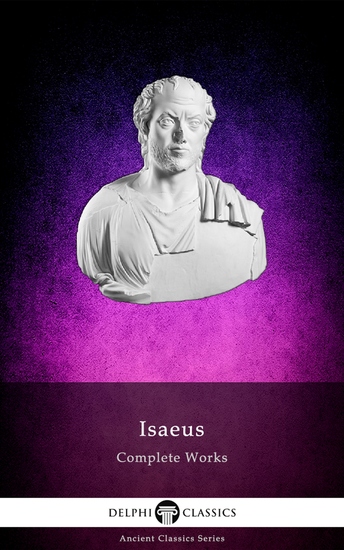
Delphi Complete Works of Isaeus (Illustrated) - cover

Delphi Complete Works of Isaeus (Illustrated)

Isaeus of Athens

Verlag: Delphi Publishing Ltd

  • 0
  • 0
  • 0

Beschreibung

The teacher of Demosthenes, Isaeus was an early 4th century BC orator, who was later listed as one of the ten Attic orators, according to the Alexandrian canon. His twelve extant orations are all on subjects connected with disputed inheritances, on which subject Isaeus appears to have been well acquainted. His oratory resembles the style of his teacher, Lysias, notable for its pure Attic and lucid quality. However, Isaeus is more aggressive and flexible in his presentation, which went on to influence the work of Demosthenes. Delphi’s Ancient Classics series provides eReaders with the wisdom of the Classical world, with both English translations and the original Greek texts. This eBook presents Isaeus’ complete extant works, with illustrations, informative introductions and the usual Delphi bonus material. (Version 1)
 
* Beautifully illustrated with images relating to Isaeus’ life and works* Features the complete extant works of Isaeus, in both English translation and the original Greek* Concise introduction to the text* Includes E. S. Forster’s 1927 translation, previously appearing in the Loeb Classical Library edition of Isaeus* Forster’s original footnotes are hyperlinked in the text* Excellent formatting of the texts* Easily locate the orations you want to read with individual contents tables* Provides a special dual English and Greek text, allowing readers to compare the sections paragraph by paragraph — ideal for students* Features a bonus biography — discover Isaeus’ ancient world
 
Please visit www.delphiclassics.com to explore our range of Ancient Classics titles or buy the entire series as a Super Set
 
CONTENTS:
 
The TranslationThe Speeches
 
The Greek TextContents of the Greek Text
 
The Dual TextDual Greek and English Text
 
The BiographyIntroduction to Isaeus (1927) by E. S. Forster
 
Please visit www.delphiclassics.com to browse through our range of exciting titles
Verfügbar seit: 18.11.2022.
Drucklänge: 564 Seiten.

Weitere Bücher, die Sie mögen werden

  • The Egyptian Book of the Dead - The Papyrus Of Ani - cover

    The Egyptian Book of the Dead -...

    E. A. Wallis Budge

    • 0
    • 0
    • 0
    The Papyrus of Ani is a papyrus manuscript in the form of a scroll with cursive hieroglyphs and color illustrations that was created c.1250 BCE during the 19th Dynasty of the New Kingdom of ancient Egypt. Egyptians compiled an individualized book for certain people upon their death called the Book of Going Forth by Day, more commonly known as the Book of the Dead, typically containing declarations and spells to help the deceased in their afterlife. 
    The Papyrus of Ani is the manuscript compiled for the Theban scribe Ani. The scroll was discovered in Luxor in 1888 by Egyptians trading in illegal antiquities. It was acquired by E. A. Wallis Budge, as described in his autobiography By Nile and Tigris. Shortly after Budge first saw the papyrus, Egyptian police arrested several antiquities dealers and sealed up their houses, one of which contained the objects Budge had purchased from the dealers. Budge distracted the guards by offering them a meal while locals tunneled under the house's walls to retrieve the objects, including the Papyrus of Ani. Stored in several custom tin boxes, the papyrus and other objects Budge had acquired were then smuggled to the principal librarian at the British Museum. Budge was afterward paid a 150GBP "gratuity" from the British Treasury on behalf of the British Museum for acquiring the papyrus.
    Zum Buch
  • Mass Killers - Inside the Minds of Men Who Murder - cover

    Mass Killers - Inside the Minds...

    David J. Krajicek

    • 0
    • 0
    • 0
    Can you predict killing sprees? What do mass killers have in common? Why do so many of them write manifestos online and what do these tell us?
     
    These are some of the questions David J. Krajicek seeks to answer in Mass Killings, on a topic that is becoming increasing urgent and desperate. In recent decades, mass shootings worldwide have increased in their savagery and frequency. Nearly all mass killers are male - and many of them are bound together by misogyny, misanthropy, and racism. They do not just "snap." They plan their assaults for months or years, drawing up detailed battle plans, and accumulating weaponry. They document the process in journals or videos online, understanding that they are leaving evidence which will help the marquee lights of their futile crimes burn brighter and longer.
     
    Krajicek shows the commonalities between mass shooters, and describes the psychopathic process that leads these troubled men to commit atrocities. Mass killers feed off each other's words and deeds, and it's crucial to be able to read the signals they give out to prevent future tragedies.
    Zum Buch
  • First Guns The: The History and Legacy of the Invention of Firearms - cover

    First Guns The: The History and...

    Editors Charles River

    • 0
    • 0
    • 0
    The Chinese developed what were later dubbed the “Four Great Inventions of China,” and one of those was none other than gunpowder, which was developed no later than the 9th century and was being used for military purposes by the 11th century. Its use slowly spread through South Asia and the Middle East before making it to Europe in the late 13th century.  
    For a time it was a mere curiosity, but its destructive power and military potential would be realized quickly. The first record of a cannon in Europe comes from a manuscript written in 1326, which has an illustration showing an armored man with what looks like a slow match lighting a vase-shaped object. This crude cannon was called a pot de fer in French and vasi in Italian.  
    While medieval engineers developed new types of cannons and explosives capable of destroying walls and castles, others were making the first handguns possible. European sources first mentioned the widespread use of handgonnes, as they were often called, in the late 14th century, precisely the time when gunpowder became cheaper. These were short metal barrels stuck on the end of wooden hafts that could be tucked under the arm, the powder being lit through a touchhole with the free hand. While they were not terribly accurate and had a shorter range and slower rate of fire than longbows or crossbows, they had the advantage of being better able to punch through armor than longbows and crossbows, and they were simple to make and use.  
    By the late 15th century, handgonners had become a major part of the leading armies, and weapons that relied on gunpowder would remain a staple of warfare throughout the 19th century, paying deadly homage to one of history’s most important inventions. Of course, that would also bring about innovative new military strategies, and some of the first people to think outside of the box would be credited with putting together the makings of the first modern armies. 
    Zum Buch
  • Medieval Bosnia: The Turbulent History of Bosnia and the Region during the Middle Ages - cover

    Medieval Bosnia: The Turbulent...

    Editors Charles River

    • 0
    • 0
    • 0
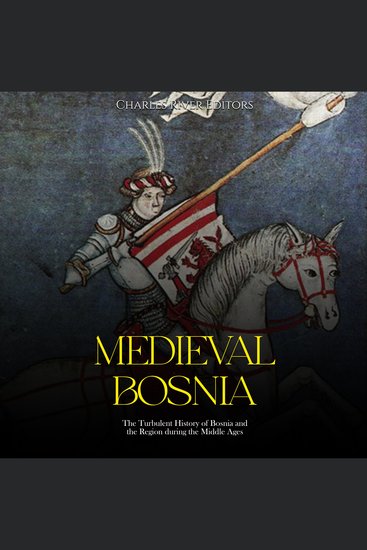
    Much has been written about Western intervention during the breakup of Yugoslavia, and whether it made matters worse, prevented worse atrocities, or was simply ineffective. In early 1992, however, what was clear was that Europe was hopelessly divided over the best course of action to take towards Yugoslavia, and after several years of fighting, the Bosnian War was one of the most violent conflagrations in Europe since the end of World War II.  
    That war had been the byproduct of centuries of tensions in the Balkans, and an attempt in the wake of World War I to redraw the political boundaries of Europe and the Middle East. That included forming the Kingdom of Yugoslavia, initially known as the Kingdom of Serbs, Croats and Slovenes, a particularly fragile enterprise, and there was almost constant tension between the majority Serbs and the other Yugoslav nationalities, especially the Croats.  
    Depending on the source, many authors have focused on different catalysts for Yugoslavia’s demise, but Vesna Drapac may have succinctly summed the situation up when he wrote that by the end, the state “lacked a reason to exist.” There is certainly something in this sentiment, but the disintegration came at an enormous cost. 
    Given what happened in Yugoslavia, it should be little surprise that Bosnia did not have its fully-established borders until the 19th century, and even in modern times, in many respects the people distinguished and defined Bosnia as a polity more than its shifting borders, and regardless of whether Bosnia operated as an independent state or kingdom. It was during the Middle Ages that Bosnia’s culture and ethnic makeup truly began to coalesce, despite the politically rocky nature of the era in the Balkans. 
    Zum Buch
  • The Extraordinary Gift of Being Ordinary - Finding Happiness Right Where You Are - cover

    The Extraordinary Gift of Being...

    Dr. Ronald D. Siegel

    • 0
    • 0
    • 0
    "Did I sound stupid?" "Should I have sent that email?" "How do I look?" Many of us spend a lot of time feeling self-conscious and comparing ourselves to others. Why do we judge ourselves so relentlessly? Why do we strive so hard to be special or successful, or to avoid feeling rejected? When psychologist and mindfulness expert Dr. Ronald Siegel realized that he, as well as most of his clients, was caught in a cycle of endless self-evaluation, he decided to do something about it. This engaging, empowering guide sheds light on this very human habit—and explains how to break it. Through illuminating stories, exercises, and practical tools, Dr. Siegel invites you to stop obsessing so much about how you measure up. Instead, by accepting the extraordinary gift of being ordinary, you can build stronger connections with others and get more joy out of life.
    Zum Buch
  • Inclusive Transportation - A Manifesto for Repairing Divided Communities - cover

    Inclusive Transportation - A...

    Veronica O. Davis, Tamika L. Butler

    • 0
    • 0
    • 0
    Transportation planners, engineers, and policymakers in the United States face the monumental task of righting the wrongs of their predecessors while charting the course for the next generation. This task requires empathy while pushing against forces in the industry that are resistant to change. How do you change a system that was never designed to be equitable? How do you change a system that continues to divide communities? 


    In Inclusive Transportation, transportation expert Veronica O. Davis shines a light on the inequitable and often destructive practice of transportation planning and engineering. She calls for new thinking and more diverse leadership to create transportation networks that connect people to jobs, education, opportunities, and to each other. Inclusive Transportation is a vision for change and a new era of transportation planning. Davis explains why centering people in transportation decisions requires a great shift in how transportation planners and engineers are trained, how they communicate, the kind of data they collect, and how they work as professional teams. 


    Davis aims to disrupt the status quo of the transportation industry. She urges transportation professionals to reflect on past injustices and elevate current practice to do the hard work that results in more than an idea and a catchphrase.
    Zum Buch