
Rejoignez-nous pour un voyage dans le monde des livres!
Ajouter ce livre à l'électronique
Grey
Ecrivez un nouveau commentaire Default profile 50px
Grey
Abonnez-vous pour lire le livre complet ou lisez les premières pages gratuitement!
All characters reduced
Kant's Critique of Judgement - cover

Kant's Critique of Judgement

Immanuel Kant

Traducteur J. H. Bernard

Maison d'édition: DigiCat

  • 0
  • 0
  • 0

Synopsis

Immanuel Kant's "Critique of Judgement" represents a pivotal exploration of aesthetics and teleology, forming a crucial part of his critical philosophy. This work, written in 1790, bridges the gap between the empirical inquiries of the "Critique of Pure Reason" and the moral imperatives of the "Critique of Practical Reason." Kant employs a meticulous analytical style, melding metaphysical inquiry with a profound examination of human experience, particularly in regard to beauty and sublime. He seeks to articulate the principles underlying aesthetic judgments and the experience of nature, asserting the significance of subjective feelings in the comprehension of universal concepts. Kant, a central figure in modern philosophy, draws on his background in metaphysics and epistemology to craft this text. Living in the Enlightenment era, Kant's engagement with the prevalent ideas around human understanding and moral philosophy profoundly influenced his treatment of aesthetic judgment, posing significant questions about the role of the viewer and the object of beauty. His rigorous intellectual upbringing in Königsberg, alongside his discussions with contemporaries, crystallized his belief in the interrelation of aesthetic experience and rational thought. For scholars, students, and lovers of philosophy alike, "Critique of Judgement" offers essential insights into the complexities of human perception and the foundations of aesthetic appreciation. Kant's contemplative approach urges readers to reconsider not only the nature of beauty but also the implications of their own judgments within a broader philosophical context. It is a compelling read for anyone seeking to understand the intricate balance between subjective experience and objective principles.
Disponible depuis: 10/08/2022.
Longueur d'impression: 348 pages.

D'autres livres qui pourraient vous intéresser

  • The Legends of the West Point Class of 1846 - cover

    The Legends of the West Point...

    Editors Charles River

    • 0
    • 0
    • 0
    West Point has long been America’s most famous military academy, but in the early 19th century, it was a highly unimpressive school consisting of a few ugly buildings facing a desolate, barren parade ground. Established with just five officers and ten cadets of the Corps of Engineers on March 16, 1802, the Academy was built on a spot just 50 miles north of New York City which had been a key Hudson River military fortress during the Revolutionary War. Cadets attending during the “Point's” first several decades were obliged to maintain their daily regimen knowing the school might shut down at any moment, as the U. S. government frequently questioned why it should provide free education. 
    As it turned out, West Point would become the foremost military academy in the nation, but none of the West Point classes became as famous as the Class of 1846, which boasted more than a dozen future Civil War generals. The Class of 1846 included a shy kid named Thomas Jonathan Jackson who made few friends and struggled with his studies, finishing 17th in his class 15 years before becoming Stonewall. Also in that class was A.P. Hill, who was already in love with the future wife of George McClellan, a young prodigy who finished second in the class of 1846. A popular and mischievous George Pickett would play hooky at the local bar and struggle just to finish last in the class, and the Class of 1846 also churned out critical Union generals like Jesse Reno, Darius Couch, and George Stoneman. 
    Before these men opposed each other on Civil War battlefields, they forged their own friendships and charted their future paths together at West Point and the Mexican-American War. 
    Voir livre
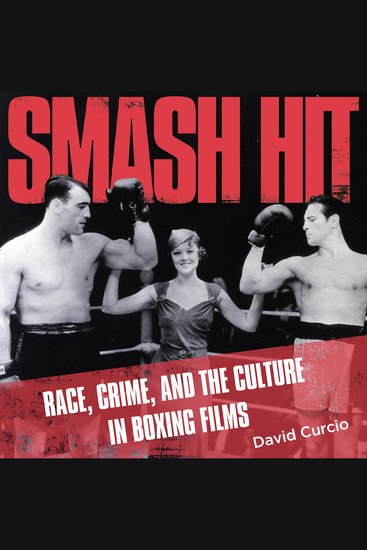
  • Smash Hit - Race Crime and Culture in Boxing Films - cover

    Smash Hit - Race Crime and...

    David Curcio

    • 0
    • 0
    • 0
    David Curcio’s SMASH HIT: RACE, CRIME, AND CULTURE IN BOXING FILMS joins Armin Lear Press’ titles exploring the way key social issues surface in the arts.      Cinema emerged alongside the rules that ushered in boxing’s modern age and the “squared circle” proved the ideal stage for cinematic display. The public had its first taste of the new medium in 1894 through a heavyweight bout, recognized today as the world’s first feature film.     As the two attractions fast-grew into the country’s most popular entertainments, nascent Hollywood studios were quick to spot an opening for a surefire combo. Like a snap-jab to the teeth, the boxing film emerged as a popular genre wherein the fighter assumed his place among the private dicks, rebel cops, and desperate underdogs mired in America’s expanding urban landscape.     Devoting equal time to both mediums, SMASH HIT: RACE, CRIME, AND CULTURE IN BOXING FILMS uses twenty films as the basis of a hard-nosed exploration as to how the genre held a bloody mirror to twentieth century America’s most prominent social anxieties, elucidating two conjoined mediums that serve as bellwether to an ever-shifting cultural zeitgeist.     “David Curcio’s Smash Hit is a first-round knockout filled with strong writing and deep insight.”-Bob Batchelor, author of Roadhouse Blues: Morrison, the Doors, and the Death Days of the Sixties and Stan Lee: A Life     "David Curcio's absorbing, fascinating book sent me down a rabbit hole of so many memorable movies....and Smash Hit belongs in the company of the best of them."-Donald McRae, The Guardian     "Smash Hit is not about the sport of boxing so much as a view of American society in the context of boxing culture, film history, and Hollywood gossip. An entertaining, informative, lively read.”-Glen Sharp, author of Punching in the Shadows
    Voir livre
  • Guerrilla Tactics for Teachers - The Essential Classroom Management Guide - cover

    Guerrilla Tactics for Teachers -...

    Andrew Fuller

    • 0
    • 0
    • 0
    Guerrilla Tactics for Teachers is a life-saving, career-preserving, sanity-building guide for teachers. Based on over 30 years of research, it is an essential collection of behaviour management and learning enhancement strategies that will help educators at any stage of their career.These are the methods that will help educators create and maintain calm classrooms that enable students to learn effectively, achieve great results, and still have a life. It provides the secret knowledge of survival in a sector that loses many great teachers to other careers when they decide it is too hard and walk away.
    Voir livre
  • Mephobia - The Fear of Becoming so Awesome that the Human Race can't Handle it and Everybody Dies: An Autobiography - cover

    Mephobia - The Fear of Becoming...

    Hayden Pearton

    • 0
    • 0
    • 0
    Do you like autobiographies filled with life-changing events, death-defying tales and powerful personal achievements? No? Well then Mephobia is just what you need! 
    Chronicling the first 30 years of Hayden Pearton's love, loss and Labradors! So if you want to read 30 brand new poems written by a South African independent author, poet and physiotherapist, check this out!
    Voir livre
  • Healing Your Inner Child: A Guide to Rediscovering Wholeness Nurturing Self-Love and Embracing Emotional Freedom - cover

    Healing Your Inner Child: A...

    Andy Gardner

    • 0
    • 0
    • 0
    Discover Wholeness: Heal Your Inner Child and Unlock True Happiness 
    Do you often wonder why certain memories still hurt? 
    Feel stuck in old patterns that don't serve you? 
    Searching for deeper self-understanding and emotional freedom? 
    If you want to feel free and happy without emotional burdens, then keep reading. 
    The answers to resolving all these issues lie in finding, connecting with, and healing your inner child. This audiobook will guide you on a journey of self-discovery, helping you nurture and free your inner child from past hurts. 
    Why This Audioook?Uncover Hidden Emotions: Discover what’s really causing your emotional pain and learn to release it.Break Free from the Past: Understand how past experiences shape your current feelings and behaviors.Empower Yourself: Gain practical tools to transform negative emotions into positive actions.Foster Genuine Relationships: Learn how to build healthier, more authentic connections with others. 
    What's InsideUnderstanding Your Inner Child: Gain a profound understanding of who your inner child is and why it's important.Engaging in Dialogue: Master the art of meaningful conversations with your inner child.Releasing Emotional Baggage: Find tools and strategies to let go of emotional pain.Cultivating Self-Love: Learn to love and be kind to yourself.Forgiving and Moving On: Discover how to truly forgive and free yourself from the past. 
    Don’t wait to transform your life. Click the “Add to Cart” button now and take the first step towards emotional freedom and self-love.
    Voir livre
  • The Weimar Republic - Inflation Degeneration and Historicity - cover

    The Weimar Republic - Inflation...

    Kelly Mass

    • 0
    • 0
    • 0
    To summarize everything about this topic, the Weimar Republic was a disaster. Perhaps the setup of the republic wasn’t as much as fault as just the world events that led to the Great Depression, the eventual surrender of Germany to France, Russia, and England in World War I before that, and other significant changes in the economy at the time. 
    The Weimar Republic was a federal constitutional republic that lasted in Germany from 1918 to 1933. The German Reich (Deutsches Reich) was the main name of the state, which was also referred to as the German Republic (Deutsche Republik). The first word associates with the city of Weimar, which hosted the republic's first constituent assembly. The nation was typically described as "Germany" in English; the title "Weimar Republic" didn't become well-known till the 1930s. 
    Do you want to buy a few eggs with thousands of marks? How about a loaf of bread for ten thousand dollars? The inflation in the Weimar Republic led to a severe economic downturn, one that had probably never been there ever before. This led to other problems, which also explained the rise of Nazi Germany somewhat later. 
    If you want to understand all these things, then go ahead and get started.
    Voir livre