
Begleiten Sie uns auf eine literarische Weltreise!
Buch zum Bücherregal hinzufügen
Grey
Einen neuen Kommentar schreiben Default profile 50px
Grey
Jetzt das ganze Buch im Abo oder die ersten Seiten gratis lesen!
All characters reduced
Fundamental Principles of the Metaphysic of Morals - cover

Fundamental Principles of the Metaphysic of Morals

Immanuel Kant

Verlag: Bu Classics Books

  • 0
  • 0
  • 0

Beschreibung

Immanuel Kant seeks to establish the supreme principle of morality, arguing that moral actions must be based on duty rather than consequences. He introduces the famous Categorical Imperative, creating a framework where rules must be universally applicable to all rational beings. The text dissects the concepts of good will, autonomy, and the kingdom of ends. It is a rigorous philosophical groundwork for ethical behavior and rational freedom.
Verfügbar seit: 29.01.2026.
Drucklänge: 123 Seiten.

Weitere Bücher, die Sie mögen werden

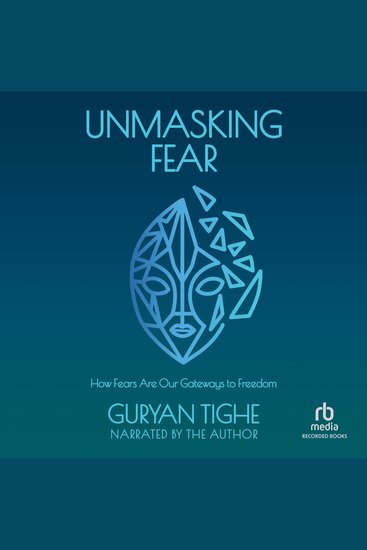
  • Unmasking Fear - How Fears Are Our Gateways to Freedom - cover

    Unmasking Fear - How Fears Are...

    Guryan Tighe

    • 0
    • 0
    • 0
    Imagine the possibilities if instead of avoiding the things you feared, you approached them with courage and curiosity. 
      
    When we are in the grip of fear, our world can get very small and for many of us, the number of choices shrink to just four basic reactions: fight, flight, freeze, or fawn. That’s not a lot of options. On a collective level, elements of our society like governments, religions, and businesses sometimes instill fear to divide and control—to keep us feeling dependent on them instead of ourselves. On an individual level, fear can be the reason we’re living a life that’s not reflective of our truth or potential. It’s what keeps us feeling stuck and holds us back. What most of us don’t realize is that fear has much to teach us. 
      
    “Fear Technician” Guryan Tighe reframes the way we approach fear from the goal of conquering it to a goal of learning from it by providing readers three gateways to look at fear in a way that frees us: curiosity, gratitude, and purpose. She shows us how to interrupt our initial reaction, pause, check in with ourselves, and rewrite the patterns we use to respond to that which we fear. With this shift in thinking and how to engage it, readers will find new pathways forward as they shift from unintentional reactions to intentional responses. 
      
    When we change our relationship to fear, we gain valuable insights that inform our growth and development, connecting us more deeply to our truth. This different approach to fear doesn’t just transform our relationship with ourselves but can also unite us with others through empathy and shared purpose. What has the power to separate us from ourselves and each other—fear—also has the power to unite us. Unmasking Fear shows us that fear is courage unrealized and understanding our fears frees us to pursue the life we want. 
      
    “For anyone in the grip of fear, or longing for deeper connection to themselves and others, this book will propel you towards greater clarity, confidence and peace.”—Randy Taran, author of Emotional Advantage and founder/CEO of Project Happiness.org
    Zum Buch
  • Vietnam War The: The History of America’s Most Controversial War - cover

    Vietnam War The: The History of...

    Editors Charles River

    • 0
    • 0
    • 0
    The Vietnam War could have been called a comedy of errors if the consequences weren’t so deadly and tragic. In 1951, while war was raging in Korea, the United States began signing defense pacts with nations in the Pacific, intending to create alliances that would contain the spread of Communism. As the Korean War was winding down, America joined the Southeast Asia Treaty Organization, pledging to defend several nations in the region from Communist aggression. One of those nations was South Vietnam.  
    	Before the Vietnam War, most Americans would have been hard pressed to locate Vietnam on a map. South Vietnamese President Diệm’s regime was extremely unpopular, and war broke out between Communist North Vietnam and South Vietnam around the end of the 1950s. Kennedy’s administration tried to prop up the South Vietnamese with training and assistance, but the South Vietnamese military was feeble. A month before his death, Kennedy signed a presidential directive withdrawing 1,000 American personnel, and shortly after Kennedy’s assassination, new President Lyndon B. Johnson reversed course, instead opting to expand American assistance to South Vietnam. 
    	The post-analysis of war is a complicated and process that benefits from hindsight, and the involvement of the United States in Vietnam over about a decade was no exception. Never formally declared as a “war,” the Vietnam War was not fought in clean lines or with clear missions. Viewers of the evening news listening to the “box score” of killed and wounded each night had at best a hazy notion of what was happening a world away in Southeast Asia. If anything, their leaders were both attentive to reelection and on a certain level were themselves unsure of what was truly taking place. A military draft that sent over 50,000 American soldiers to their deaths was triggered by a resolution sought by President Lyndon B. Johnson in a decision to contain communism in a distant Asian land. 
    Zum Buch
  • The Addiction Recovery Skills Workbook - Changing Addictive Behaviors Using CBT Mindfulness and Motivational Interviewing Techniques - cover

    The Addiction Recovery Skills...

    PhD Suzette Glasner-Edwards, PhD...

    • 0
    • 0
    • 0
    Is your addiction taking control of your life? This book provides an integrative, seven-step program to help you finally overcome drug and alcohol addiction. 


    If you struggle with addiction, seeking treatment is a powerful, positive first step toward eventual recovery. But gaining an understanding of the causes of addiction—such as feelings of helplessness or loss of control—is also crucial for recovery. In this book, addiction expert Suzette Glasner-Edwards offers evidence-based techniques fusing cognitive behavioral therapy (CBT), motivational interviewing, and mindfulness-based relapse prevention to help you move past your addictive behaviors. 


    On the long road to addiction recovery, you need as many tools as possible to help you stay sober and reach your destination. That's why this is the first book to combine research-proven motivational techniques, CBT, and mindfulness-based strategies to help you create your own unique recovery plan. It also makes a wonderful resource for loved ones and professionals treating addiction. 


    If you're ready to take that important first step toward recovery, this book can help you beat your addiction and get back to living a full, meaningful life.
    Zum Buch
  • The Unification of Germany - The History of the Merge of Germany with Prussia - cover

    The Unification of Germany - The...

    Kelly Mass

    • 0
    • 0
    • 0
    The Unification of Germany had a significant impact on the whole country, the empire, and the decades after that. It was the inauguration for Germany into the 20th century, and the dreaded World War I and World War II that were partially consequences of that unification. 
    On January 18th, 1871, in the Palace of Versailles in France, Germany was lawfully merged into the German Empire, a Prussia-dominated country state with federal components. Throughout the Franco-Prussian War, princes of German countries assembled there to declare King Wilhelm I of Prussia Emperor of the German Empire. 
    The Treaty of Verdun in 843 developed a confederated kingdom of German princedoms that had existed for over 1,000 years. Even so, till 1800, there was no development of a German country identity, owing to the independent nature of baronial states; most occupants of the Holy Roman Empire, beyond those straight governed by the emperor, determined themselves mainly with their prince, instead of with the Empire as a whole. Kleinstaaterei, or "small-statery," happened called a result of this practice. Improvements in transport and interactions brought these areas closer together by the nineteenth century. 
    Today, you can learn more about what made this unification so special, and how it led to other events in history.
    Zum Buch
  • On Nothing & Kindred Subjects - cover

    On Nothing & Kindred Subjects

    Hilaire Belloc

    • 0
    • 0
    • 0
    In On Nothing & Kindred Subjects, Hilaire Belloc masterfully blends humor, philosophy, and social commentary in a series of essays that explore seemingly trivial or abstract topics—what he playfully calls "Nothing." With wit and wisdom, Belloc delves into themes like idleness, the absurdities of conversation, and the fleeting nature of modern trends, all while revealing deeper truths about human nature and society. Though lighthearted in title and tone, the book offers sharp critiques of contemporary culture and the loss of enduring values. Rooted in Belloc’s Catholic worldview and love for reason, these reflections encourage readers to see significance in the mundane and to question the emptiness of superficial pursuits. A delightful and thought-provoking read.
    Zum Buch
  • Thriving Families - A Trauma-Informed Guidebook for the Foster and Adoptive Journey - cover

    Thriving Families - A...

    Jennifer Ranter Hook, Joshua N....

    • 0
    • 0
    • 0
    A practical roadmap for foster and adoptive familiesCaring for children is deeply important to the heart of God, and adoption and foster care are important callings that connect to God’s heart for children and families. But this road isn’t always easy. It’s important that foster and adoptive parents prepare to address their children’s history of trauma, separation, and disrupted placements, which can lead to mental health, emotional, and behavioral difficulties. It is also important to understand how this journey shapes and influences our children. We cannot ignore the deep feelings and questions that children experience as they try to understand their story. How can we help them navigate their identity, and sit with them in the unknowns of their story or the grief and loss that comes up?​Drawing on the latest science and research on trauma, attachment, sensory processing difficulties, cultural competence, and grief and loss, authors Josh and Jenn Hook provide a trauma-informed approach to help adoptive and foster families—and the church called to care for the vulnerable in our midst—to help their children heal, grow, and thrive. 
    Zum Buch