Begleiten Sie uns auf eine literarische Weltreise!
Buch zum Bücherregal hinzufügen
Grey
Einen neuen Kommentar schreiben Default profile 50px
Grey
Jetzt das ganze Buch im Abo oder die ersten Seiten gratis lesen!
All characters reduced
Fassbinder Thousands of Mirrors - cover

Entschuldigung, dieses Buch ist in Ihrem Land nicht verfügbar.

Fassbinder Thousands of Mirrors

Ian Penman

Verlag: Fitzcarraldo Editions

  • 0
  • 0
  • 0

Beschreibung

Melodrama, biography, cold war thriller, drug memoir, essay in fragments, mystery – Fassbinder Thousands of Mirrors is cult critic Ian Penman's long awaited first original book, a kaleidoscopic study of the late West German filmmaker Rainer Werner Fassbinder (1945–1982). Written quickly under a self-imposed deadline in the spirit of Fassbinder himself, who would often get films made in a matter of weeks or months, Fassbinder Thousands of Mirrors presents the filmmaker as a pivotal figure in the late 1970s moment between late modernism and the advent of postmodernism and the digital revolution. Compelling, beautifully written and genuinely moving, echoing the fragmentary and reflective works of writers like Barthes and Cioran, this is a story that has everything: sex, drugs, art, the city, cinema and revolution.
Verfügbar seit: 19.04.2023.
Drucklänge: 200 Seiten.

Weitere Bücher, die Sie mögen werden

  • The Heidi Chronicles - cover

    The Heidi Chronicles

    Wendy Wasserstein

    • 0
    • 1
    • 0
    This Pulitzer Prize winning play is the tale of a baby-boomer's long, hard road from 60's confusion to 1990's self-assured woman...or so she hopes.An L.A. Theatre Works full-cast performance featuring Lisa Akey, Kosha Engler, Kaitlin Hopkins, Barbara Klein, Lisa Pelikan, Martha Plimpton, Scot Reese, Raphael Sbarge and Grant Shaud.
    Zum Buch
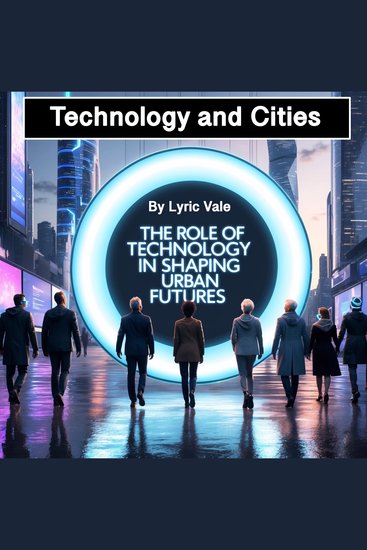
  • Technology and Cities - The Role of Technology in Shaping Urban Futures - cover

    Technology and Cities - The Role...

    Lyric Vale

    • 0
    • 0
    • 0
    In recent decades, technology has become a defining force in the development and transformation of cities. From the industrial revolution to the rise of the internet, technological advancements have continually reshaped urban life, making cities hubs of innovation, connectivity, and economic growth. Today, as cities face growing populations, climate change, and resource constraints, technology plays a central role in addressing these challenges while also opening new possibilities for urban living. The integration of digital technologies, automation, and data analytics is driving what we now recognize as the emergence of "smart cities," where every aspect of urban life is enhanced by technology. These advancements not only improve efficiency but also offer the potential to foster more sustainable, livable, and equitable urban environments. 
    The influence of technology in cities extends across various domains, including infrastructure, transportation, healthcare, and governance. In terms of urban infrastructure, cities are adopting digital systems for managing everything from electricity grids to water distribution, allowing for more responsive and efficient service delivery. Transportation has also undergone a transformation with the introduction of autonomous vehicles, electric cars, and new mobility services like ride-sharing, reshaping how people move within cities and reducing the environmental impact of urban travel. Similarly, the integration of sensors and Internet of Things (IoT) devices enables real-time data collection that informs city management, improving everything from traffic flow to waste management.
    Zum Buch
  • Design Against Racism - Creating Work That Transforms Communities - cover

    Design Against Racism - Creating...

    Omari Souza

    • 0
    • 0
    • 0
    A historical and philosophical exploration of the impact of design on underserved communities, examining the field’s shortcomings as well as its potential to create positive change. Through essays that delve into history and practice, and case studies that demonstrate practical strategies, Design Against Racism explores how designers of all disciplines can address, through their work, the legacies of racism and oppression. 
      
    Design profoundly influences culture. The heart of this book is its powerful blend of essays on design history, case studies, and discussions of practical methods to approach design work, adapted from the restorative justice movement. It explores how design as a professional practice and academic discipline directly affects historically excluded communities, offering frameworks and examples that foster collective improvement. 
      
    Topics from author Omari Souza, founder of the annual State of Black Design conference, and contributing design professionals include:  
    • Unveiling the White Gaze: The Narrative of Whiteness and Colonial Nostalgia  
    • Language as a Tool for Marginalization—and Resistance  
    • Hip-Hop Architecture: Transforming Spaces through Culture and Innovation  
    • Afrofuturism as a Design Strategy  
    • Whose Knowledge Is It? Reclaiming Histories, Narratives, and the Plurality of Knowledge  
    • Nonhierarchical Engagement with Communities—Anti-Racist Design Community Pop-Up  
      
    This is a critique of design and a practical handbook that will teach designers and educators how a restorative justice approach can transform their design practice to counteract and fight racism. 
      
    TIMELY AND ESSENTIAL TOPICS: Thought-provoking essays from leaders in design diversity offer an anti-racist approach to design practice based in an understanding of history, a focus on community building, and a commitment to inclusion. 
      
    AUTHOR & CONTRIBUTORS: Omari Souza is an Assistant Professor of Communication Design at the University of North Texas and co-host of the highly acclaimed minisode podcast The Design of Business | The Business of Design. Contributors include preeminent design professionals George Fourlas, Shamika Klassen, Kaleena Sales, Zariah Cameron, Lesley-Ann Noel, Cassini Nazir, Yolanda A. Rankin, Soniyah Robinson, and Danielle Lake. 
      
    Perfect for:  
    • Student and professional design practitioners of all disciplines, including graphic designers, product designers, architects, and more  
    • Course adoption for design programs  
    • Anyone eager to explore the themes of anti-racism and decolonizing design
    Zum Buch
  • Paper Lithography - cover

    Paper Lithography

    Sue Brown

    • 0
    • 0
    • 0
    A step-by-step guide to making paper lithography prints. This practical book explains how to use gum arabic to transfer a photocopied image without specialised equipment. It uses both hand-drawn and photographic images to show how paper lithography (or gum arabic transfer printing) is a quick and simple process that allows for creative experimentation on a range of surfaces. Packed with advice and ideas, it highlights this exciting, flexible and creative technique for artists and makers. Contains clear, detailed instructions to printing a lithographic transfer using a humble photocopy as a plate. Advice on how to incorporate the process as part of sketchbook, textile and etching practice, Ideas for more advanced multimedia applications and inspirational finished examples. Also includes tips for coping with common problems and warnings of pitfalls to be avoided.
    Zum Buch
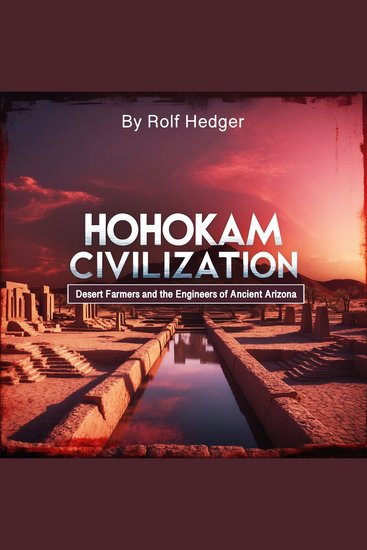
  • Hohokam Civilization - Desert Farmers and the Engineers of Ancient Arizona - cover

    Hohokam Civilization - Desert...

    Rolf Hedger

    • 0
    • 0
    • 0
    The Hohokam civilization, flourishing in the deserts of what is now southern Arizona, represents one of the most fascinating examples of ancient ingenuity in the American Southwest. Known for their advanced irrigation techniques, complex social structures, and distinctive artistic expressions, the Hohokam thrived in a harsh environment for over a thousand years. Their story provides valuable insight into human adaptability and innovation in response to challenging surroundings. 
    The origins of the Hohokam civilization are traced back to around 300 BCE, with their culture emerging as a distinct entity by approximately 600 CE. Archaeologists and researchers have found evidence of their presence in the Sonoran Desert, a region marked by intense heat and little rainfall. Despite these extreme conditions, the Hohokam were able to build thriving communities that relied heavily on farming, with maize, beans, and squash being staple crops. The Hohokam’s ability to create sustainable agricultural systems in the desert is considered one of their greatest achievements. 
    Central to the Hohokam way of life was their mastery of water management. They constructed a vast network of irrigation canals, some of which stretched for miles, to channel water from rivers into their fields. This water was crucial not only for agriculture but also for their communities' survival. The Hohokam’s innovative canal systems transformed the desert landscape, allowing them to cultivate the land and support large populations. These systems remain a testament to their engineering skills and ability to harness the natural environment for their benefit.
    Zum Buch
  • Art History Chinese art - cover

    Art History Chinese art

    Stephen W. Bushell, Pierre...

    • 0
    • 0
    • 0
    As the centre of Far-Eastern art, China has always fascinated Westerners, who take an interest in its religious leaders and savants as much as in its artists. Sophisticated and mysterious, Chinese art has persistently developed for 10,000 years through unequalled talent, which long ago established its artistic preeminence. Admired and imitated by all, today Chinese paintings and porcelain are the timeless reminders of a decadent past which continues to astound people around the world. Dealing not only with architecture, sculpture and painting but also with bronze and porcelain, this text offers a complete panorama of Chinese arts and civilisation until the fall of the Empire in 1911.
    Zum Buch