Rejoignez-nous pour un voyage dans le monde des livres!
Ajouter ce livre à l'électronique
Grey
Ecrivez un nouveau commentaire Default profile 50px
Grey
Abonnez-vous pour lire le livre complet ou lisez les premières pages gratuitement!
All characters reduced
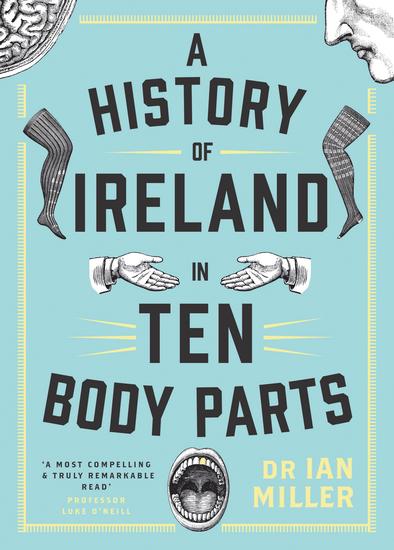
A History of Ireland in Ten Body Parts - cover

A History of Ireland in Ten Body Parts

Ian Miller

Maison d'édition: Gill Books

  • 0
  • 0
  • 0

Synopsis

Skulls, height, hands, legs, sex organs, blood, brains, stomachs, ears and corpses – discover Irish history anew through the utterly unique prism of the human body.
From the brutal beheading of the red-headed Clonycavan Man some 2,000 years ago to the ancient skulls – believed to be those of giants – stolen from islands off Ireland's west coast, medical historian Dr Ian Miller brings readers on a delightfully gruesome journey through our rich heritage.
Learn about the fears of excessive tea drinking that were once such a great cause for concern on this isle – scarcely believable! Meet the doctors who revolutionised Irish medicine in the 19th century – along with the deplorable bodysnatching that accompanied this progress.
Fact and folklore intertwine seamlessly throughout, providing the reader with an endlessly fascinating account of matters historical and mythological.
Disponible depuis: 05/09/2024.
Longueur d'impression: 352 pages.

D'autres livres qui pourraient vous intéresser

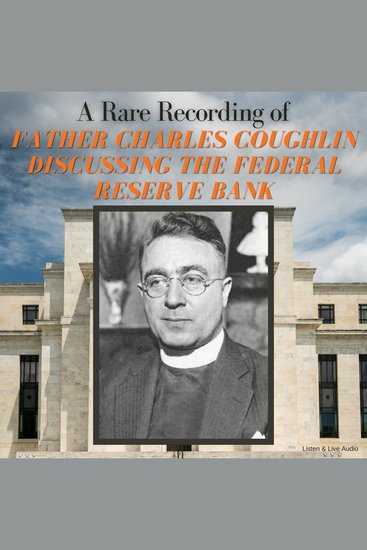
  • A Rare Recording of Father Charles Coughlin Discussing The Federal Reserve Bank - cover

    A Rare Recording of Father...

    Father Charles Coughlin

    • 0
    • 0
    • 0
    Father Charles Coughlin was a controversial Canadian-American Catholic priest based in Michigan. Calling for monetary reforms, the nationalization of major industries and railroads, and protection of the rights of labor, Coughlin used weekly radio broadcasts to reach a mass audience of up to thirty million listeners during the 1930s. An early supporter of Franklin D. Roosevelt and his New Deal, Coughlin later became a harsh critic. After the outbreak of World War II in 1939, the Roosevelt administration finally forced the cancellation of his radio program and forbade the dissemination of his newspaper, Social Justice.
    Voir livre
  • Befriending China - cover

    Befriending China

    Dee Knight

    • 0
    • 0
    • 0
    Befriending China tells the story of China's current effort to "open up" to a flood of visitors, as part of a campaign of "People-To-People Peacemaking." The story is partially based on three visits to China from late 2023 through late 2024. It describes the impressive achievements China has made in infrastructure, education, health care, and poverty alleviation. It includes an in-depth eye-witness account of visiting Xinjiang, debunking official rumors in the US of abuse of the Uyghur population there. It also highlights exciting tourism opportunities, with closeup looks at the mountainous Guizhou and Shanxi provinces, and the amazing "megacities" of Shanghai, Beijing, Chongqing, Hangzhou and Suzhou. It includes a preface by Carlos Martinez, editor of the Friends of Socialist China website. It also examines China's democratic system, and its successful foreign policy based on common prosperity and a shared future. Finally, it details ongoing US efforts to slander China and prepare for war against it, arguing that China is not our enemy.
    Voir livre
  • The Compendium of Erotica - Dictionary of Erotic Literature Dictionary of Aphrodisiacs and Love Potions Through the Ages - cover

    The Compendium of Erotica -...

    Harry E. Wedeck

    • 0
    • 1
    • 0
    Explore what sent hearts a flutter through the centuries in this compilation of erotic cultural and literary history.Dictionary of Erotic LiteratureRepresenting cultures around the world and spanning from ancient times to the twentieth century, this A-to-Z guide explores one of the most universal and enduring themes in literature. Entries range from Ovid’s Ars amatoria, second-century Gnosticism, and ninth-century Arabian poets, all the way up to the explicit novels published in Paris in the 1960s.As author Harry E. Wedeck explains in his introduction, a culture’s artistic and literary depictions of eroticism reveal a great deal about their way of life. In Dictionary of Erotic Literature, Wedeck draws on this endlessly vast topic to present an illustrative sampling of authors, written works, and terminology that will be of value to any student of literature or cultural history.Dictionary of AphrodisiacsFrom absinthe, almond soup, and Albertus Magnus to yarrow, yohimbine, and Émile Zola,this authoritative reference volume covers knowledge of aphrodisiacs spanning centuries and drawn from literature, spirituality, and ancient science. Entries include edible substances believed to enhance sexual performance, gemstones thought to possess amorous charms, gods and goddesses of love from various myths, and historic figures who contributed to studies and thought on aphrodisiacs.This dictionary reveals many intriguing ways for partners to enrich their relationships, including recipes to stimulate the gourmet lover using the many ingredients described in the book.Love Potions Through the AgesThis survey explores the evolution of love potion practices in societies over the centuries and across the world. Separate chapters focus on ancient Greece, Rome, India, and the Orient, as well as the Middle Ages and modern times. Wedeck relays the spiritual aspects of these concoctions as well as historical anecdotes about them. Recipes are also included, though Wedeck cautions that they are exclusively for academic purposes and not intended for personal use.
    Voir livre
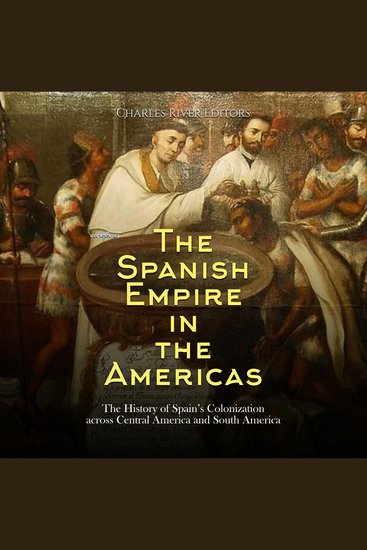
  • Spanish Empire in the Americas The: The History of Spain’s Colonization across Central America and South America - cover

    Spanish Empire in the Americas...

    Editors Charles River

    • 0
    • 0
    • 0
    By the time Christopher Columbus started setting east from the New World, he had explored San Salvador in the Bahamas (which he thought was Japan), Cuba (which he thought was China), and Hispaniola, the source of gold. As the common story goes, Columbus, en route back to Spain from his first journey, called in at Lisbon as a courtesy to brief the Portuguese King John II of his discovery of the New World. King John subsequently protested that according to the 1479 Treaty of Alcáçovas, which divided the Atlantic Ocean between Spanish and Portuguese spheres of influence, the newly discovered lands rightly belonged to Portugal. To make clear the point, a Portuguese fleet was authorized and dispatched west from the Tagus to lay claim to the “Indies,” which prompted a flurry of diplomatic activity in the court of Ferdinand and Isabella. At the time, Spain lacked the naval power to prevent Portugal from acting on this threat, and the result was the hugely influential 1494 Treaty of Tordesillas. 
    The Treaty of Tordesillas was one of the most important documents of its kind of the age, for it established the essential parameters of the two competing empires, the first of the major European imperial entities. The Treaty of Tordesillas drew an imaginary line from pole to pole, running 100 leagues west of the westernmost islands of the Azores. According to the terms of a supporting papal bull, all the lands to the west of that belonged to Spain, and all of those to the east belonged to Portugal. What this meant in practical terms was that Portugal was given Africa and the Indian Ocean while Spain was granted all the lands to the west, including the Americas and the Caribbean, all collectively known as the “Indies,” or the New World. 
    Perhaps inevitably, a regional rivalry had developed as the Portuguese began to establish a colony in Brazil and push its boundaries southwards. 
    Voir livre
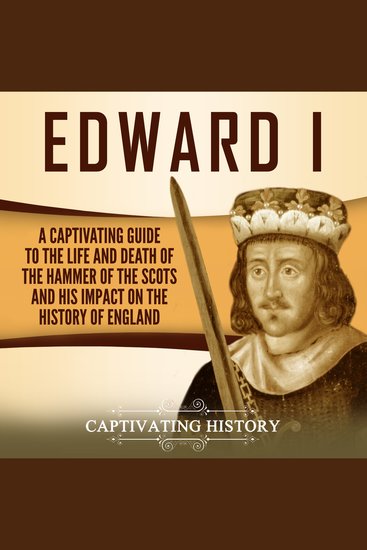
  • Edward I: A Captivating Guide to the Life and Death of the Hammer of the Scots and His Impact on the History of England - cover

    Edward I: A Captivating Guide to...

    Captivating History

    • 0
    • 0
    • 0
    Who was King Edward I of England? And why should we learn about him? 
    King Edward I was the first of three Edwards who reigned in perfect succession. He was one of the most important kings in English history, but he was also one of the most controversial. This was the king who subdued Wales and fought Scotland to a standstill for much of his reign. He battled leading Scottish figures that are recognizable to even novice history students. Both William Wallace and Robert the Bruce butted heads with this English ruler.  
    Edward engaged in harsh crackdowns, yet he also confirmed the statutes of the Magna Carta and helped strengthen ties to parliament. Edward often behaved as an absolutist dictator with a penchant for reform. He has been described as a “great and terrible” king, whose equal parts of greatness and terribleness can easily be seen throughout his tenure as an English monarch.  
    In this book, you will learn about:Edward’s early days as prince and the impact of his childhoodThe Welsh revolts and Edward’s eventual conquest of WalesEdward’s Holy Land CrusadeScotland’s crisis of succession and Edward’s long war with the ScotsThe rise of William Wallace and Robert the BruceEdward’s final days as kingAnd much more! 
    Scroll up and click the “add to cart” button to learn more about King Edward I of England!
    Voir livre
  • Portugal and Slovakia in Comparative Perspective - Essays on Iberian-Slavic political social and cultural questions - cover

    Portugal and Slovakia in...

    Pieter C. van Duin, Zuzana...

    • 0
    • 0
    • 0
    This book is a contribution to European comparative history involving Portugal and Slovakia, but also the larger geographic units of Iberia and Slavic Central Europe. While developments in Portugal and Slovakia predominate, Spain, the Czech lands, and other regions are discussed as well. The subjects investigated include the position of women and the activities of messianic thinkers in the seventeenth century as well as semi-fascist Catholic political movements in the twentieth century. The authors look at the subject matter from the viewpoint of politics, social phenomena, and culture. The cultural dimension includes religion and ideology, both of which have clearly been of critical importance in Portuguese and Slovak history. It also includes problems of ethno-linguistic and national identity and the more recent phenomenon of multiculturalism, whose social promotion is controversial and uncertain.


    This comparative study by Zuzana Poláčková and Peter C. van Duin, a collection of essays, is a revelation, especially for students of European authoritarian and totalitarian regimes, and, furthermore, anybody interested in European history."
    
    —Josette Baer, Professor, UZH University of Zurich


    This book gives proof to Cicero’s dictum: "Historia magistra vitae est"—without knowledge of the past we cannot build a sustainable future. Thanks to the authors for this great contribution to knowledge!"
    
    —Lucia Mokrá, Professor of International Law, Comenius University, Bratislava


    This collection of essays provides not only fascinating insights into the political workings of these two small states, but of the workings of politics in the larger Iberian / Slavic context. Highly recommended."
    
    —Dr. David Reichardt, International Relations, Webster University, Saint-Louis, Missouri 


    A very important contribution to the study of the comparative history of Europe, and therefore I fully recommend its publication."
    
    —Mgr. Juraj Marušiak, PhD. Institute of Political Science, public research institution, Slovak Academy of Sciences, Bratislava, Slovak Republic
    Voir livre