Begleiten Sie uns auf eine literarische Weltreise!
Buch zum Bücherregal hinzufügen
Grey
Einen neuen Kommentar schreiben Default profile 50px
Grey
Jetzt das ganze Buch im Abo oder die ersten Seiten gratis lesen!
All characters reduced
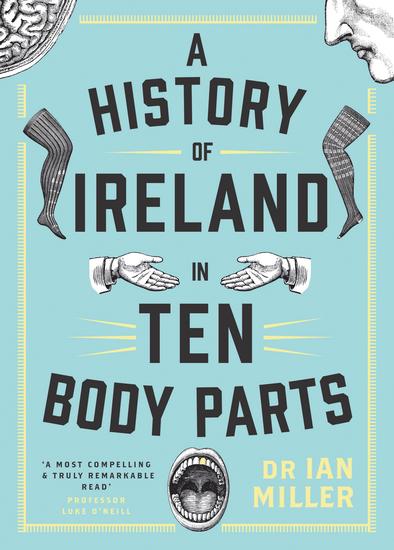
A History of Ireland in Ten Body Parts - cover

A History of Ireland in Ten Body Parts

Ian Miller

Verlag: Gill Books

  • 0
  • 0
  • 0

Beschreibung

Skulls, height, hands, legs, sex organs, blood, brains, stomachs, ears and corpses – discover Irish history anew through the utterly unique prism of the human body.
From the brutal beheading of the red-headed Clonycavan Man some 2,000 years ago to the ancient skulls – believed to be those of giants – stolen from islands off Ireland's west coast, medical historian Dr Ian Miller brings readers on a delightfully gruesome journey through our rich heritage.
Learn about the fears of excessive tea drinking that were once such a great cause for concern on this isle – scarcely believable! Meet the doctors who revolutionised Irish medicine in the 19th century – along with the deplorable bodysnatching that accompanied this progress.
Fact and folklore intertwine seamlessly throughout, providing the reader with an endlessly fascinating account of matters historical and mythological.
Verfügbar seit: 05.09.2024.
Drucklänge: 352 Seiten.
Weitere Bücher, die Sie mögen werden

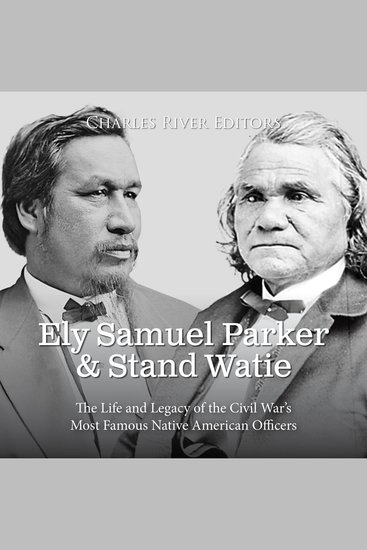
  • Ely Samuel Parker and Stand Watie: The Life and Legacy of the Civil War’s Most Famous Native American Officers - cover

    Ely Samuel Parker and Stand...

    Editors Charles River

    • 0
    • 0
    • 0
    One of the best known of the six nations is the Seneca, and arguably the most famous Seneca chief was Ely Samuel Parker. Over the course of his life, he was a Seneca chief, a civil engineer, a close friend and adjutant to General Ulysses S. Grant, an advocate for the Indian peoples, and the first Native American Commissioner of the Department of Indian Affairs. His marriage to a much younger socialite scandalized Washington, and he made a fortune on Wall Street and lost it all. He ended his life in genteel poverty, working for nearly 20 years in an obscure position for the New York City Police Department. Parker was a largely self-taught engineer, who worked on various canal projects, and was hired by the Department of the Treasury to supervise the construction of several buildings in Galena, Illinois, where he met a shy salesclerk named Ulysses S. Grant. At the age of 18, he dined with President Polk, later talked with President Lincoln, and had the commanding general of the U.S. Army as the best man at his wedding.  
    Stand Watie’s life connects the traditional Cherokee homeland in Tennessee and Georgia, the fight within the tribe over leaving for the West or staying on their homeland and trying to resist, and the Trail of Tears. At the same time, his life also includes the ongoing split between mixed-blood and full-blood Cherokee in the Cherokee Nation, and the chaos of Indian Territory during the Civil War. Like the country as a whole, the Cherokee Nation was split over the question of slavery, and with an estimated 100 slaves owned, Watie was the biggest native slaveholder in the region. At the start of the war, Watie was commissioned as a colonel in Confederate service and later as a brigadier general. His 1st Cherokee Mounted Rifles Regiment fought more engagements than any other Confederate unit west of the Mississippi River. As a result, Watie is perhaps the most famous figure of a widely overlooked aspect of the Civil War.
    Zum Buch
  • Internet Governance - Policies and Regulation - cover

    Internet Governance - Policies...

    Craig Dames

    • 0
    • 0
    • 0
    Internet governance refers to the development and application of rules, policies, and practices that shape the evolution and use of the internet. It involves multiple stakeholders, including governments, private sector entities, civil society organizations, and technical communities. As the internet has grown from an academic experiment to a global infrastructure, the need for effective governance has become increasingly crucial. The way the internet is managed impacts digital rights, economic development, and global security, making governance a central issue in today’s interconnected world. 
    The origins of internet governance can be traced back to the early days of the internet, when management was primarily handled by academic and research institutions. Over time, as commercial interests and governmental involvement increased, governance structures evolved to accommodate new challenges. Organizations like the Internet Corporation for Assigned Names and Numbers (ICANN) and the Internet Governance Forum (IGF) were established to facilitate discussions on technical coordination, policy-making, and regulation. The involvement of international bodies such as the United Nations further highlights the growing importance of internet governance in global affairs. 
    A fundamental aspect of internet governance is the balance between different stakeholder interests. Governments seek to regulate the internet to ensure national security, protect citizens' rights, and maintain economic stability. Meanwhile, private companies advocate for minimal regulation to encourage innovation and market growth. Civil society organizations focus on issues such as privacy, digital rights, and access to information. This multistakeholder model aims to create a collaborative and inclusive approach to governance, but it also presents challenges in reaching consensus on key issues.
    Zum Buch
  • Soviet and Post-Soviet Foreign Policies I - East-South Relations and the Political Economy of the Communist Bloc 1971–1991 - cover

    Soviet and Post-Soviet Foreign...

    Robert M. Cutler

    • 0
    • 0
    • 0
    This collection of studies investigates the political economy of international relations between the Soviet bloc (the “East”) and the developing world (the “South”), spanning the entire post-Stalin era while focusing on the 1970s and 1980s. The works examine East-South relations from the standpoints of international trade patterns, financial transfers, military relations including their economic angle, interactions within the United Nations Conference on Trade and Development (UNCTAD), and the international legal framework for trade embedded in the “socialist offensive in international law.” The chapters provide extensive bibliographies making this volume a handbook  of great interest not only to researchers, but also to university students and the general public.
    Zum Buch
  • NASM CPT Study Guide 2024-2025 - Review Book with 360 Practice Questions and Answer Explanations for the Certified Personal Trainer Exam - cover

    NASM CPT Study Guide 2024-2025 -...

    Shawn Blake

    • 0
    • 0
    • 0
    Find everything you need to confidently prepare and pass the NASM CPT exam with this all-in-one study guide 
      
    The National Academy of Sports Medicine or NASM CPT exam can provide the certification you need to succeed in your career as a personal trainer. 
      
    With its comprehensive and practical approaches to ensure safe but effective training, a NASM certificate can provide the knowledge and competence you need to safely guide and train your clients to achieve their fitness goals. 
      
    However, due to its varying and often challenging topics, approximately only 74% of exam takers pass the NASM CPT exam. 
      
    But don’t let numbers stop you from trying your best. 
      
    With the right study guide and strategies to maximize preparation time, anyone can pass the NASM CPT exam and start their career. 
      
    Grab a pen, and don’t forget to take notes as you discover: 
     How to physically and mentally prepare yourself for the exam with the ACE MethodAn in-depth discussion on basic and applied sciences and nutritional concepts you will find in the NASM CPT examThe importance of understanding the psychology of exercise and strategies to coach your clients using behavioral approachesWhy conducting assessments can help you create an effective and successful exercise program for your potential clientsHow to use the OPT model and design a program for clients with various fitness levelsThe importance of incorporating different types of training concepts to help your clients achieve their fitness goals 
      
    And so much more! 
      
    Take a closer step toward your dream career.Ace the NASM CPT Exam and start your personal trainer career.
    Zum Buch
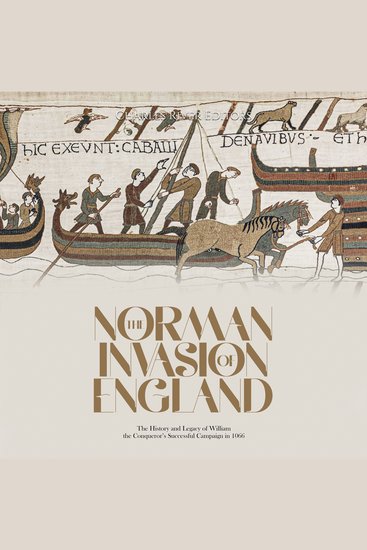
  • Norman Invasion of England The: The History and Legacy of William the Conqueror’s Successful Campaign in 1066 - cover

    Norman Invasion of England The:...

    Editors Charles River

    • 0
    • 0
    • 0
    For hundreds of years, the Anglo-Saxons – who had been harassing the Saxon Shore as pirates –began to settle in Britain, creating a patchwork of little kingdoms and starting a new era of English history. Several early medieval historians, writing well after the events, said the Anglo-Saxons were invited to Britain to defend the region from the northern tribes and ended up taking over. The Venerable Bede (672 or 673-735) said in his Historia ecclesiastica gentis Anglorum (“Ecclesiastical History of the English People”) that in the year 449, “The British consulted what was to be done and where they should seek assistance to prevent or repel the cruel and frequent incursions of the northern nations. They all agreed with their king Vortigern to call over to their aid, from the parts beyond the sea, the Saxon nation. … The two first commanders are said to have been Hengist and Horsa.” 
    	However they came to control most of England, the Anglo-Saxons became the dominant power in the region for nearly 500 years, and the strength of their cultural influence could be felt even after William the Conqueror won the Battle of Hastings and became the first Norman ruler on the island. William is one of history’s most famous conquerors, but the efforts to consolidate his rule in England were complicated from the start, both due to external enemies and those jockeying for his position while he was still alive. William ultimately decided to split Normandy and England. His son Robert, still in open revolt, would nonetheless inherit Normandy, while the next in line, his second son William, would rule England. The two states that William left behind were hardly united or at peace. Soon after his death, Odo conspired with Robert to oust his brother from the English throne and re-establish a united state, but the revolt failed, and King William “Rufus” II would rule England until his suspicious death in 1100.
    Zum Buch
  • Decentralization and Multilevel Elections in Ukraine - Reform Dynamics and Party Politics in 2010–2021 - cover

    Decentralization and Multilevel...

    Valentyna Romanova

    • 0
    • 0
    • 0
    Methodologically, the book illustrates the added value of investigating elections from a multilevel perspective.
    Zum Buch