Rejoignez-nous pour un voyage dans le monde des livres!
Ajouter ce livre à l'électronique
Grey
Ecrivez un nouveau commentaire Default profile 50px
Grey
Abonnez-vous pour lire le livre complet ou lisez les premières pages gratuitement!
All characters reduced
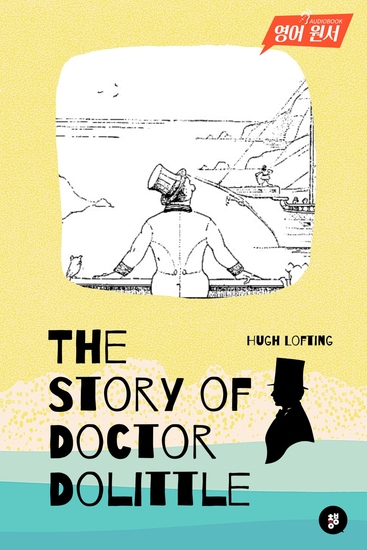
The Story of Doctor Dolittle - cover

The Story of Doctor Dolittle

Hugh Lofting

Maison d'édition: 책보요여

  • 0
  • 0
  • 0

Synopsis

″‘But I like animals better than the best people,’ said the Doctor.”

The Story of Doctor Dolittle, Being the History of His Peculiar Life at Home and Astonishing Adventures in Foreign Parts (1920), written and illustrated by the British author Hugh Lofting, is the first of his Doctor Dolittle books, a series of children\'s novels about a man who learns to talk to animals and becomes their champion around the world. It was one of the novels in the series which was adapted into the 1967 film Doctor Dolittle.
Disponible depuis: 08/05/2023.
Longueur d'impression: 120 pages.

D'autres livres qui pourraient vous intéresser

  • The American - cover

    The American

    Henry James

    • 0
    • 0
    • 0
    "The American" by Henry James follows Christopher Newman, a wealthy and confident American businessman, as he ventures to Europe seeking adventure and romance. In Paris, he becomes infatuated with the beautiful and enigmatic Claire de Cintré, a young widow from a noble French family. Driven by his passion, Newman pursues Claire despite her family's disapproval. As their relationship develops, cultural disparities, social expectations, and financial considerations complicate their love. Claire's aristocratic relatives, particularly her controlling mother, present formidable obstacles, and Newman's American directness clashes with European subtleties.
    Voir livre
  • A Tale of Two Cities - cover

    A Tale of Two Cities

    Charles Dickens

    • 0
    • 0
    • 0
    "A Tale of Two Cities" by Charles Dickens is a historical novel written in the mid-19th century. Set against the backdrop of the French Revolution, the story begins by exploring the social and political turmoil of the era, introducing key themes such as resurrection, sacrifice, and the contrast between oppression and liberty.  
    The narrative follows Mr. Jarvis Lorry on his mission to retrieve Dr. Alexandre Manette, an imprisoned former physician who has been "recalled to life" after years of suffering. Dickens vividly depicts the contrasting conditions in England and France, highlighting the hardships faced by ordinary people. 
    A notable scene unfolds as Mr. Lorry travels on a Dover mail coach and encounters a mysterious messenger who delivers a message concerning Dr. Manette. Upon arriving in Paris, the ominous undertones of the Revolution are palpable, with Madame Defarge's wine shop symbolizing the growing discontent.  
    The story hints at the challenges ahead as the characters intertwine in a tale of personal and political upheaval, setting the stage for a drama that explores the quest for justice in the face of tyranny.
    Voir livre
  • Complete Works of H P Lovecraft The (Volume 3) (Unabridged) - cover

    Complete Works of H P Lovecraft...

    H. P. Lovecraft

    • 0
    • 0
    • 0
    "The Complete Works of H.P. Lovecraft contains all the original stories which Lovecraft wrote as an adult. It begins in 1917 with "The Tomb" and ends in 1935 with his last original work "The Haunter of the Dark." The book is ordered chronologically by the date the story was written.
    Voir livre
  • Lady Susan - Full Cast Drama - cover

    Lady Susan - Full Cast Drama

    Jane Austen

    • 0
    • 0
    • 0
    "Lady Susan," a novella by Jane Austen, offers readers a departure from her more well-known novels like "Pride and Prejudice" and "Sense and Sensibility." Written in the form of letters, this epistolary work provides a fascinating glimpse into the life of Lady Susan Vernon, a character who stands apart from Austen's typical heroines. 
     
    The novella's protagonist, Lady Susan, is a cunning and manipulative widow, quite unlike the virtuous heroines that populate Austen's other works. Lady Susan's sharp wit and calculated charm serve as the driving force behind the narrative. Through her letters, we witness her artful maneuvering as she navigates the complexities of society, orchestrates advantageous marriages, and simultaneously manages her own affairs. 
     
    Austen's choice of the epistolary form allows readers to witness the inner workings of Lady Susan's mind as she artfully weaves webs of deception and manipulation. The novella showcases the power of language and rhetoric in social interactions, with Lady Susan employing her mastery of words to control the perceptions of those around her. Her character is both captivating and repulsive, offering a unique exploration of the darker facets of human nature. 
     
    Despite Lady Susan's morally dubious actions, Austen manages to infuse the novella with her trademark wit and humor. The characters surrounding Lady Susan, from her confidante Alicia Johnson to her would-be son-in-law Reginald De Courcy, serve as foils to her cunning, allowing for moments of comedic tension and irony. 
     
    "Lady Susan" is a shorter work compared to Austen's full-length novels, but it remains a testament to her ability to craft engaging characters and intricate social dynamics. In this novella, Austen provides a window into a world of manipulation, ambition, and social stratagems, all while maintaining her distinctive style and narrative prowess.
    Voir livre
  • A Man with Two Lives - From their pens to your ears genius in every story - cover

    A Man with Two Lives - From...

    Ambrose Bierce

    • 0
    • 0
    • 0
    Ambrose Gwinnett Bierce was born on 24th June 1842 at Horse Cave Creek in Meigs County, Ohio. His parents were poor but they introduced him to literature at an early age, instilling in him a deep appreciation of books, the written word and the elegance of language.  
    Growing up in Koscuisko County, Indiana poverty and religion were defining features of his childhood, and he would later describe his parents as “unwashed savages” and fanatically religious, showing him little affection but always quick to punish. He came to resent religion, and his introduction to literature appears to be their only positive effect. 
    At age 15 Bierce left home to become a printer’s devil, mixing ink and fetching type at The Northern Indian, a small Ohio paper. Falsely accused of theft he returned to his farm and spent time sending out work in the hopes of being published. 
    His Uncle Lucius advised he be sent to the Kentucky Military Institute. A year later he was commissioned as an Officer.  As the Civil War started Bierce enlisted in the 9th Indiana Infantry Regiment.  
    In April 1862 Bierce fought at the Battle of Shiloh, an experience which, though terrifying, became the source of several short stories. Two years later he sustained a serious head wound and was off duty for several months. He was discharged in early 1865.  
    A later expedition to inspect military outposts across the Great Plains took him all the way to San Francisco. He remained there to become involved with publishing and editing and to marry, Mary Ellen on Christmas Day 1871.  They had a child, Day, the following year.  
    In 1872 the family moved to England for 3 years where he wrote for Fun magazine. His son, Leigh, was born, and first book, ‘The Fiend’s Delight’, was published.  
    They returned to San Francisco and to work for a number of papers where he gained admiration for his crime reporting. In 1887 he began a column at the William Randolph Hearst’s San Francisco Examiner.  
    Bierce’s marriage fell apart when he discovered compromising letters to his wife from a secret admirer. The following year, 1889 his son Day committed suicide, depressed by romantic rejection. 
    In 1891 Bierce wrote and published the collection of 26 short stories which included ‘An Occurrence at Owl Creek Bridge’.  Success and further works including poetry followed.  
    Bierce with Hearst’s resources helped uncover a financial plot by a railroad to turn 130 million dollars of loans into a handout. Confronted by the railroad and asked to name his price Bierce answered “my price is $130 million dollars. If, when you are ready to pay, I happen to be out of town, you may hand it over to my friend, the Treasurer of the United States”.  
    He now began his first foray as a fabulist, publishing ‘Fantastic Fables’ in 1899.  But tragedy again struck two years later when his second son Leigh died of pneumonia relating to his alcoholism.  
    He continued to write short stories and poetry and also published ‘The Devil’s Dictionary’.  
    At the age of 71, in 1913 Bierce departed from Washington, D.C., for a tour of the battlefields where he had fought during the civil war. At the city of Chihuahua he wrote his last known communication, a letter to a friend. It’s closing words were “as to me, I leave here tomorrow for an unknown destination,” Ambrose Bierce then vanished without trace.
    Voir livre
  • Clairvoyance - From their pens to your ears genius in every story - cover

    Clairvoyance - From their pens...

    D K Broster

    • 0
    • 0
    • 0
    Dorothy Kathleen Broster was born on 2nd September 1877 at Devon Lodge in Grassendale Park, Garston, Liverpool. 
    At 16, the family moved to Cheltenham, where she attended Cheltenham Ladies' College and then on to St Hilda’s College, Oxford to read history, where she was one of the first female students, although at this time women were not awarded degrees. 
    Broster served as secretary to Charles Harding Firth, a Professor of History for several years, and collaborated on several of his works. Her first two novels were co-written with a college friend, Gertrude Winifred Taylor. 
    With the Great War interrupting her literary ambitions she served as a Red Cross nurse at a Franco-American hospital, but returned to England with a knee infection in 1916.  
    After the war, she moved near to Battle in East Sussex and took up writing full-time.  
    In 1920 she at last received her Bachelor of Arts and Master of Arts from Oxford. 
    Her novels, mainly historical fiction, peaked in popularity with ‘The Flight of the Heron’, in 1925, a best-seller followed up by two sequels. 
    As well as poetry and various articles she also wrote several short stories, the best known of which is a classic of weird fiction ‘The Couching at the Door’ in which an artist appears to be haunted by a mysterious entity. 
    An intensely private individual many readers deduced from her name that she was both a man and Scottish. 
    D K Broster died in Bexhill Hospital on 7th February 1950.  She was 73.
    Voir livre