Rejoignez-nous pour un voyage dans le monde des livres!
Ajouter ce livre à l'électronique
Grey
Ecrivez un nouveau commentaire Default profile 50px
Grey
Abonnez-vous pour lire le livre complet ou lisez les premières pages gratuitement!
All characters reduced
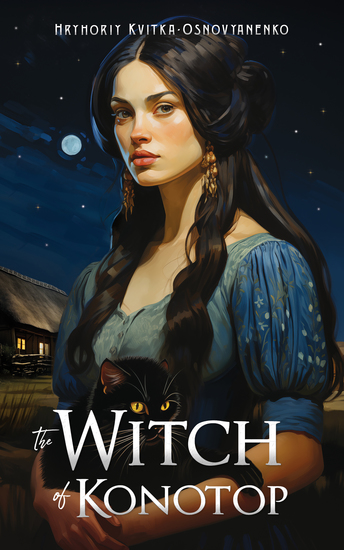
The Witch of Konotop - cover

The Witch of Konotop

Hryhoriy Kvitka-Osnovyanenko

Traducteur Michael M. Naydan, Alla Perminova

Maison d'édition: Glagoslav Publications B.V. (N)

  • 0
  • 0
  • 0

Synopsis

The Witch of Konotop (written in 1833 and published in 1836–37) is a beloved, classic Ukrainian comic novella that is little known outside of Ukraine. Part of the reason for this has been the difficulty in translating its complex stylistic levels that range from archaic Old Church Slavonic to colorful, colloquial Ukrainian. It shares several stylistic similarities to Mykola Hohol’s (aka Nikolai Gogol’s) Ukrainian horror tales in Evenings on a Farm Near Dikanka (1833). These include a folksy, rambling narrator; comical situations with moral lessons; insignificant detail; ironic asides; as well as a thematic focus on Ukrainian folk belief in witches and demons.
 
This book has been published with the support of the Translate Ukraine Translation Program.
Disponible depuis: 10/09/2024.
Longueur d'impression: 172 pages.

D'autres livres qui pourraient vous intéresser

  • Diary of a Lunatic - From their pens to your ears genius in every story - cover

    Diary of a Lunatic - From their...

    Leo Tolstoy

    • 0
    • 0
    • 0
    Leo Tolstoy was born in 1828 in the Russian province of Tula to a wealthy noble family. As a child, he had private tutors but he showed little interest in any formal education. When he went to the University of Kazan in 1843 to study oriental languages and law, he left without completing his courses.  Life now was relaxed and idle but with some writing also taking place.  Gambling debts forced an abrupt change of path and he joined the army to fight in the Crimean War.  He was commended for his bravery and promoted but was appalled at the brutality and loss of life.  He recorded these and other earlier experiences in his diaries which formed the basis of several of his works. 
    In 1852 ‘Childhood’ was published to immediate success and was followed by ‘Boyhood’ and ‘Youth’. 
    His experience in the army and the horrors he witnessed resulted in ‘The Cossacks’ in 1862 and the trilogy ‘Sevastopol Tales’. After the war he travelled around Europe, visiting London and Paris and meeting such luminaries as Victor Hugo and Charles Darwin.  
    It was now that Tolstoy began his masterpiece, ‘War and Peace’. Published in 1869 it was an epic work that changed literature. He quickly followed this with ‘Anna Karenina’.  
    These successes made Tolstoy rich and helped him accomplish many of his dreams but also brought problems as he grappled with his faith and the lot of the oppressed poor. These revolutionary views became so popular that the authorities now kept him under surveillance.  
    He led a life of asceticism and vegetarianism and put his socialist ideals into practice by establishing numerous schools for the poor and food programmes. He also believed in giving away his wealth, which caused much discord with his wife.  
    His writing continued to bring forth classics such as ‘The Death of Ivan Ilyich’ and many brilliant and incisive short stories such as ‘How Much Land Does A Man Need’.  
    In 1901 Tolstoy was excommunicated from the Church and controversially deselected for the Nobel Prize for Literature. 
    Whilst undertaking a pilgrimage by train in October 1910 with his daughter Aleksandra he caught pneumonia in the nearby town of Astapovo.  Leo Tolstoy died on November 9th, 1910, he was 82.
    Voir livre
  • Joan of Naples - cover

    Joan of Naples

    Alexandre Dumas

    • 0
    • 0
    • 0
    "Joan of Naples" by Alexandre Dumas is a dramatic historical novel exploring the tumultuous life of Queen Joan I of Naples. A figure of both admiration and scandal, Joan navigates political intrigue, betrayal, and personal passion in a kingdom rife with conflict. Her reign is marked by struggles for power, accusations of murder, and alliances that blur the lines between loyalty and manipulation. Dumas vividly portrays her resilience amid courtly conspiracies and shifting allegiances, while delving into themes of love, justice, and the burdens of leadership. Set against the rich tapestry of medieval Italy, this gripping tale blends romance, tragedy, and ambition, offering a poignant reflection on the complexities of ruling as a woman in a ruthless world.
    Voir livre
  • The Mysteries of Udolpho - cover

    The Mysteries of Udolpho

    Ann Radcliffe

    • 0
    • 0
    • 0
    "Fate sits on these dark battlements and frowns."
    
    Orphaned and vulnerable, the young Emily St. Aubert is torn from her idyllic home in Gascony and her beloved Valancourt. She finds herself imprisoned in the gloomy, brooding Castle of Udolpho, held captive by her aunt's husband, the sinister Signor Montoni. Amidst the winding corridors, flickering tapers, and the eerie sounds of the Italian mountains, Emily must confront terrifying apparitions and the even more frightening machinations of men.
    
    The Queen of "The Explained Supernatural": Ann Radcliffe revolutionized the thriller by creating scenes of intense, ghostly terror—only to reveal their logical, earthly origins. The Mysteries of Udolpho is a masterclass in suspense, using the "sublime" beauty of the Alps and the Pyrenees to mirror the internal emotional storms of its heroine.
    
    A Blueprint for Modern Horror: This novel established the archetypes that still dominate fiction today: the persecuted heroine, the cruel brooding villain, and the sentient, haunted house. Beyond the scares, it is a story of resilience and moral strength, as Emily navigates a world where law and order have been replaced by the whims of the powerful.
    
    Experience the novel that launched a thousand nightmares. Purchase "The Mysteries of Udolpho" today and uncover the secret behind the black veil.
    Voir livre
  • Meditation - Sounds of Thunderstorms - Jane Austen - cover

    Meditation - Sounds of...

    Jane Austen

    • 0
    • 0
    • 0
    Experience Jane Austen like never before—immersed in the soothing
    sound of thunderstorms.
     
    Escape into the brilliance of Love and Freindship, a
    delightful and satirical early work penned by a young Jane Austen in 1790. This
    exclusive digital audio edition, Meditation: Sounds of
    Thunderstorms - Jane Austen, combines the power of nature with Austen’s
    witty storytelling, creating a mesmerizing listening experience that feels both
    cozy and electrifying.
     
    Why you'll love it:
     
    ·        
    A Literary Escape: Step back
    into Austen’s earliest writings, where her sharp humor and social satire first
    took shape.
     
    ·        
    A Meditative Atmosphere: The
    calming rumble of thunderstorms enhances the storytelling, deepening your
    immersion.
     
    ·        
    A Unique Listening Experience:
    Perfect for Austen lovers, meditation enthusiasts, and anyone seeking a
    soothing yet thought-provoking journey.
     
    Whether you're unwinding at home, setting the mood for a rainy-day read, or
    just craving a fresh way to enjoy Austen’s genius, this audio edition is the perfect
    companion.
    Voir livre
  • The Watsons - cover

    The Watsons

    Jane Austen

    • 0
    • 0
    • 0
    in Austen’s unfinished work, The Watsons, a family reunion sparks the passionate pursuits of four sisters. Where it all leads is a literary guessing game.
    
    ©2020 Pandora's Box (P)2020 Pandora's Box
    Voir livre
  • The Voyage Out - cover

    The Voyage Out

    Virginia Woolf

    • 0
    • 0
    • 0
    The Voyage Out is the first novel by Virginia Woolf, published in 1915 by Duckworth.
    Woolf began work on The Voyage Out by 1910 (perhaps as early as 1907) and had finished an early draft by 1912. The novel had a long and difficult gestation; it was not published until 1915, as it was written during a period in which Woolf was especially psychologically vulnerable. She suffered from periods of depression and at one point attempted suicide. The resultant work contained the seeds of all that would blossom in her later work: the innovative narrative style, the focus on feminine consciousness, sexuality and death.
    Voir livre